Air Canada to Introduce A321XLR on Select Routes Soon

MONTREAL- Air Canada (AC) is embarking on a significant expansion initiative, preparing to integrate the Airbus A321XLR into its fleet. This long-range narrowbody aircraft will be pivotal in the airline’s strategy for international growth.
The arrival of the first A321XLR is anticipated in early 2026, marking a transformative moment for Air Canada. Thanks to its enhanced range and fuel efficiency, the A321XLR will enable the airline to access medium-haul destinations that were not previously feasible with its current narrowbody fleet.
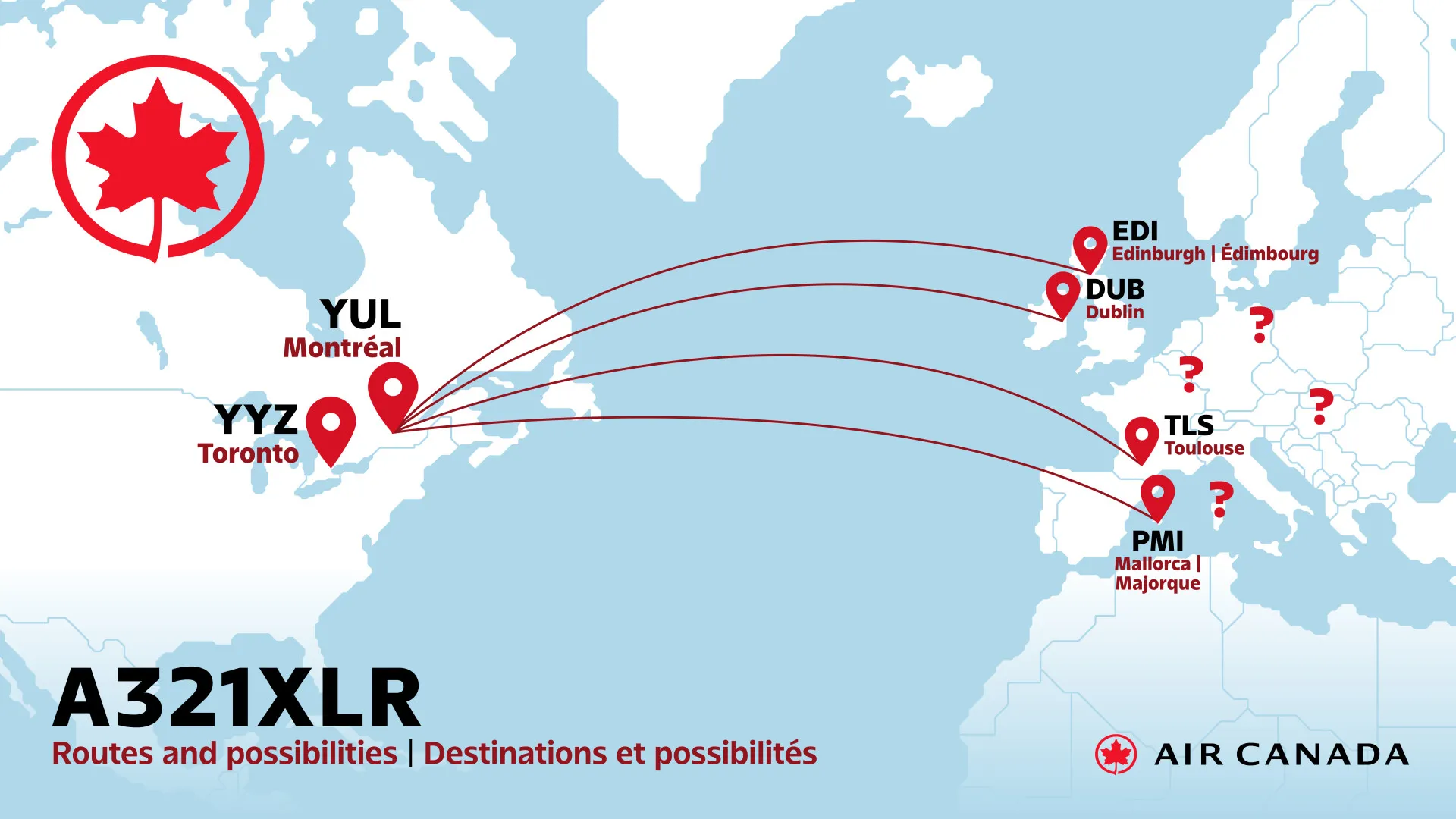
Air Canada A321XLR to Unlock New Routes
Alexandre Lefevre, Vice President of Network Planning – North America and Scheduling at Air Canada, noted that the A321XLR’s introduction “heralds a new era of international growth.”
He mentioned that the airline has been diligently exploring route opportunities in anticipation of this aircraft’s arrival.
The A321XLR is set to initiate commercial service by the summer of 2026, with the first new route announced from Montréal (YUL) to Palma de Mallorca (PMI), starting in June 2026.
Additional destinations such as Toulouse (TLS), Dublin (DUB), and Edinburgh (EDI) will expand the airline’s presence in Europe.
With its extended range, the A321XLR enables Air Canada to access markets previously deemed uneconomical for larger aircraft. Lefevre emphasized that this addition is a strategic asset rather than just a replacement for older models.

Improved Passenger Experience
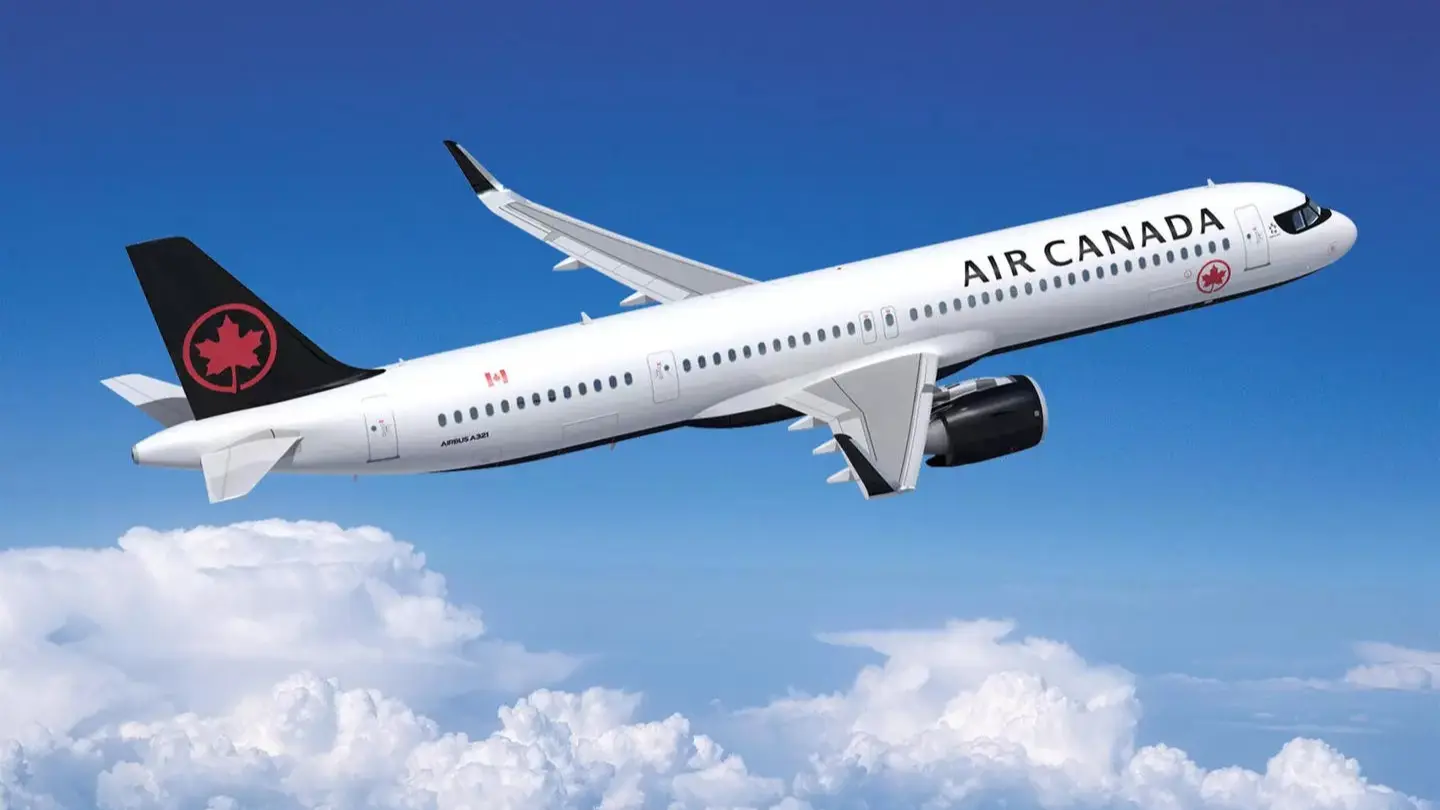
The A321XLR from Air Canada will boast a newly crafted interior featuring Airbus’s XL overhead bins, lie-flat seating in premium sections, and increased comfort for long-haul journeys. This upgraded cabin will also set the standard for future enhancements across the airline’s entire fleet.
Lefevre pointed out that the aircraft’s flexibility is beneficial not only for international routes but also for domestic and transcontinental flights in Canada. Passengers traveling between hubs like Toronto (YYZ) and Vancouver (YVR) or Montréal (YUL) will enjoy a modern cabin atmosphere and upgraded seating options.
Moreover, the A321XLR aligns with Air Canada’s sustainability initiatives, offering operational efficiencies through its larger fuel capacity and improved aerodynamics. These advancements will lead to lower fuel consumption and emissions while extending flight range.
Additionally, faster boarding processes enabled by the XL bins and redesign will result in shorter turnaround times, contributing to better scheduling and enhancing on-time performance. This will allow the aircraft to maximize productivity and elevate customer satisfaction.
Looking Ahead
The integration of the Airbus A321XLR into Air Canada’s fleet is a pivotal move in its long-term strategy to enhance transatlantic connectivity and increase fleet flexibility.
As this aircraft enters service in 2026, travelers and markets can expect the airline to expand its international reach with improved agility and efficiency.
What are your thoughts on Air Canada’s expansion with the new A321XLR?