First Look at China’s 6th-Generation Military Aircraft

China’s J-36 Military Aircraft Takes Flight: A Glimpse into Sixth-Generation Technology
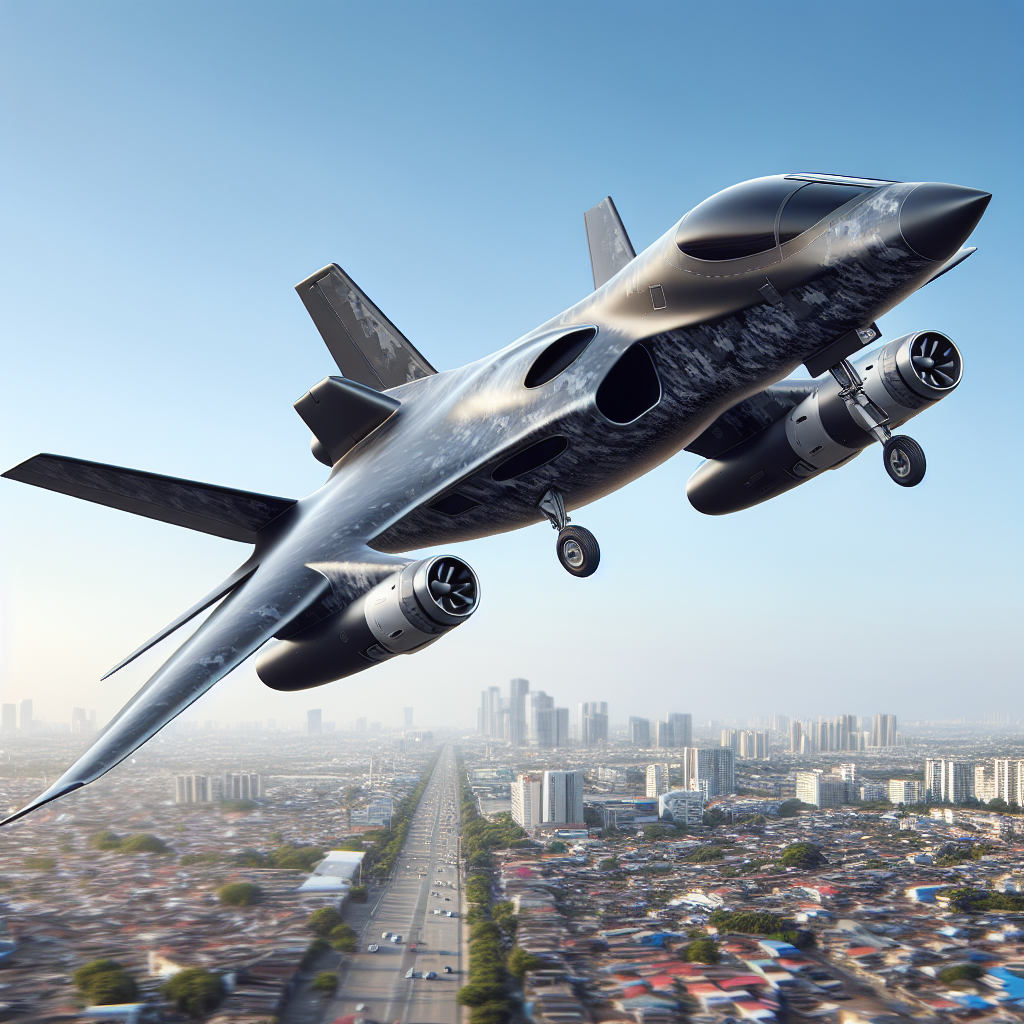
China’s cutting-edge J-36 military aircraft, touted as a sixth-generation fighter, has recently been spotted during what experts believe to be its second test flight. Captured in stunning detail, these images reveal an aircraft still in the early stages of development, igniting excitement about its potential capabilities.
New Sightings Highlight J-36 Development Progress
Recent footage and photographs shared on Chinese social media platforms showcase the J-36 flying at low altitudes over urban areas. These clips, filmed by everyday citizens with smartphones, offer a unique look at the aircraft’s maneuvers.
- The aircraft was seen making turns with its landing gear extended.
- A flight data probe on the nose indicates that the J-36 remains in preliminary testing, far from operational readiness.
First Public Appearance and Related Designs
The J-36 made its initial public appearance on December 26, 2024, taking off from the Chengdu Aircraft Corporation headquarters. On the same day, another aircraft, rumored to be the J-XX fighter, was also filmed at the Shenyang Aircraft Corporation.
- The relationship between the J-36 and J-XX remains unclear.
- Speculations abound whether the J-XX is a fifth-generation or sixth-generation design meant to complement the J-36.
During its debut, the J-36 flew alongside a twin-seat variant of the J-20 and was followed by a Chinese-made Flanker derivative, either a J-11 or J-16.
Design Features and Configuration of the J-36
The J-36 exhibits a tailless, flying-wing design equipped with three engine nozzles. Recent images suggest the presence of afterburners, although some analysts caution that the authenticity of these images may be questionable.
- Key design elements include:
- Two engine intakes under the wings and one dorsal intake behind the cockpit.
- A landing gear configuration similar to Russia’s Su-34, featuring twin-wheel nose gear.
- A sleek black and grey camouflage paint scheme.
The spaces between the main landing gears likely house internal weapons bays for large, long-range missiles, with future demonstrations anticipated to showcase these capabilities.
Advanced Aerodynamics and Stealth Features of the J-36
The J-36’s streamlined design is engineered for aerodynamic efficiency and reduced radar visibility. This innovative approach may lead to:
- Improved speeds and kinetic energy transfer for launched missiles.
- Enhanced stealth capabilities, minimizing detection by enemy radar.
Its maneuverability and stability are expected to rely on advanced flight control software rather than conventional aerodynamic surfaces.
Engine Speculation: What Powers the J-36?
Experts speculate that the J-36 could be powered by either WS-10C turbofan engines or the next-generation WS-15 engines, designed for advanced variants of the J-20.
- The WS-15 is considered China’s response to the Pratt & Whitney F135 and the Russian AL-41F1S.
- There is ongoing development of adaptive cycle engine technology, promising significant advancements in propulsion.
Unclear Generational Classification: What Does It Mean for the J-36?
The classification of the J-36 as a sixth-generation aircraft remains a topic of debate among experts. The criteria for what constitutes sixth-generation technology vary, complicating definitive assessments.
- Unlike previous military aircraft, no official media from China has presented the J-36 or the J-XX, leading to questions about their true capabilities.
- The J-36, also referred to as the JH-XX, may serve dual roles, including that of a regional bomber aligned with China’s H-20 strategic bomber program.
As the development of the J-36 progresses, it represents a significant leap in China’s military aviation technology.
Conclusion
As we await further updates on the J-36’s capabilities and specifications, we invite you to share your thoughts on this emerging technology. For more insights into military advancements, check out our related articles on sixth-generation aircraft and global military aviation trends.