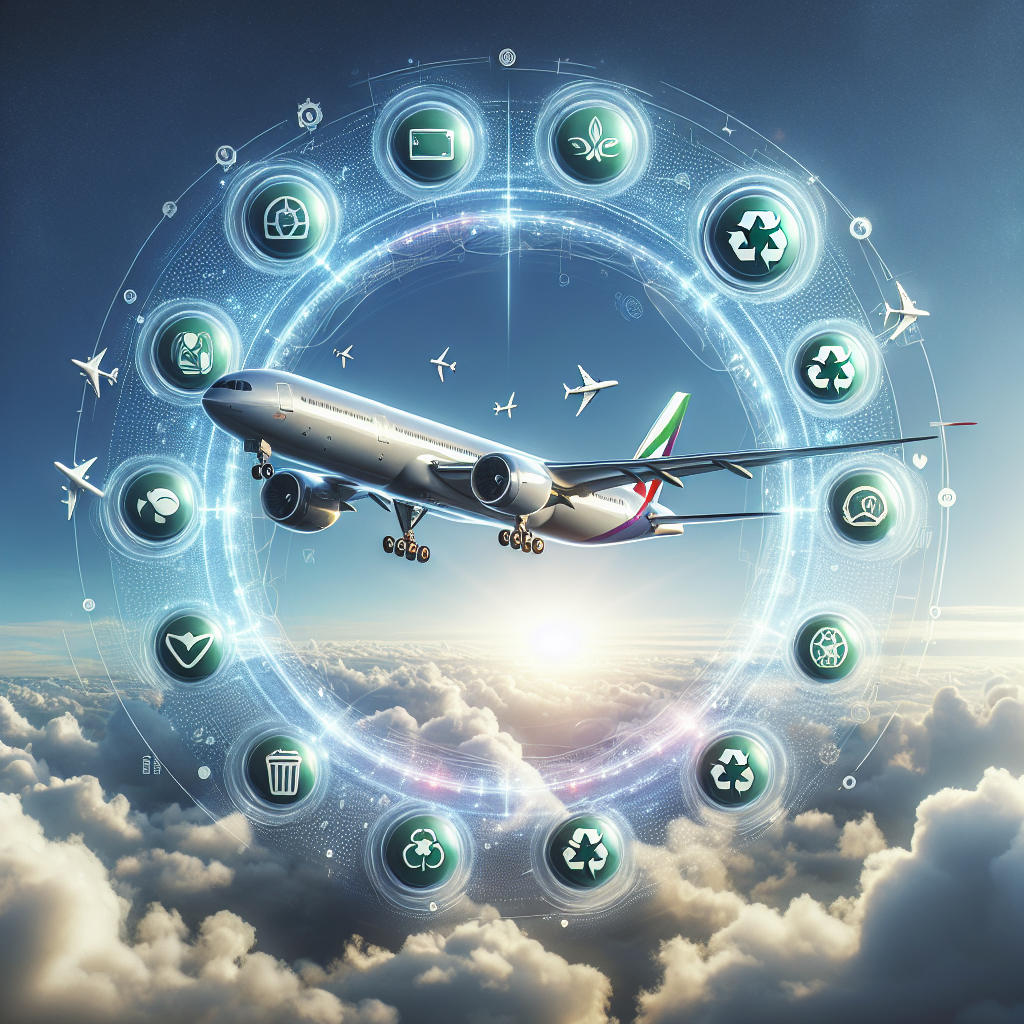
Emirates Joins Consortium to Boost Airline Recycling Efforts

Emirates Joins the Aviation Circularity Consortium to Promote Sustainable Aviation Practices
In a significant move towards promoting sustainability in the aviation industry, Emirates has officially joined the Aviation Circularity Consortium (ACC) as of April 7, 2025. This strategic partnership aims to unlock the potential of a circular economy within aviation, focusing on accelerated decarbonization through high-value circularity in the global supply chain. By joining the ACC, Emirates is set to enhance its sustainability strategy and collaborate with key stakeholders to reshape the future of aviation.
What is the Aviation Circularity Consortium?
The Aviation Circularity Consortium (ACC) is a coalition of organizations dedicated to fostering a circular economy in the aviation sector. With a mission to unite airlines, regulators, original equipment manufacturers (OEMs), suppliers, and financial entities, the ACC aims to create innovative pathways to decarbonize the aviation supply chain.
Emirates’ Commitment to Sustainability
Emirates has long embedded recycling and circular solutions within its operational framework. The airline’s sustainability initiatives include:
- Cabin Interior Upcycling: Transforming materials from decommissioned aircraft for new uses.
- Sustainable Materials: Incorporating eco-friendly materials in products.
- Inflight Initiatives: Implementing programs to reduce waste during flights.
By participating in the ACC, Emirates hopes to further advance circular aviation innovations, reinforcing its commitment to sustainable practices.
Collaboration with SL Metals
Emirates joins the ACC alongside SL Metals, a prominent aluminum alloy distributor based in Singapore. SL Metals is dedicated to promoting sustainable supply chain practices in the aviation sector. The collaboration aims to enhance material circularity in aviation, acknowledging that responsible sourcing and efficient material usage are critical in reducing the environmental impact of aluminum production, which contributes 3% of global industrial CO2 emissions.
Industry-Wide Cooperation for Decarbonization
Recognizing the urgency of sustainable practices, Emirates is the second airline to join the ACC, following Qantas. The airline emphasizes that its experience in sustainable fleet management will contribute significantly to addressing the challenges of responsibly managing end-of-life aircraft.
Ahmed Safa, Head of Engineering & MRO at Emirates Group, stated, “Aviation must rethink how materials are used across an aircraft’s lifecycle, from production to retirement.” As the number of retired aircraft increases, the need for sustainable end-of-life solutions becomes even more critical.
Advancing Sustainable Aviation Practices
Both Emirates and SL Metals are committed to improving sustainability within their operations while supporting broader industry efforts. Sam Tan Yee Leong, CEO of SL Metals, highlighted the importance of responsible aluminum sourcing and efficient material use to create a more resilient and sustainable aviation supply chain.
Conclusion
The partnership between Emirates and the Aviation Circularity Consortium marks a pivotal step toward achieving sustainability in aviation. As the industry increasingly embraces circular economy principles, collaborations like these will play a crucial role in reducing waste and enhancing efficiency.
For further insights into sustainable aviation practices, consider exploring this informative piece on aviation decarbonization strategies.
What are your thoughts on the role of circular economy initiatives in aviation? Share your insights in the comments below or check out our related articles for more information!