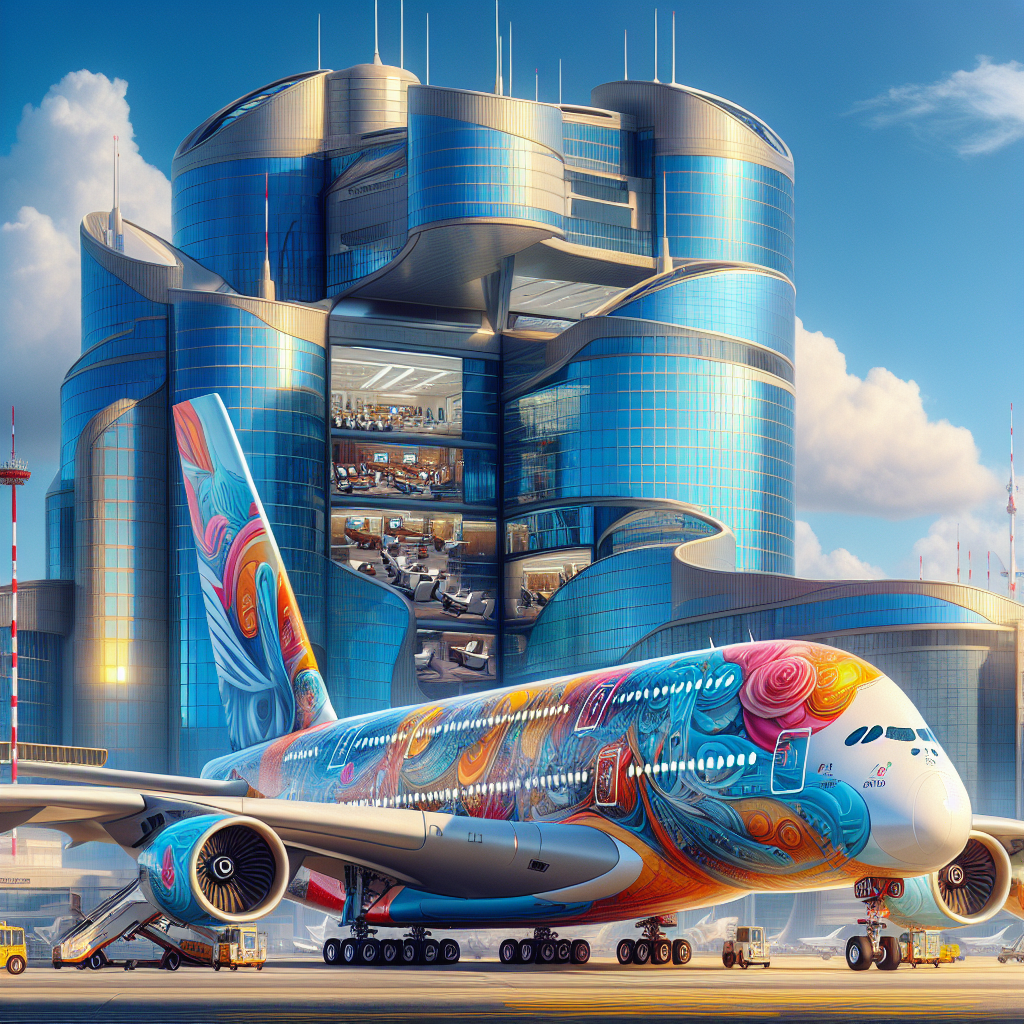
Emirates Restores World’s Oldest Airbus A380

Emirates Revives Oldest A380 Aircraft After Five-Year Hiatus
Dubai International Airport (DXB) has recently marked a significant milestone in aviation history with the reactivation of Emirates’ (EK) oldest Airbus A380-861. After five years of inactivity, this iconic aircraft is back in passenger service, showcasing Emirates’ commitment to innovation and service excellence.
The Airbus A380-861, registered as A6-EDF and originally built in February 2006, was stored at Dubai World Central International Airport (DWC) since 2020. Its successful return to service highlights the airline’s ability to breathe new life into its fleet, solidifying its position as the largest global operator of the A380.
Emirates Reintroduces the A380 to Passenger Service
Emirates has successfully reintegrated the historic A6-EDF into its operations, completing its first revenue flight as EK925 from Dubai (DXB) to Cairo (CAI). This reactivation is particularly noteworthy, as A6-EDF is now the world’s oldest active passenger-carrying A380, with nearly double the average age of Emirates’ other superjumbos.
Following extensive storage, the aircraft made a short journey from DWC to DXB on December 30, 2023. Before its commercial debut, A6-EDF underwent rigorous testing, including a comprehensive 3-hour and 30-minute flight on March 29, 2025, ensuring its readiness for passengers.
Current Operations and Route Strategy for A6-EDF
A6-EDF’s inaugural flight, EK925, took off from Dubai at 22:39 and arrived in Cairo at midnight local time. The return flight, EK926, departed Cairo at 01:54, returning to Dubai at 06:52. The route between Dubai and Cairo is among the shortest and most frequently served for A380 operations, making it a strategic choice for reintroducing this aging aircraft.
- Additional Destinations: Since its return, A6-EDF has also flown to Jeddah (JED) and Zurich (ZRH).
- Operational Challenges: Operating an older aircraft like A6-EDF presents unique challenges, including higher fuel consumption and maintenance costs. However, Emirates’ decision to deploy the aircraft on shorter routes is a strategic move to optimize operational efficiency.
Configuration and Capacity of the Revived A380
The A6-EDF features a 517-seat configuration, with 14 first-class suites, 76 fully flat business-class seats, and 427 economy seats. This layout is one of 23 similarly configured aircraft in Emirates’ fleet, which boasts remarkable diversity across its A380 configurations.
- Seat Distribution: Economy class represents 82% of the total capacity, allowing Emirates to cater to a wide range of passengers.
- Fleet Configuration: Emirates operates nine different layouts across its 116 active A380s, ranging from 468 seats in four-class arrangements to 615 seats in two-class configurations, strategically deployed based on market demands.
Conclusion
The revival of Emirates’ oldest A380 aircraft not only showcases the airline’s innovative spirit but also sets a remarkable precedent in the aviation industry. As A6-EDF takes to the skies once more, travelers can look forward to experiencing the luxury and comfort that the Emirates A380 is known for.
What are your thoughts on the reintroduction of older aircraft like the A380? Share your insights in the comments below, and check out our related articles for further updates on the aviation industry. For more information on Emirates’ A380 fleet and operations, visit Emirates’ official website and read more about the history of the Airbus A380 on Simple Flying.