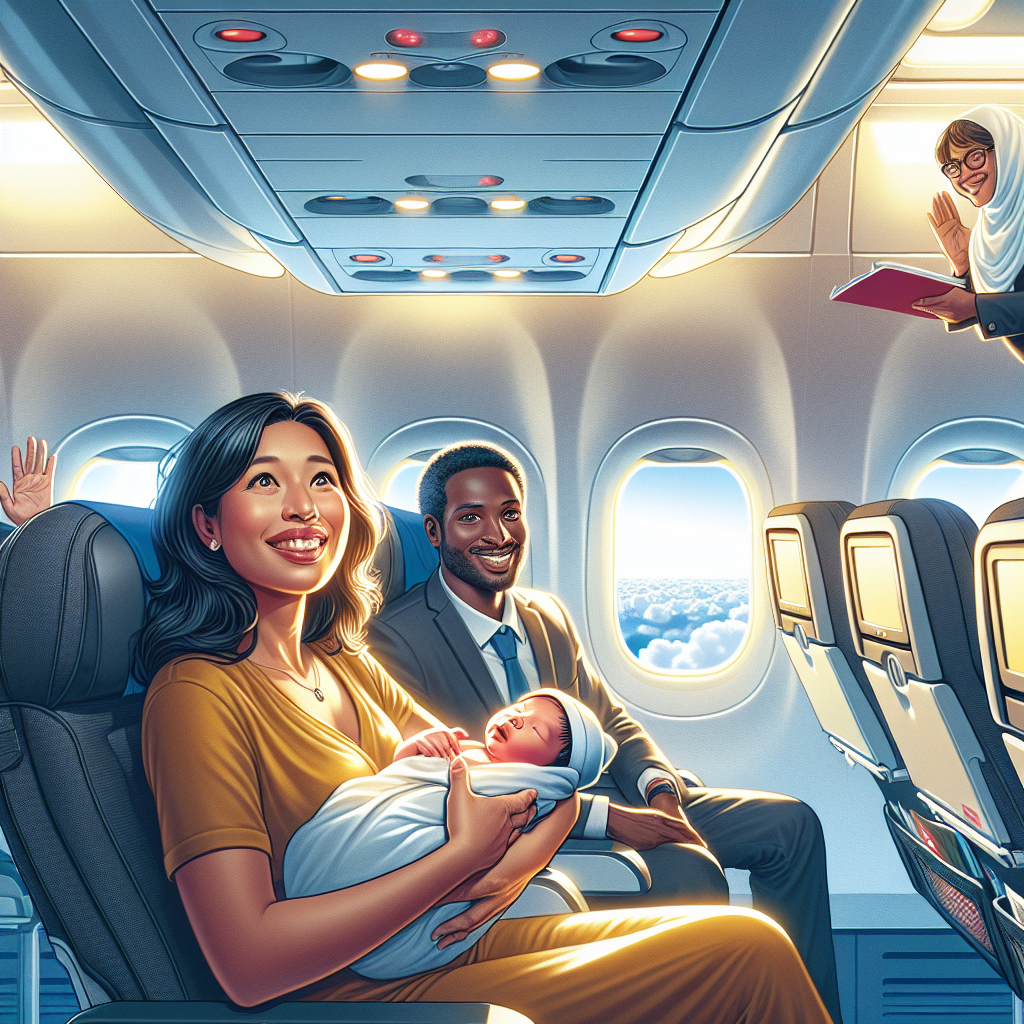
How Airlines Manage In-Flight Baby Deliveries

Title: Unforgettable Moments: Baby Born Mid-Flight on Ryanair Flight FR4797
Introduction
In a remarkable turn of events, a Ryanair flight (FR4797) from Brussels Charleroi (CRL) to Castellón (CDT) made an unscheduled landing in Limoges, France, after a passenger gave birth to a baby girl at an altitude of 18,000 feet. This incident, which occurred on May 8, 2025, underscores the incredible unpredictability of air travel and the extraordinary moments that can unfold when flying.
Details of the Incident
The Boeing 737-800 took off from Brussels at 13:30 UTC and was en route when a medical emergency developed over central France. Promptly, the flight crew diverted the aircraft, landing safely at Limoges Airport (LIG) at 12:35 UTC, where emergency services were on standby to assist.
Babies Born Onboard: A Growing Phenomenon
This recent birth adds to a growing list of babies born during flights. Notable examples include:
- September 2021: A Moroccan woman gave birth on a Turkish Airlines flight from Istanbul (IST) to Chicago (ORD).
- July 2019: A baby was delivered on a flight from Doha (DOH) to Beirut (BEY), leading to an emergency landing in Kuwait (KWI).
- 2021 U.S. Evacuation: An Afghan evacuee welcomed a child aboard a C-17 military aircraft.
How Airlines Handle In-Flight Births
Airlines are well-prepared for medical emergencies, including childbirth. When a passenger goes into labor, the cabin crew initiates specific protocols to ensure the safety of both mother and child.
- Assessment: Crew members quickly evaluate the passenger’s condition.
- Communication: If delivery is imminent, they inform the pilots for a potential diversion.
- Preparation: The crew readies the cabin for medical assistance.
Communication Framework in Emergencies
During in-flight emergencies, flight crews utilize a structured communication system known as NITS:
- Nature of the problem (passenger in labor)
- Intentions of the crew (possible diversion)
- Time available (estimated arrival at the nearest airport)
- Special instructions (preparation for medical assistance)
Managing Birth at Altitude
In the absence of medical professionals onboard, cabin crew takes on the responsibility of delivery. They typically create a private area in the rear galley and use the aircraft’s emergency medical kit, which includes gloves and blankets.
- Post-Delivery Care: After the baby is born, crew members monitor both mother and child until ground medical personnel can take over.
Citizenship for Airborne Births
Contrary to popular belief, babies born in flight do not automatically receive citizenship from the country of the airspace in which they were born. The determination of citizenship involves several factors:
- Parental Nationality: Many nations grant citizenship based on parental nationality, known as "jus sanguinis."
- Aircraft Registration: A child’s nationality may also be influenced by the country of the aircraft’s registration.
- Territorial Airspace: Some countries may grant citizenship based on the airspace in which the birth occurs.
Airline Policies on Pregnancy
Most airlines have policies that restrict travel for women in advanced stages of pregnancy, usually prohibiting flights after 36 weeks for single pregnancies. Despite these precautions, unexpected births can and do happen, leading airlines to continuously refine their training programs.
Medical Challenges of In-Flight Births
Delivering a baby at cruising altitude poses several unique medical challenges, including:
- Reduced cabin pressure
- Limited medical equipment
- Space constraints
- Potential turbulence
The dry cabin environment can also increase the risk of dehydration for the mother.
Bottom Line
As air travel continues to grow, airlines are focusing more on enhancing their medical emergency responses. This includes improving medical kits, refining crew training for childbirth scenarios, and better coordination with ground-based medical services. While births during flights remain rare, each incident serves as a reminder of the extraordinary circumstances that can arise at 18,000 feet.
Call to Action
What are your thoughts on in-flight births? Share your opinions or check out related articles to learn more about airline safety and medical emergencies.