Emirates Traveler Unveils Hidden Lounge in Airbus A380

DUBAI— Passengers aboard Emirates Airline (EK) are often taken aback by a hidden area within the Airbus A380, referred to by the crew as the “Harry Potter cupboard.” This tiny space, located beneath a staircase at the front of the aircraft, is designated for the purser, the primary flight attendant on board.
While it isn’t intended for relaxation, this area functions as an office, allowing the purser to oversee operations, manage in-flight paperwork, and handle the entertainment system. As a superjumbo takes off from Dubai International Airport (DXB), this hidden workspace represents part of the airline’s unique approach to cabin management, a feature that is becoming increasingly rare in modern aircraft.
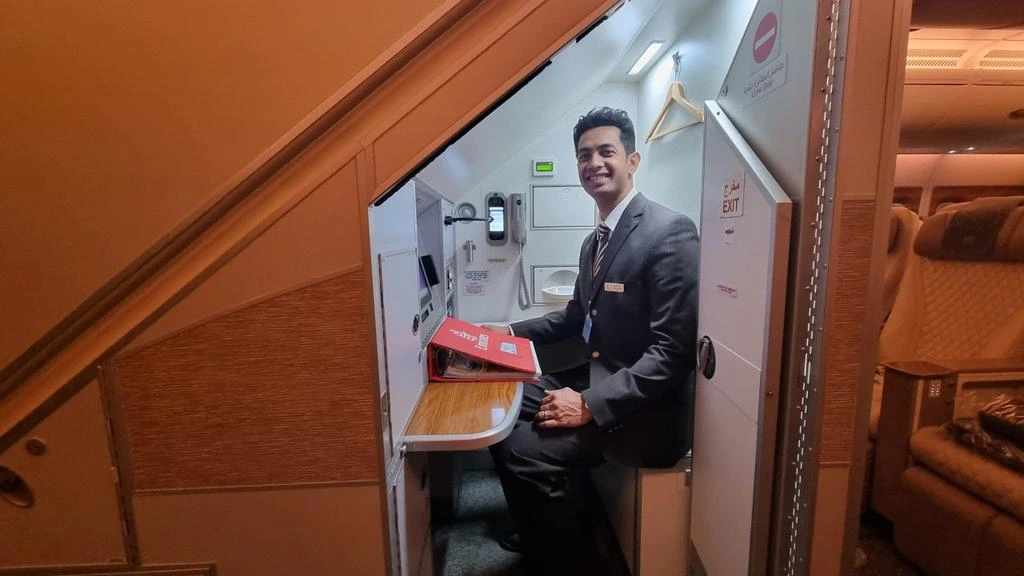
Emirates A380 Secret Office for Crew
In the past, dedicated workspaces for chief flight attendants were standard on widebody aircraft like the Boeing 747, Boeing 777, and Airbus A340. As airlines began to implement in-seat entertainment, the bulky hardware required needed central control, which placed functional workspace right where the purser could effectively manage the cabin.
On the A380, Emirates ingeniously created a workspace beneath the forward staircase to accommodate this need. Within this compartment, the purser can:
- Oversee and operate the entertainment system.
- Handle operational paperwork throughout the flight.
- Coordinate with the cabin crew effectively.
As modern terminals have become more compact and space-efficient, such dedicated offices have become less commonplace. Airlines today often prioritize passenger seating capacity over crew needs, making the Emirates A380 one of the few aircraft to retain this feature, as noted in various reports.
Changing Role of the Purser
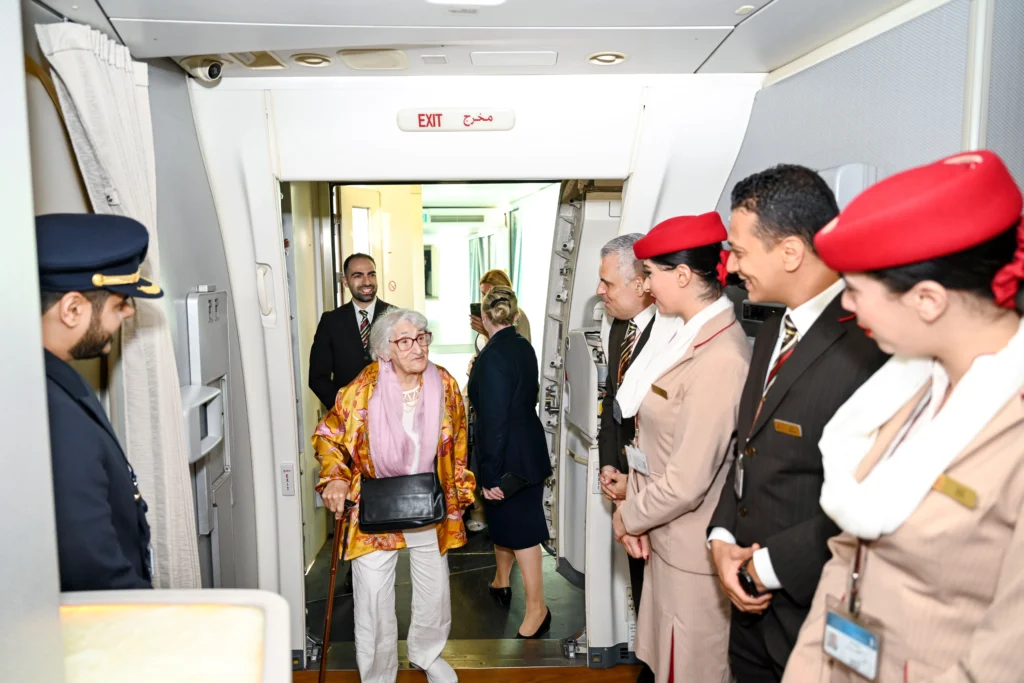
The purser is traditionally the chief flight attendant and has a significant management role in cabin operations. Their duties span beyond paperwork to include supervising the entire in-flight service, resolving passenger concerns, and ensuring compliance with safety regulations.
Originating from nautical terms, the title “purser” referred to crew members managing finances and provisions. Over time, in aviation, the role has evolved into a leadership position within the cabin crew hierarchy.
While Emirates continues to use the title of purser, other airlines often have differing designations such as:
- In-flight Manager
- Cabin Service Director
- Lead Flight Attendant
For instance, Delta Air Lines retains the purser designation for specific long-haul international services, although many carriers have moved away from the traditional title.

Hidden Spaces on Widebody Aircraft
Aircraft designers often utilize otherwise unused sections of the fuselage for crew functions. In both the A380 and Boeing 777, areas such as staircases, galleys, and crew rest compartments are ingeniously tucked away in various corners.
The purser’s office beneath the A380’s staircase is just one of several concealed features that passengers might overlook. Some other significant areas include:
- Crew Rest Compartments situated above the main cabin for pilots and flight attendants.
- Storage Areas within empty fuselage space for catering supplies.
- Avionics and Electrical Bays accessible only to the crew members.
While these areas remain unseen by travelers, they are essential for ensuring seamless operations during long-haul flights.
Bottom Line
Contemporary airline design prioritizes efficiency and revenue maximization. As such, every inch of cabin space is meticulously analyzed for potential passenger seating. Consequently, the presence of a purser’s office, once ubiquitous, has sharply declined.
Emirates continues to uphold this feature on their A380, reflecting the airline’s service ethos and the unique space offerings of this double-decker aircraft.
This situation underscores the delicate balance between operational requirements and commercial ambitions. Although a purser’s office may not directly translate into revenue, it fosters organized management within the cabin—an essential aspect of Emirates’ service philosophy.