
Boeing 787 Diverts to Boston After Near Fuel Shortage

Boeing 787 Flight Diverts to Boston Due to Low Fuel
BOSTON- An Air Europa (UX) flight, UX91, traveling from Adolfo Suarez Madrid Barajas Airport (MAD) to New York’s John F. Kennedy Airport (JFK), had to shift course to Boston Logan Airport (BOS) after pilots reported dangerously low fuel levels during their descent. Initially, air traffic controllers planned for the aircraft to enter a holding pattern near JFK, but the crew opted for an immediate diversion instead, prioritizing safety.
The Boeing 787-9 Dreamliner landed safely in Boston after alerting air traffic control about the low fuel situation and requesting swift handling. The aircraft reached the gate without further complications.
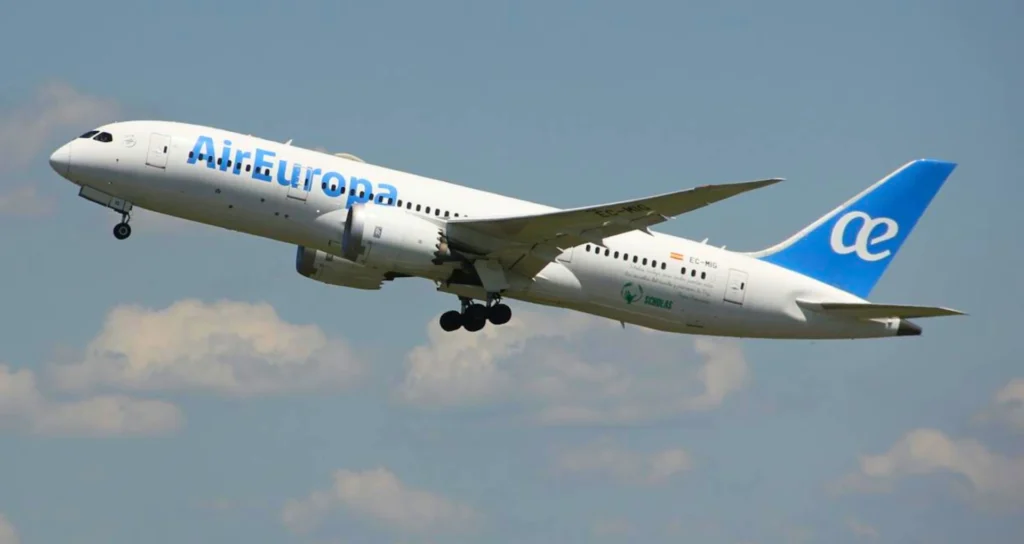
Boeing 787 Low Fuel Situation
Air traffic controllers notified the crew of flight UX91 about expected delays at JFK, which would require the aircraft to hold its position. With fuel levels nearing the minimum, the cockpit crew concluded that holding was not an option. Instead, they made the swift decision to divert to Boston to maintain a safety buffer.
The aircraft was cleared to Boston using the ROBUX 3 arrival route. As they neared their diversion point, the crew reaffirmed their commitment to Boston, as they could not sustain a return trip to JFK or wait in a holding pattern.
As the flight approached Logan Airport, the pilots declared a minimum fuel status and requested priority for landing. Air traffic control promptly acknowledged this, providing the necessary vectors, altitude assignments, and speed adjustments to facilitate a stable approach.
The aircraft landed on runway 22 Left at Boston Logan, receiving immediate clearance to taxi without further issues. The diversion was executed successfully.
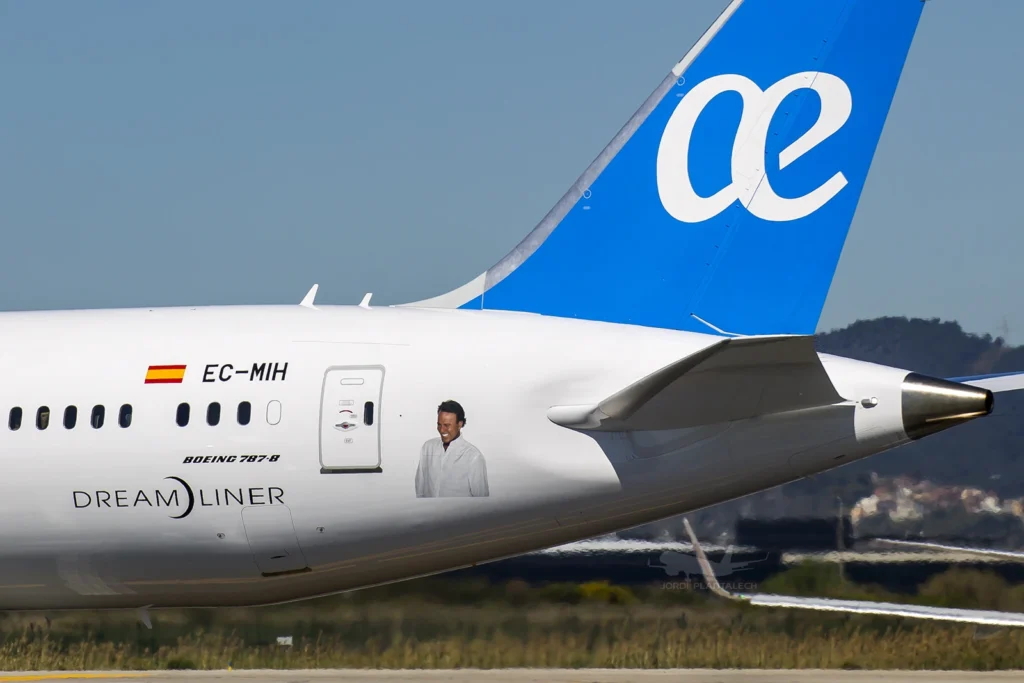
Clear Communication with ATC
The recorded dialogue revealed that air traffic control offered the option to hold near JFK, which the crew turned down due to low fuel. They emphasized that, while they were not in a Mayday situation, the remaining fuel was critical, prompting them to head directly to an alternate airport.
Air traffic control efficiently provided routing assistance, ensuring quick navigation points and runway assignments for their arrival in Boston. The communication remained straightforward, aligning with standard procedures for minimum fuel declarations.
A segment of the communication between the Air Europa pilots and Boston ATC highlights this:
Pilot: “Yeah, we’re just making numbers with holding as well. Europa 091.”
ATC: “Affirmative. You can expect a hold unless you need to go somewhere else.”
As further exchanges continued, the crew firmly committed to Boston, stating, “Not direct to JFK, but you can proceed to Boston. Europa 091, we are close to minimum fuel.”
Minimum fuel communications indicate that an aircraft cannot withstand delays beyond what was anticipated, requiring immediate action from ATC to avoid any further holdups. In this instance, the Air Europa team adhered to protocols to ensure a secure landing in Boston, averting an emergency situation.
In situations like these, the skillful coordination between pilots and air traffic control plays a crucial role in safely managing low fuel scenarios. Have you ever experienced a flight diversion? What are your thoughts on how airlines should handle such emergencies?
Similar Posts

Bahamasair Considers Airbus A220 to Replace 737
Bahamasair is considering upgrading its fleet by ordering Airbus A220 aircraft to replace its aging Boeing 737-700 jets. CEO Tracy Cooper announced this potential acquisition at the Routes Americas conference, aiming to enhance operational efficiency with a projected 13-15% cost improvement. The airline plans to order eight to ten A220s, which could be leased, to expand its reach across the U.S. and Latin America. The A220’s superior range and capacity would facilitate new routes, further supporting Bahamasair’s crucial role in the Bahamian economy and tourism sector, which welcomed 11 million visitors in 2024.

Boeing, FAA Discuss 737 MAX 7 & 10 Stall Management Issues
Boeing is awaiting a crucial decision from the FAA regarding its request for an exemption related to the Stall Management Yaw Damper (SMYD) system for the 737 MAX 7 and MAX 10 models. Submitted in January, the request highlights Boeing’s struggle to meet stricter regulatory standards established after two fatal crashes involving the MAX 8. Delays in certification could affect the rollout of advanced safety features. The Air Line Pilots Association opposes the exemption, arguing it would lower reliability standards. The outcome will significantly impact Boeing’s reputation and competitiveness in the aerospace market, especially against rivals like Airbus.
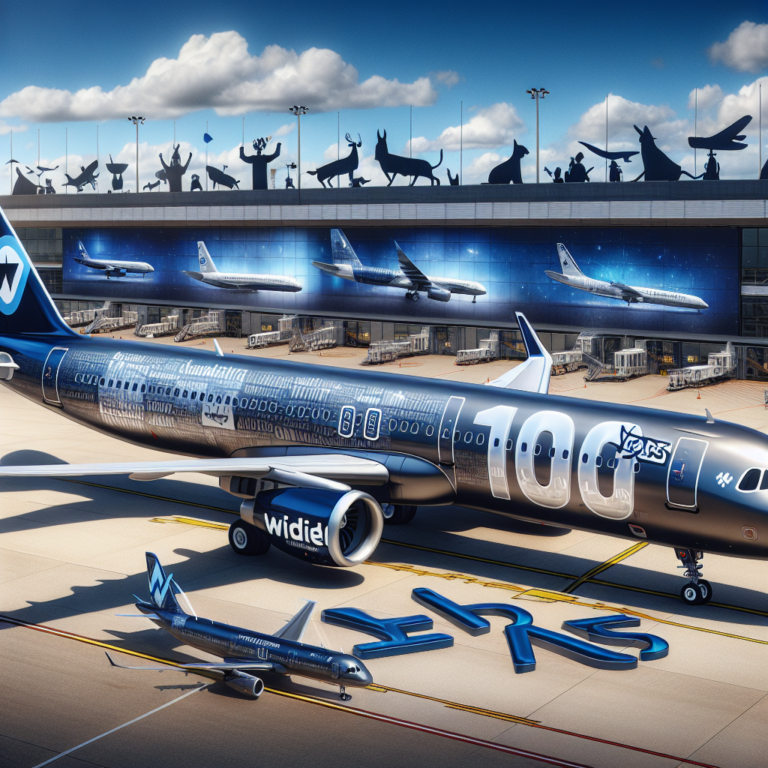
Delta’s Centenary A321neo Starts Ground Tests in Hamburg
In 2025, Delta Air Lines will celebrate its 100th anniversary, marking its origins as Huff Daland Crop Dusters Inc. in 1925. To commemorate this milestone, Delta will unveil a special centenary livery on two Airbus aircraft, including an A321neo set to debut in March 2025. The livery features a midnight blue and metallic royal blue color scheme, with large “100 Years” titles. Delta is also enhancing its fleet with a new Airbus A350-900 and modernizing the interiors of its 757 aircraft. The celebration kicked off at CES 2025, showcasing Delta’s rich history and commitment to sustainability.
KLM Faces Winter Challenges with Declining De-Icing Fluid Supply at Schiphol
Amsterdam Schiphol Airport (AMS) is grappling with severe winter challenges as…

Spirit Airlines Launches New Summer Routes from Savannah
Spirit Airlines is expanding its routes from Savannah-Hilton Head International Airport (SAV) starting August 14, 2025, following its emergence from bankruptcy. New daily nonstop flights will connect Savannah to Newark (EWR), with additional routes to Fort Lauderdale (FLL) and Nashville (BNA) launching on October 9, and to Detroit (DTW) on October 10, 2025. This expansion enhances travel options for residents and positions Savannah as an attractive destination. Spirit’s Vice President, John Kirby, and Savannah Airport’s Executive Director, Greg Kelly, both expressed excitement about the new routes, which aim to provide affordable travel options and improve community connectivity.

US Helicopter with 5 on Board Makes Emergency Landing in Kathmandu
A private helicopter carrying five US citizens made an emergency landing in Nepal after a bird strike near Banepa, about 50 kilometers east of Kathmandu. The Heli Everest helicopter, en route from Lukla to Kathmandu, faced the incident around 11 AM but landed safely, with no injuries reported. The pilot’s professionalism was commended, and the helicopter will undergo a technical inspection. This incident occurred on the same day as two other aviation mishaps: a tragic Jeju Air crash in South Korea that killed 179 and a landing gear failure with an Air Canada flight in Halifax, where all onboard were safe.