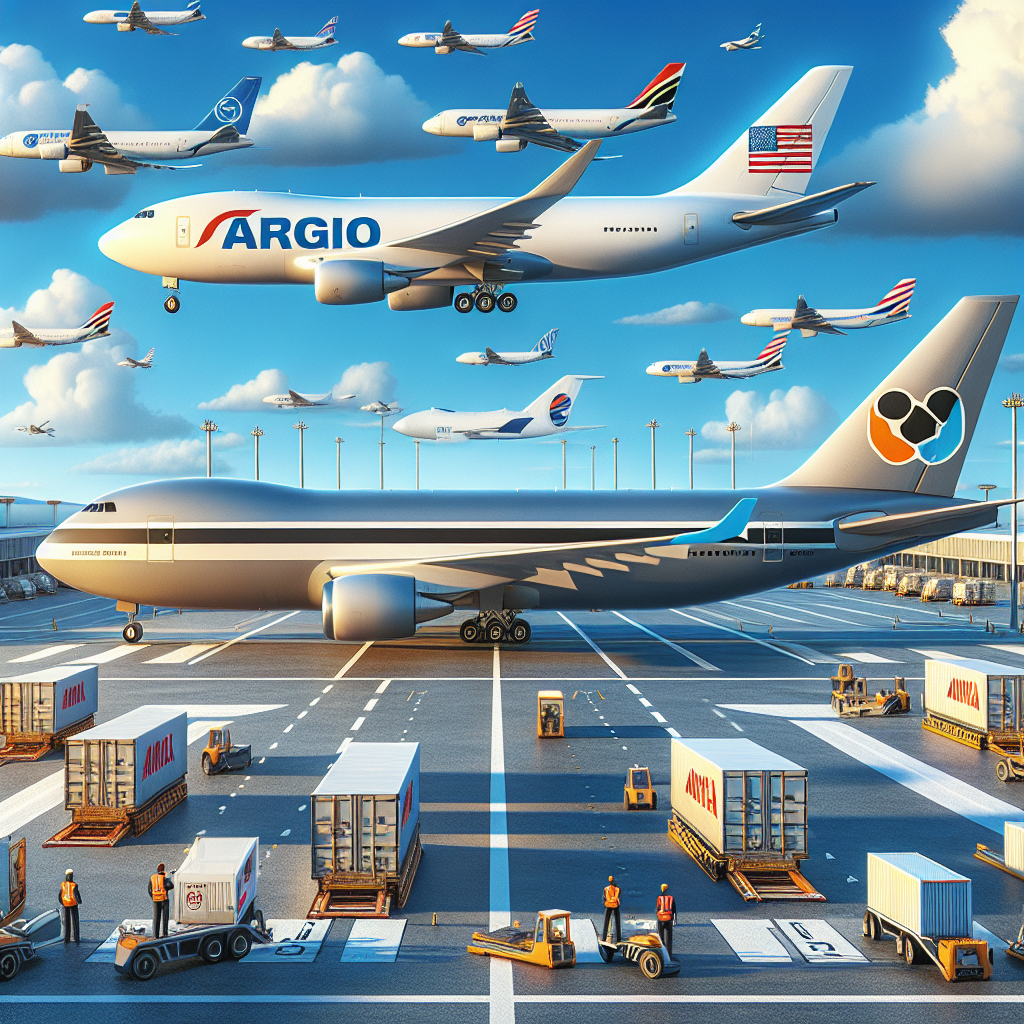
Air Canada Cargo Leases Two Boeing 767Fs to Ethiopia

Air Canada Cargo Leases Boeing 767 Freighters to Ethiopian Airlines Cargo
KANSAS – In a significant boost to its operations, Air Canada Cargo (AC) has officially leased two factory-built Boeing 767-300 freighters to Ethiopian Airlines Cargo (ET). This strategic move not only enhances Ethiopian Cargo’s fleet but also underscores the growing demand for air freight services globally.
The freighters, identified by their registrations MSN 67023 and MSN 67024, were withdrawn from service in April 2024 and are currently stored at Kansas City International Airport (MCI). According to Cargo Facts, the aircraft are set to significantly strengthen Ethiopian Airlines Cargo’s capabilities, with MSN 67023 having already flown to the airline’s hub in Addis Ababa (ADD) on December 6, after a brief technical stop at Liège (LGG).
Ethiopian Cargo Expands Its Fleet
Ethiopian Cargo, the dedicated air freight division of Ethiopian Airlines, operates one of the largest air cargo networks in Africa. With the addition of these two Boeing 767 freighters, the airline’s freighter fleet now totals 20 aircraft, comprising:
- 4 Boeing 737-800Fs
- 3 Boeing 767-300Fs
- 11 Boeing 777Fs
This diverse fleet allows Ethiopian Cargo to effectively connect Africa with major global markets across Asia, Europe, and the Americas, enhancing its competitive edge in the air freight industry.
Air Canada’s Strategic Fleet Adjustments
Air Canada acquired these two freighters as part of a broader fleet expansion plan initiated in 2022, which included eight converted 767-300Fs and additional orders for Boeing 777 freighters. However, due to a decline in the air cargo market, Air Canada decided to phase out these factory-built freighters in 2024, shifting its focus to a streamlined fleet consisting of six converted 767-300Fs, as reported by The Stat Trade Times.
Air Canada’s Passenger Boeing 767 Redeployment
In addition to its cargo operations, Air Canada recently announced plans to reintroduce two retired Boeing 767-300ERs for passenger service, starting in February 2025. These aircraft, registered as C-FOCA and C-GLCA, are over 33 years old and were previously stationed at John C. Munro Hamilton International Airport (YHM).
This redeployment signifies the Boeing 767’s return to scheduled passenger operations after being retired in 2020 due to the COVID-19 pandemic. The aircraft will operate on several routes from Toronto Pearson International Airport (YYZ):
- Toronto–Las Vegas McCarran International Airport (YYZ-LAS): February 1 to March 29
- Toronto–Calgary International Airport (YYZ-YYC): February 15 to April 30
- Toronto–Edmonton International Airport (YYZ-YEG): February 15 to April 30
- Toronto–Montego Bay Sangster International Airport (YYZ-MBJ): March 31 to April 30
- Toronto–Phoenix Sky Harbor International Airport (YYZ-PHX): Limited flights on March 14, 16, and 23
These passenger Boeing 767s will maintain their original cabin configurations, featuring 24 lie-flat business class seats in a 1-1-1 layout and 187 economy seats arranged in a 2-3-2 configuration.
Air Canada’s Broader Fleet Expansion Plans
The redeployment of the 767 is part of Air Canada’s comprehensive five-year fleet expansion strategy, which aims to acquire 90 new aircraft between 2024 and 2029. The incoming fleet will include:
- 30 Airbus A321XLRs (2026–2029)
- 27 Airbus A220s (various timelines)
- 18 Boeing 787-10s (2026–2029)
- 12 Boeing 737 MAXs (2025)
- 2 Boeing 767-300ERs (2025)
- 1 Boeing 787-9 (2025)
This strategic expansion is designed to optimize Air Canada’s route network and improve operational efficiency, ensuring the airline remains competitive in the evolving aviation landscape.
For more updates on Air Canada and Ethiopian Airlines Cargo, feel free to share your thoughts in the comments below or explore our related articles for further insights into the aviation industry.