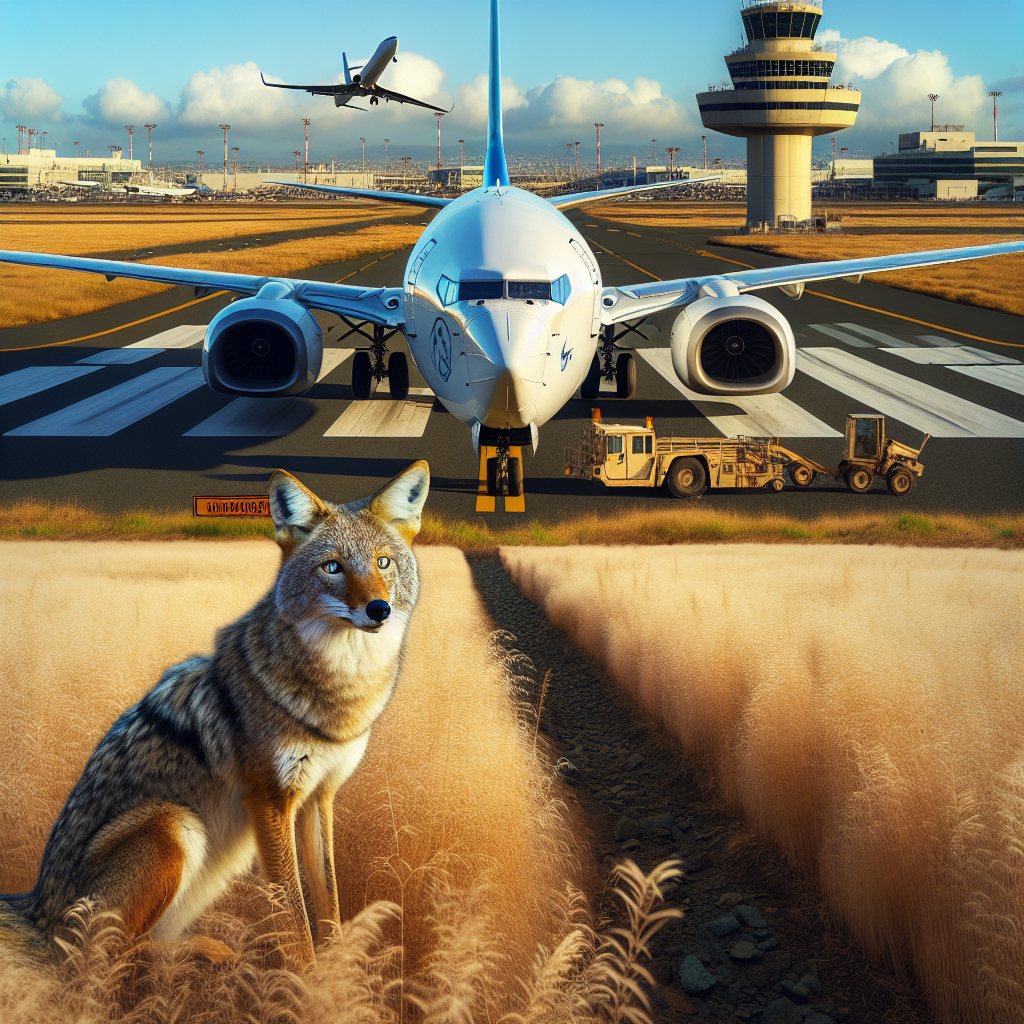
Coyote Hits United Airlines 737 MAX, Flight Returns to Chicago

United Airlines Flight Encounters Coyote During Takeoff: A Look at Wildlife Strikes in Aviation
In a surprising incident, a United Airlines (UA) Boeing 737 MAX 9 struck a coyote during takeoff from Chicago O’Hare International Airport (ORD) on its way to Phoenix Sky Harbor International Airport (PHX). Fortunately, the flight, UA1727, returned safely to Chicago without any reported injuries. This incident brings attention to the ongoing issue of wildlife strikes in aviation, a challenge that airlines and airports around the world continue to face.
The Incident: United Airlines Flight UA1727 Strikes Coyote
United Airlines Flight UA1727 departed from Chicago O’Hare at approximately 10:45 AM, carrying 167 passengers and six crew members. During takeoff, the aircraft’s landing gear came into contact with a coyote, prompting the pilots to execute a precautionary return for inspection. The Boeing 737 MAX 9 landed safely, and passengers were quickly rebooked on another flight to ensure their travel plans remained unaffected.
United Airlines managed the situation with commendable efficiency, placing passenger safety as a top priority and arranging alternate transportation with minimal disruption. While the airline confirmed the coyote strike, further details regarding the investigation and the coyote itself remain undisclosed.
Understanding Wildlife Strikes: The Broader Context
Wildlife strikes, particularly those involving birds, are a significant concern for the aviation industry. The incident involving Flight UA1727 highlights the dangers posed by terrestrial animals, such as coyotes. According to the Federal Aviation Administration (FAA), the United States has reported over 310,000 wildlife strikes involving civil aircraft from 1990 to 2023. While bird encounters dominate these statistics, strikes involving land animals—like coyotes—though less frequent, can lead to substantial damage.
Specifically, data from the U.S. Department of Agriculture indicates that coyotes have been responsible for 824 reported strikes between 1990 and 2022. Their adaptability to various habitats, including areas near airports, raises the likelihood of such dangerous encounters.
Strategies for Wildlife Strike Prevention
In an effort to reduce wildlife hazards, airports implement various strategies, including:
- Habitat Modification: Altering the environment to deter wildlife from nesting or congregating near runways.
- Wildlife Control Measures: Employing trained personnel and specialized techniques to manage animal populations around airports.
- Technology Utilization: Using advanced detection systems to monitor animal movements near runways.
Chicago O’Hare International Airport, one of the busiest in the world, has a robust wildlife management program to minimize these risks. However, incidents like the coyote strike involving United Airlines Flight UA1727 remind us of the unpredictable nature of wildlife and the continual need for innovative solutions in mitigation efforts.
Conclusion: The Ongoing Challenge of Wildlife Strikes
This recent incident serves as a crucial reminder of the aviation industry’s persistent challenges concerning wildlife strikes. While existing safety protocols and management systems are effective in preventing the majority of accidents, rare events involving terrestrial animals highlight the importance of ongoing research and adaptation to new risks.
For more insights into wildlife management in aviation, check out our articles on wildlife strike statistics and airport safety measures.
Feel free to share your thoughts on this incident or read related articles to stay informed about aviation safety!