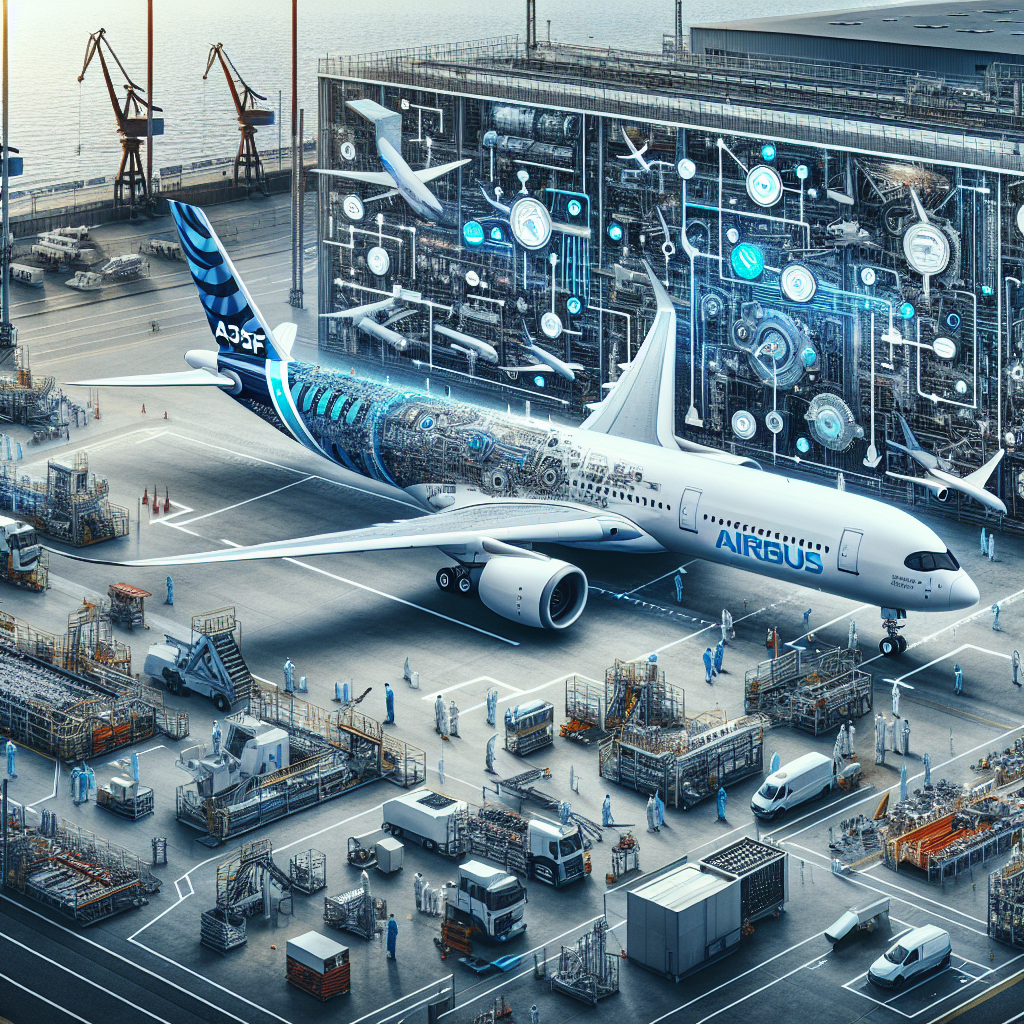
First A350F Tail Protector Arrives at Airbus Hamburg Facility

Airbus A350F Production Milestone: First Tail Protector Delivered to Hamburg
In a significant development for the aerospace industry, the first Airbus A350F Section 19, featuring a newly designed tail protector, has been successfully transported to Hamburg. This crucial milestone not only highlights Airbus’s commitment to enhancing operational efficiency in its manufacturing processes but also underscores the importance of Getafe as a key production hub in the creation of the next-generation freighter.
The newly developed tail protector aims to safeguard the aircraft during cargo loading operations, showcasing Airbus’s dedication to maintaining high production quality while meeting industry demands. With planned deliveries on track, Airbus anticipates the A350F to enter service by late 2027.
The Innovative Airbus A350F Tail Protector
The A350F program, launched in 2022, is focused on adapting Airbus’s advanced freighter to cater to evolving market needs. One of the standout features is the tail protector incorporated in Section 19, specifically designed to prevent damage during ground operations. This modification involved a strategic reconfiguration of the production line while adhering to Airbus’s rigorous quality standards.
Manuel García, Head of A350F Engineering, emphasized that the tail protector reduces the risk of structural damage from unintended movements during loading and unloading. “Cargo aircraft must be secured at the rear during these operations,” stated Carlos Sancho, Development Programme Head. He added that the A350F includes an in-flight adapter to enhance stability, streamlining cargo operations.
Streamlining the Production Process for the A350F
Airbus’s innovative approach to integrating modifications without interrupting the production of A350 passenger aircraft has been essential for maintaining efficiency. The company’s strategy involves constructing standard sections alongside passenger models, which are then diverted for freighter-specific enhancements.
The transformation of Section 19 necessitated the development of a dedicated workstation and a high level of coordination across manufacturing teams. “It was a race against time that demanded full alignment across all departments,” explained Txema Santiago, Manufacturing Engineering Process Engineer. Key validation steps in this process included:
- Process Failure Modes and Effects Analysis (PFMEA): Assessing potential issues.
- Industrial Process Acceptance Reviews (IPAR): Ensuring compliance with standards.
- First Implementation Check (FIC): Final validation before the production rollout.
Navigating Supply Chain Challenges
Despite achieving significant production milestones, Airbus faces ongoing supply chain challenges, particularly concerning US supplier Spirit AeroSystems. Nevertheless, the company has initiated the production of essential A350F components and tools to ensure that deliveries remain on schedule.
As of January 2025, Airbus has secured 63 orders for the A350F, reaffirming strong market demand for its next-generation freighter. With its enhanced design features and optimized production processes, the A350F is set to establish new industry standards upon its anticipated entry into service in late 2027.
For more information on the Airbus A350F program and its innovative features, consider exploring related articles on aircraft manufacturing and cargo transport advancements. We invite you to share your thoughts on this development in the comments below!