Army Suspends Pentagon Helicopter Flights Near DCA for Safety

US Army Suspends Helicopter Flights Near Ronald Reagan Washington National Airport for Safety Concerns
In a significant move to enhance airspace safety, the US Army has suspended all helicopter flights near Ronald Reagan Washington National Airport (DCA). This decision follows a series of safety incidents, including a recent near-miss involving military aircraft, raising alarms about public safety in one of the nation’s busiest airspaces. The Army’s focus on safety underscores the urgency of addressing ongoing concerns related to helicopter operations in congested areas.
According to reports from One Mile at a Time (OMAAT), this suspension affects the operations of the 12th Aviation Battalion. The decision comes on the heels of a tragic helicopter crash in January 2025, which has heightened scrutiny over military flights near commercial airlines such as Delta Air Lines (DL) and Republic Airways (YX) in Washington, D.C.
Army Suspends Helicopter Operations Near DCA
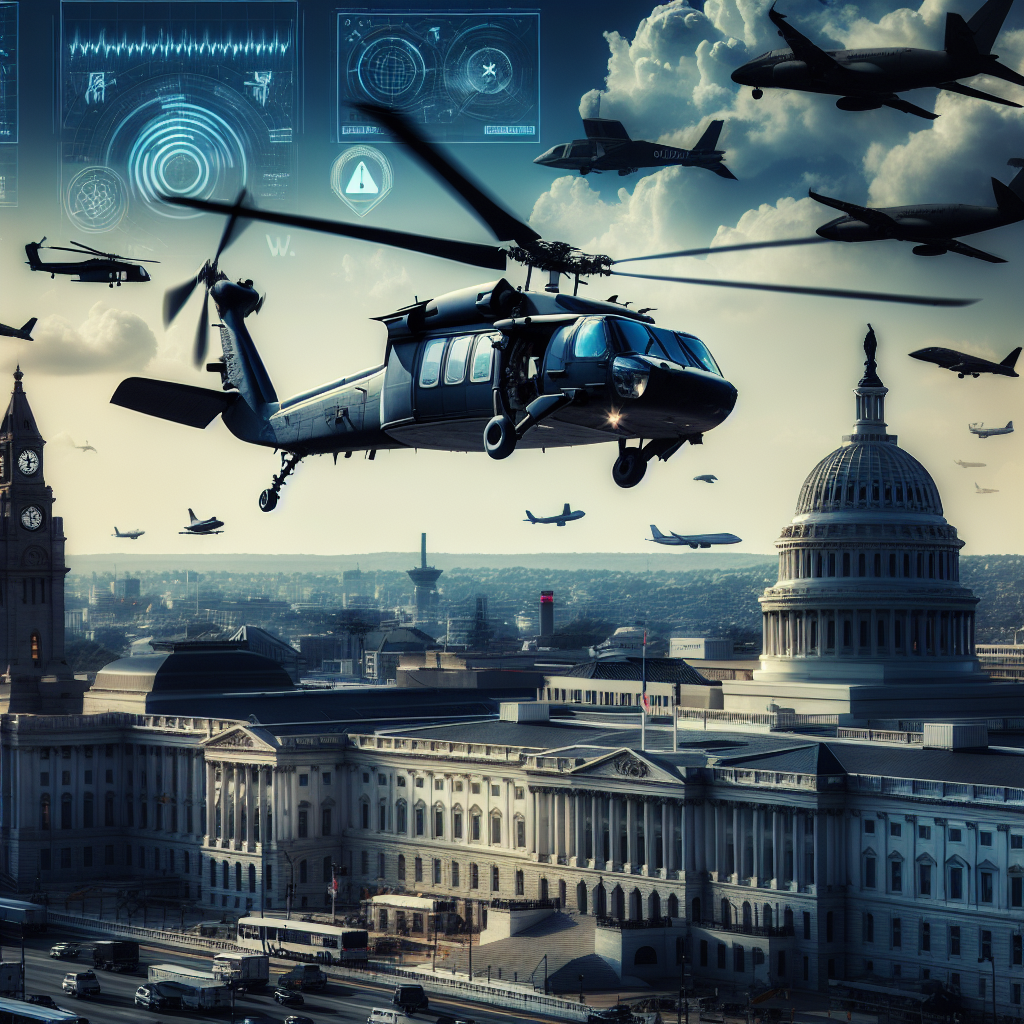
The Army’s decision to halt helicopter flights in the Pentagon area reflects the growing necessity to reassess operational safety protocols in a complex airspace. The 12th Aviation Battalion, which is tasked with emergency evacuations for VIPs, has been involved in several incidents. The most notable was the January 2025 collision between a Black Hawk helicopter and an American Eagle CRJ-700 that tragically resulted in the loss of 67 lives.
Just last week, another Black Hawk helicopter deviated from its designated flight path near the Pentagon, prompting two commercial jets to execute go-arounds. Although the Army maintained that the helicopter was following FAA-approved routes, the incident has raised serious concerns about airspace coordination and risk management.
Regulatory and Political Response to Helicopter Incidents
The Federal Aviation Administration (FAA) and the National Transportation Safety Board (NTSB) are currently investigating the May 1 incident. FAA officials noted that while the Black Hawk adhered to published flight routes, its presence still required significant adjustments from air traffic controllers, affecting commercial airline operations.
In March 2025, the FAA imposed permanent restrictions on non-essential helicopter flights near DCA, which included closing a vital route along the Potomac River. These actions followed the January crash, which revealed systemic risks in the airspace, with NTSB data showing numerous close calls between helicopters and commercial aircraft over the years.
Transportation Secretary Sean Duffy labeled the recent incident as "unacceptable," emphasizing the clarity of helicopter restrictions around DCA. He also suggested that the Department of Defense consider alternative ground transportation options for VIPs, such as taxis or rideshare services, to alleviate airspace congestion. Senators Ted Cruz and Maria Cantwell echoed Duffy’s concerns, with Cruz advocating for stricter FAA oversight and Cantwell describing the situation as "outrageous" given the brigade’s recent return to flight.
Addressing a Pattern of Close Calls
Despite generally effective coordination between military and civilian air traffic control, the recent incidents involving the 12th Aviation Battalion indicate a troubling breakdown in risk management. Although the Black Hawk involved in last week’s near-miss was operating within FAA-sanctioned routes, the incident forced immediate evasive action from pilots and air traffic controllers, highlighting the unpredictability that military flights can introduce into civilian airspace.
The January crash marked a pivotal moment in aviation safety, and last week’s near-miss has further underscored the urgent need for policy reforms. The emerging pattern of incidents suggests systemic risks that must be addressed promptly.
A Responsible Path Forward
In light of these developments, the temporary suspension of Army helicopter flights near DCA is a prudent and necessary decision. The internal review will focus on improving flight routing, enhancing airspace coordination, and refining communication protocols between military and civilian aviation authorities.
With increasing congressional interest and public scrutiny, future policy changes will likely emphasize greater oversight. Whether these changes lead to permanent restrictions or revised joint-use strategies remains uncertain, but the safety of thousands of daily passengers at DCA hinges on the implementation of data-driven reforms.
We invite readers to share their thoughts on the suspension of helicopter flights and its implications for airspace safety. For more insights on aviation safety and updates on military operations, explore our related articles.