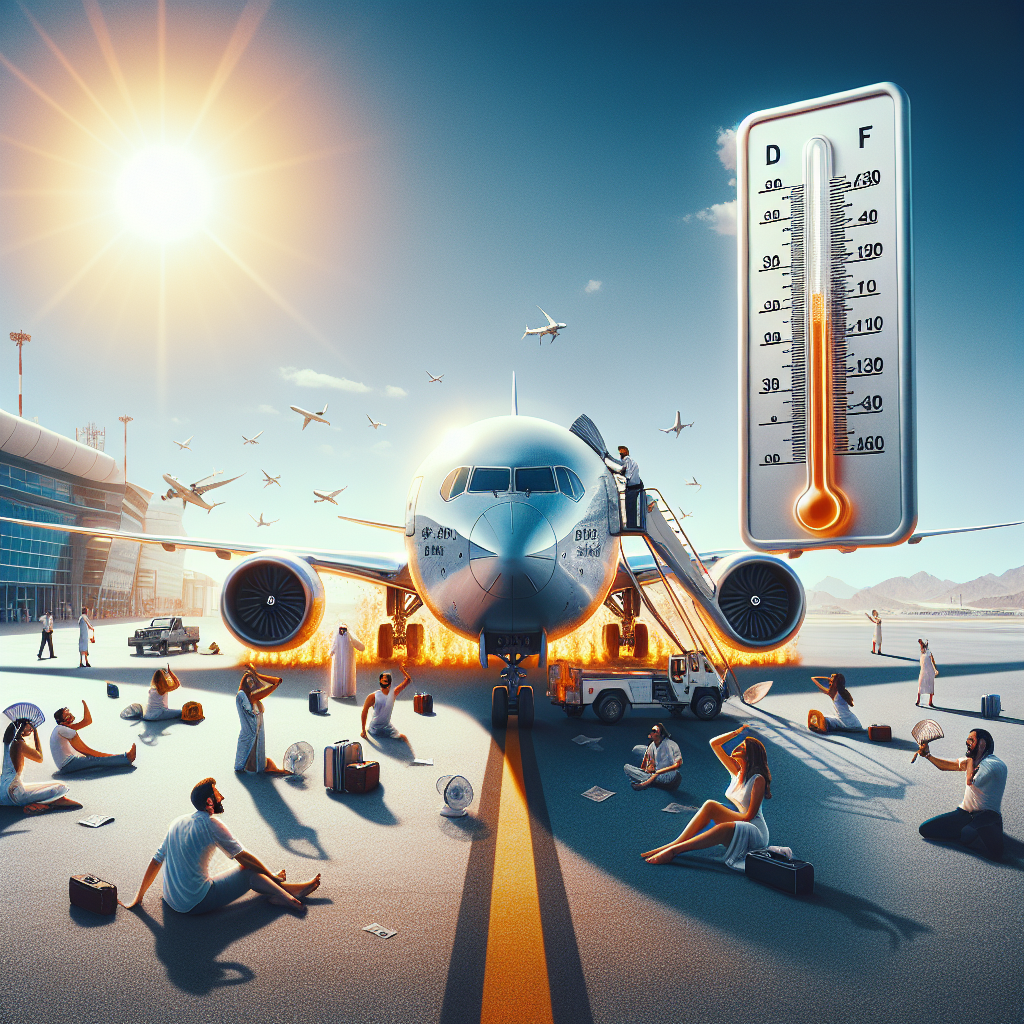
British Airways Passengers Stranded in 47°C Heat in Dubai

Extremely Hot Conditions for British Airways Passengers During Tarmac Delay
DUBAI – Passengers aboard British Airways Flight BA104 faced severe discomfort due to an air conditioning failure while stranded on the tarmac. The Boeing 787-9 Dreamliner was delayed for two hours on May 24, leading to dangerously high temperatures in the cabin. This incident highlights the critical importance of reliable auxiliary power units (APUs) in maintaining comfortable conditions for travelers.
British Airways Flight BA104 Stuck in Dubai
Scheduled to fly from Dubai International Airport (DXB) to London Heathrow (LHR), Flight BA104 experienced a malfunction in its APU, which is essential for providing air conditioning while the aircraft is stationary. Although ground equipment can typically compensate for APU failures, the situation worsened after the plane began to taxi. A cockpit warning light prompted the aircraft to stop, leading to its diversion to a remote cargo area with no escape from the rising heat.
Passenger Experiences During the Delay
Passengers shared alarming accounts of the conditions inside the aircraft. Jacqueline Stringer, one of the travelers, reported that the internal temperature soared to 47°C (116.6°F). In an effort to cope, some children were stripped to their diapers, while only a single cup of water was provided per person. Flight attendants struggled to manage the situation, making it difficult to provide adequate service.
Stringer, who has pre-existing health conditions, described the experience as distressing. She sought advice on a British Airways complaints forum, receiving a mix of sympathetic and dismissive responses. The airline later acknowledged the technical issue but provided no information regarding compensation or a formal apology to affected passengers.
Health and Safety Risks in Extreme Heat
The failure of the APU and subsequent extended delay raise significant health and safety concerns. Experts warn that prolonged exposure to temperatures above 40°C can lead to dehydration and heat exhaustion, particularly among vulnerable populations such as children, the elderly, and individuals with pre-existing conditions.
Operational Challenges for Airlines During Ground Delays
Reboarding passengers after ground delays poses logistical challenges for airlines. Nevertheless, when cabin temperatures reach dangerous levels, the need for temporary evacuation becomes critical. Maintaining passenger safety should always be a priority, even if it complicates operations.
In conclusion, the British Airways incident serves as a reminder of the importance of reliable systems in aviation. As airlines strive to improve their protocols, passengers must remain vigilant about their safety during unexpected delays.
If you have experienced a similar situation or wish to learn more about air travel safety, feel free to share your thoughts or read our related articles on airline passenger rights and safety measures.