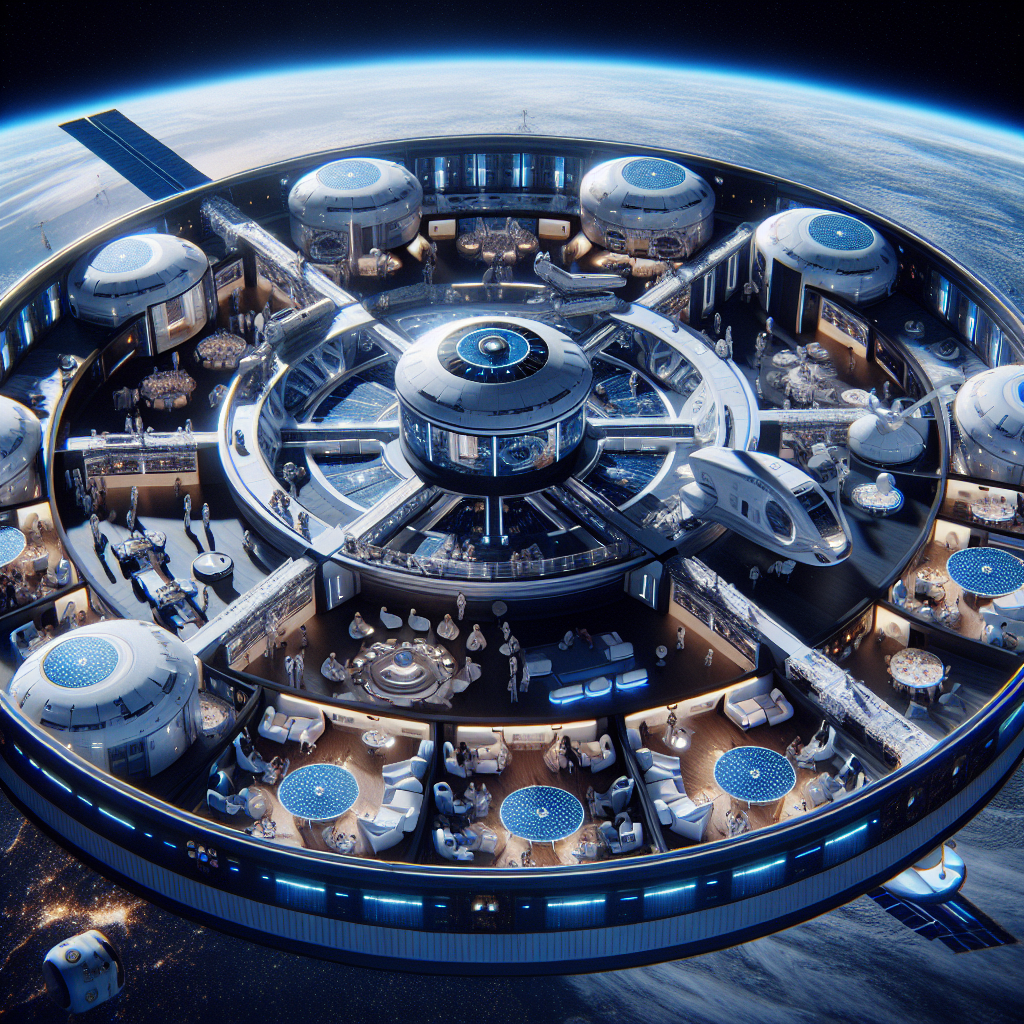
World’s First Space Hotel to Host 400 Guests

Voyager Station: The World’s First Space Hotel Set to Launch in 2027
The excitement surrounding space tourism is reaching new heights with the announcement of Voyager Station, the world’s first space hotel, slated to open in 2027. Developed by Orbital Assembly Corporation (OAC), this luxury resort will orbit Earth, offering guests an unforgettable experience complete with artificial gravity. Designed to accommodate 280 guests and 112 crew members, Voyager Station is poised to revolutionize how we think about travel beyond our planet.
As the commercial space tourism industry gains momentum, Voyager Station aims to make space travel as common as international vacations. By blending cutting-edge aerospace design with the allure of luxury stays, OAC is setting the stage for a new era of exploration and relaxation in low Earth orbit.
The Future of Space Tourism: Voyager Station
Commercial space tourism is becoming a reality, thanks to initiatives from prominent figures like Jeff Bezos (Blue Origin) and Richard Branson (Virgin Galactic). However, Voyager Station takes this concept further by offering extended luxury stays in space. Utilizing a rotating wheel design inspired by Wernher von Braun’s vision, this innovative hotel will generate artificial gravity through centrifugal force, providing guests with a comfortable and unique Earth-like experience.
Voyager Station will rotate approximately 1.5 times per minute, simulating varying levels of gravity, from lunar to potentially Earth-like conditions. This gravity feature is crucial for guest comfort and functionality, with elevator shafts connecting a central zero-gravity hub to outer habitation modules where artificial gravity takes effect.
Features and Layout of Voyager Station
Voyager Station will consist of 24 modules arranged in a circular wheel, covering approximately 125,000 square feet. Each module will serve a specific purpose, including accommodation, recreation, hospitality, and research. Anticipated facilities include:
- Restaurant & Bar: A full-service dining experience featuring space-friendly cuisine.
- Concert Hall: Designed for unique zero-gravity musical performances.
- Gym: Offering innovative fitness experiences tailored to low-gravity environments.
- Cinema: Showcasing both traditional films and immersive space-themed content.
- Observation Decks: Providing breathtaking panoramic views of Earth from orbit.
Guests will arrive at a central docking hub and transfer to their modules via pressurized shafts, ensuring a seamless transition into their extraordinary vacation.
Pricing, Accessibility, and Market Strategies
Currently, space travel is largely limited to the ultra-wealthy, with prices like Oliver Daemen’s $28 million suborbital flight with Blue Origin. However, OAC’s long-term vision is to position space vacations as competitively priced alternatives to high-end cruise packages.
Tim Alatorre, OAC’s vice president and chief architect, notes that while the hotel itself is relatively cost-efficient, the high cost of space travel remains a barrier. With advancements from companies like SpaceX expected to lower launch costs, the dream of orbital stays may soon become accessible to a broader audience.
Additionally, OAC is introducing real estate opportunities aboard Voyager Station, including leasing options for villas and commercial units, further mirroring luxury developments on Earth.
The Competitive Landscape of Space Hotels
While OAC is pioneering the world’s first space hotel, competition is heating up. Axiom Space is working with NASA to develop a commercial module on the International Space Station (ISS) that could evolve into an independent facility. Likewise, Sierra Space and Blue Origin are collaborating on Orbital Reef, a multi-use commercial space station.
Despite facing challenges in funding, logistics, and international regulations, Voyager Station remains unique as the only project specifically designed for tourism, focusing on leisure, hospitality, and entertainment. Prototypes such as the Gravity Ring and Pioneer stations are set to launch by 2025, allowing OAC to test systems and refine technologies before the full-scale hotel opens.
Alatorre is optimistic about the future, stating, “There’s nothing technologically standing in our way. It’s just a question of time and money, and we can overcome those.”
Join the Conversation
As Voyager Station prepares to redefine the boundaries of travel, we invite you to share your thoughts on the future of space tourism. Are you excited about the prospect of spending a vacation in orbit? Explore more about space tourism and its potential impact on our world by reading related articles.