Boeing 787 Pilots from LATAM Successfully Land at LAX with RAT Activated

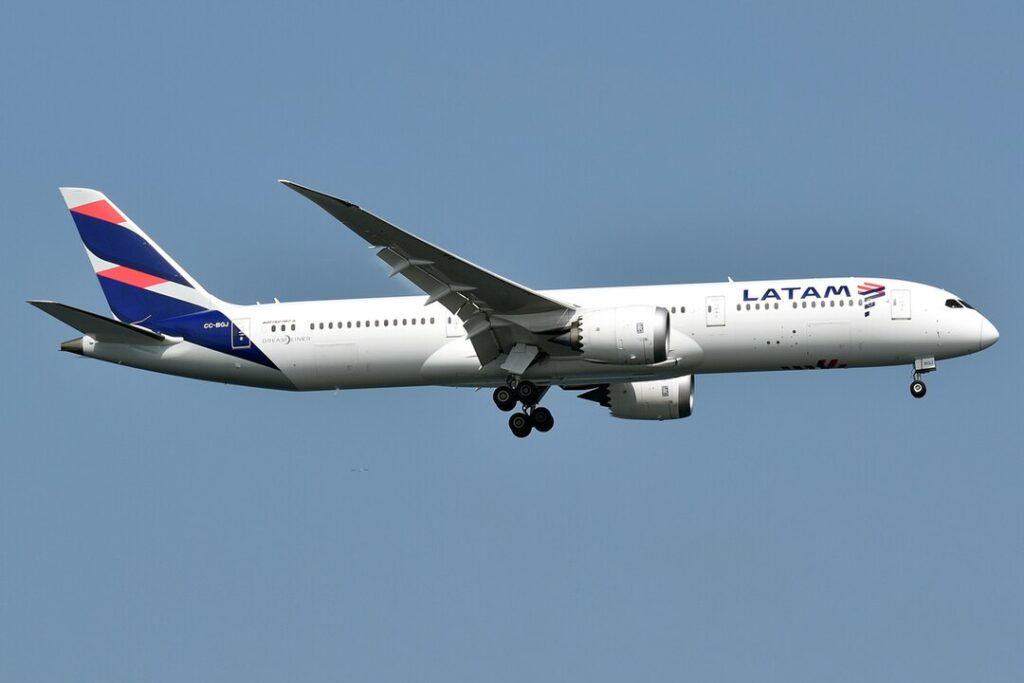
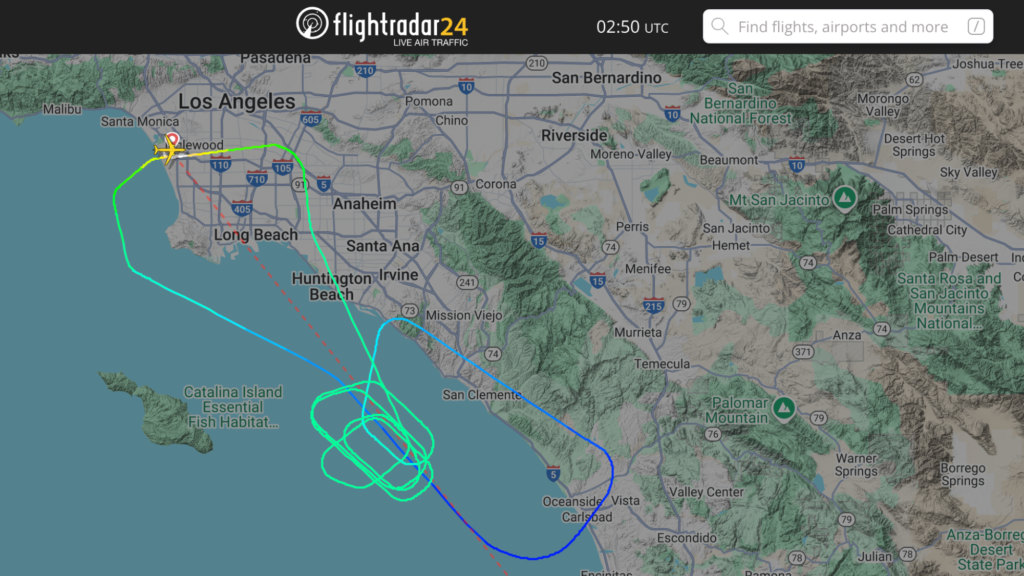
LOS ANGELES- A LATAM Airlines Boeing 787-8 Dreamliner executed an emergency landing at Los Angeles International Airport (LAX) after spending nearly an hour circling over the Pacific Ocean. The aircraft had its Ram Air Turbine (RAT) visibly deployed, indicating a serious power issue onboard.
The flight, initially destined for Santiago (SCL), successfully returned to Los Angeles using its own power. The deployment of the RAT suggests significant electrical or hydraulic difficulties occurred during the flight.
LATAM 787 Emergency Landing
The LATAM Airlines Boeing 787-8 Dreamliner faced a significant in-flight emergency while heading to Santiago, prompting it to divert back to Los Angeles (LAX). The aircraft circled above the Pacific for about an hour before successfully landing on Runway 25L, with its Ram Air Turbine (RAT) deployed, a scenario not commonly seen during commercial flights.
Video shared by Airline Videos showcased the RAT, a small retractable turbine located under the fuselage, prominently displayed near the landing gear.
This system’s deployment generally signals a major electrical or hydraulic failure, often due to engine shutdowns or serious power system anomalies. Despite the emergency, the aircraft managed to taxi to the gate on its own, indicating that some onboard systems were still functional.
Understanding the Ram Air Turbine (RAT)
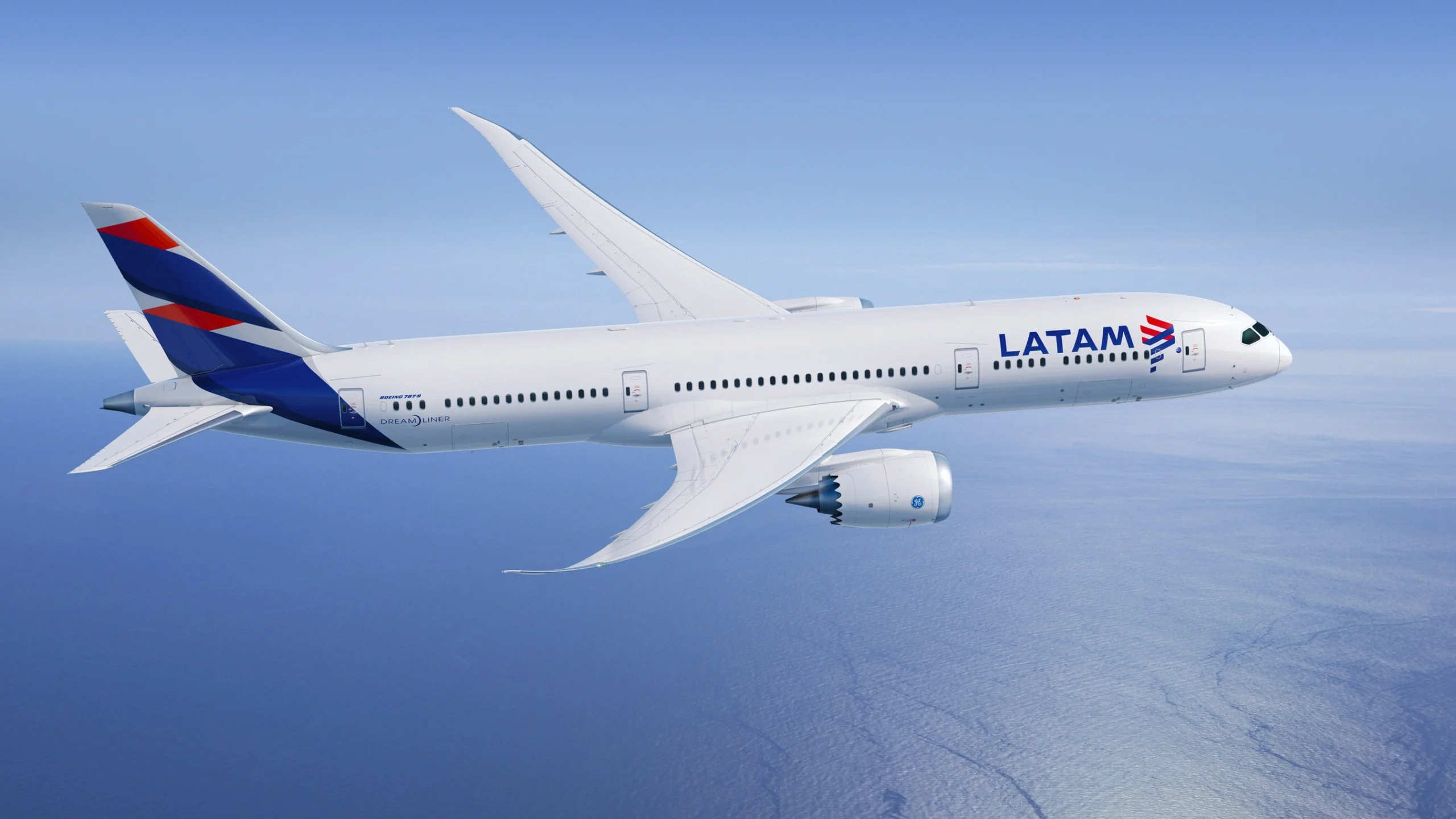
The Ram Air Turbine (RAT) serves as a critical safety mechanism designed to provide emergency electrical and hydraulic power in aircraft like the 787-8 Dreamliner. This turbine can be deployed manually by pilots or automatically in the event of engine failure or total power loss.
Once active, the RAT captures airflow during the flight, which spins a small turbine to supply energy for vital systems, including flight controls and navigation, allowing for safe emergency landings.
In addition to fuel cutoffs, various other issues such as electrical problems or software malfunctions can trigger the RAT’s deployment.
Flight Path Review
Data from Flightradar24 reveals that the LATAM flight took off from Los Angeles at 23:21 UTC and returned around 1:00 UTC, spending a considerable amount of time in a holding pattern offshore.
The Great Circle Distance between LAX and Santiago is measured at 8,963 km, highlighting the early interception of the flight.
This incident has resonated within aviation communities, prompting discussions and concerns across social media, as reported by various news outlets.
Boeing 787 Safety Concerns
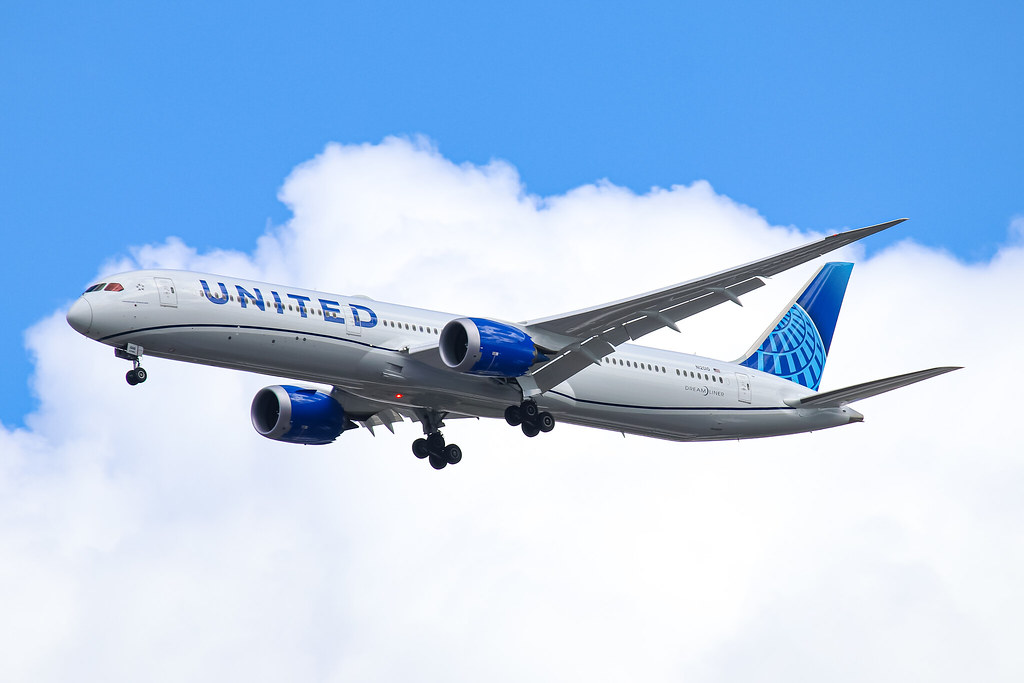
This occurrence is part of a broader trend of recent safety incidents involving Boeing 787 aircraft. For instance, a United Airlines 787-8 Dreamliner was forced to return to Washington Dulles Airport (IAD) on July 25, due to an engine failure shortly after takeoff.
Pilots had to issue a Mayday and entered a holding pattern before landing safely. These recurrent incidents highlight the paramount importance of backup systems, such as the RAT.
Have you ever encountered a similar aviation incident or what are your thoughts on the effectiveness of safety systems like the RAT?