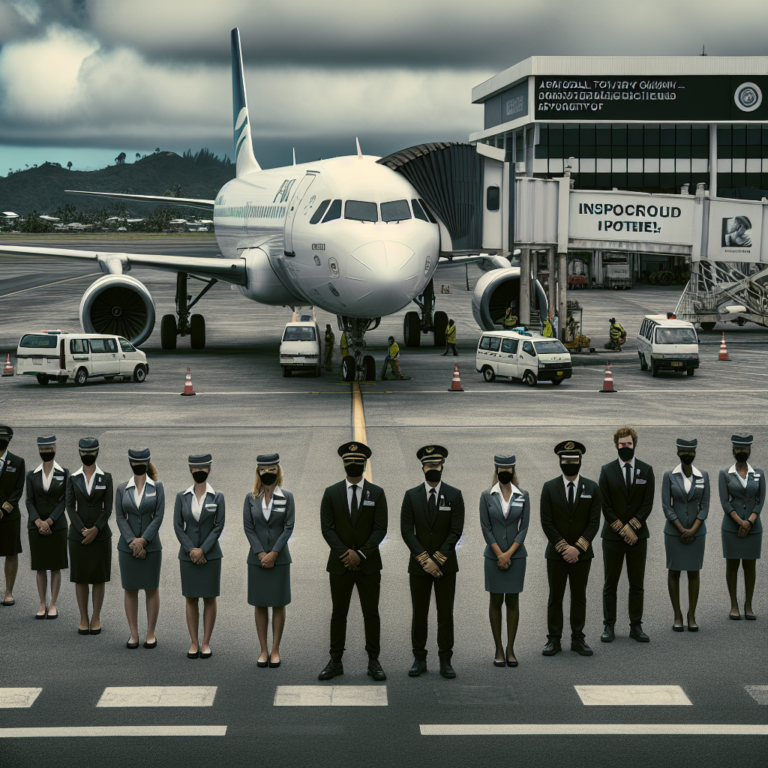
Leading Players in the Airline Industry: Major Airlines and Jet Manufacturers

Investigating the largest airlines and commercial aircraft manufacturers worldwide reveals the challenges in finding a consistent metric for comparison. This complexity arises from the diversity in operational structures—some airlines are publicly traded while others remain private, resulting in varying data availability.
When assessing airlines, one might consider factors like fleet size or destination numbers; however, these metrics do not encompass aircraft manufacturers. Market capitalization, or market cap, is widely regarded as a dependable way to gauge a company’s equity and size.
Harvard Business School defines market cap as one of the simplest measures of a company’s value. Essentially, it represents the total value of a company’s outstanding shares, reflecting how the market perceives the entity. It is determined by multiplying the total number of shares by the current share price.
However, using market cap has its limitations, especially since data is only available for publicly traded airlines and manufacturers. Therefore, assessing revenues can also serve as a helpful metric to identify the largest airlines and commercial aircraft manufacturers, regardless of their public or private status.
The Largest Airlines and Commercial Jet Manufacturers by Market Cap
According to data from a reliable market provider, there are currently 71 publicly traded airlines and 18 aircraft manufacturers, with only two focused on commercial jets.
Airbus
Market cap: $181.61 billion (as of September 2025)
Position: 1
Position among all companies: 86
Founded: 1970
Employees: 157,894
Headquarters: European Union
Products: Commercial, business, helicopters, defense, and space
Airbus has made its mark as one of the leading companies in the aviation sector over its 55-year history. Under the leadership of CEO Guillaume Faury, Airbus maintains a global presence with offices and assembly plants in countries including France, the United Kingdom, and the United States. The company aims to deliver around 820 commercial aircraft in 2025, with 420 jets already received this year.
Boeing
Market cap: $163.28 billion (as of September 2025)
Position: 2
Position among all companies: 109
Founded: 1916
Employees: 172,000
Headquarters: United States
Products: Commercial, business, helicopters, defense, and space
Once the leader in commercial aircraft manufacturing, Boeing has recently faced significant challenges. After experiencing reputational damage from several incidents, including the tragic 737 MAX crashes in 2018 and 2019, the company appointed a new CEO, Kelly Ortberg, to restore confidence. Despite these hurdles, Boeing remains a significant player in the aviation market.
Delta Air Lines
Market cap: $39.09 billion (as of September 2025)
Position: 3
Position among all companies: 604
Founded: 1925
Employees: 138,100
Headquarters: United States
Products: Commercial
Delta Air Lines is recognized as a premium carrier within the U.S. market and leads its competitors in revenue. Initially starting as a crop-dusting service in 1925, Delta has expanded significantly through acquisitions, including its merger with Northwest Airlines in 2008. With nearly 1,000 aircraft in its fleet, Delta is continually enhancing its operations.
United Airlines
Market cap: $34.50 billion (as of September 2025)
Position: 4
Position among all companies: 676
Founded: 1931
Employees: 111,300
Headquarters: United States
Products: Commercial
Based in Chicago, United Airlines has come a long way since filing for bankruptcy in 2002. The airline emerged as a leading carrier in 2012 after merging with Continental Airlines. With a fleet exceeding 1,000 aircraft, United is focused on further expansion, currently awaiting delivery of 673 additional planes.
Ryanair
Market cap: $31.09 billion (as of September 2025)
Position: 5
Position among all companies: 737
Founded: 1984
Employees: 26,000
Headquarters: Ireland
Products: Commercial
Ryanair’s transformation from a small airline operating one aircraft to the fifth largest in the world is remarkable. Known for its budget-friendly approach, Ryanair has faced both criticism and acclaim for its business model. Under CEO Michael O’Leary’s leadership, the airline remains a dominant force in Europe’s aviation market.
InterGlobe Aviation (IndiGo)
Market cap: $25.10 billion (as of September 2025)
Position: 6
Position among all companies: 898
Founded: 2005
Employees: 26,164
Headquarters: India
Products: Commercial, freighters
As India’s largest airline, IndiGo has positioned itself well in a rapidly growing aviation market. The airline’s passenger numbers have surged dramatically, from 30 million in 2019 to 113 million five years later. Going public in 2015, IndiGo’s fleet currently comprises over 400 aircraft, with numerous orders pending.
International Airlines Group (IAG)
Market cap: $25.10 billion (as of September 2025)
Position: 7
Position among all companies: 952
Founded: 2011
Employees: 52,762
Headquarters: Spain
Products: Commercial
Formed by merging British Airways and Iberia in 2011, IAG has seen several other airlines join its ranks, including Vueling and Aer Lingus. British Airways significantly contributes to its profits, boasting valuable flight slots across the UK. IAG operates more than 600 aircraft worldwide.
Air China
Market cap: $16.96 billion (as of September 2025)
Position: 8
Position among all companies: 1,234
Founded: 1988
Employees: 104,000
Headquarters: China
Products: Commercial, freighters
Established in 1988, Air China emerged from the government’s reorganization of the Civil Aviation Administration. Although controlled by the state, the airline went public in 2004. It now operates a diverse fleet exceeding 500 aircraft, with plans for additional acquisitions soon.
Southwest Airlines
Market cap: $16.62 billion (as of September 2025)
Position: 9
Position among all companies: 1,276
Founded: 1967
Employees: 72,242
Headquarters: United States
Products: Commercial
Southwest Airlines has encountered challenges over the past year, which have affected its financial performance. Recent changes in service policies have drawn public attention, as the airline adapts to market pressures and investor demands. With a fleet of almost 800 aircraft, Southwest is prepared for future growth.
Singapore Airlines
Market cap: $15.18 billion (as of September 2025)
Position: 10
Position among all companies: 1,276
Founded: 1947
Employees: 22,819
Headquarters: Singapore
Products: Commercial, freighters
Consistently recognized as one of the finest airlines globally, Singapore Airlines sets the bar for premium service. Notable for being the first to operate the Airbus A380, the airline has a diversified fleet and is continually expanding its operations.
The Largest Airlines and Commercial Aircraft Manufacturers by Revenue (2025)
Evaluating revenues provides an avenue for comparing both privately and publicly owned companies:
- Airbus – $74.21 billion
- Boeing – $66.51 billion
- Delta Air Lines – $61.64 billion
- United Airlines – $57.06 billion
- American Airlines – $54.21 billion
- Lufthansa Group – $40.50 billion
- IAG – $34.62 billion
- Emirates – $33 billion
- Air France-KLM – $33.93 billion
(data based on publicly available information)
What do you think about the impact of market trends on the future of these airlines?