Emirates Introduces Innovative Economy Class Seats: Key Challenges Ahead

DUBAI- Emirates (EK) is developing innovative Economy Class seats intended to enhance passenger comfort during ultra-long-haul flights from Dubai International Airport (DXB). The airline believes that this redesign could be a significant advancement for travelers facing journeys lasting up to 17 hours.
However, airline president Sir Tim Clark acknowledges that the project encounters hurdles due to existing cabin regulations. Still, Emirates is dedicated to improving the passenger experience while maintaining revenue efficiency.
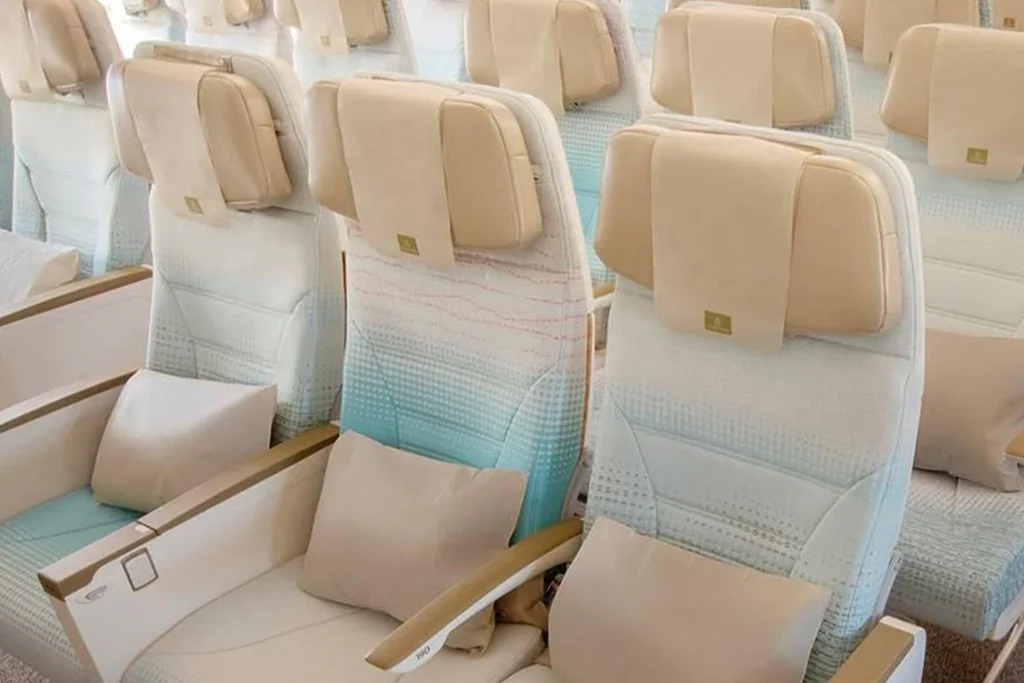
Emirates New Next-Gen Economy Seats
Sir Tim Clark has consistently pointed out that the aviation sector has not done enough to prioritize the comfort of Economy Class passengers.
Rather than simply increasing seat width or legroom—which could diminish capacity and revenue—Emirates is focusing on improving seat ergonomics and design to make long-haul travel more pleasant.
One of the suggested changes is raising seat height to enhance back and head support for passengers. However, manufacturers have raised concerns that taller seats might obstruct the cabin crew’s visibility, an existing safety requirement.
According to reports, Emirates has contested this logic, highlighting that many modern aircraft, like the Airbus A380, already employ various surveillance cameras.
In addition, Business and First Class areas have privacy walls and doors, yet regulators have permitted modifications, such as small openings for crew inspections.
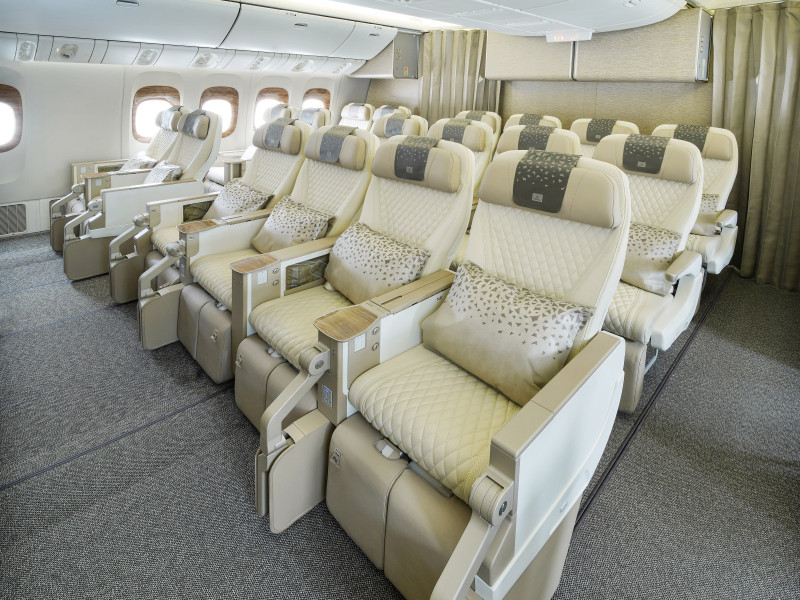
Design Challenges
A key challenge lies in achieving a balance between innovation and regulatory compliance. While taller seats could dramatically enhance comfort, they also clash with safety protocols.
Clark has expressed his frustrations, claiming he has been “pulling the remains of [his] hair out” during discussions with seat manufacturers.
He believes viable solutions are available, such as integrating cameras or redesigning seats, yet regulators remain cautious. This dynamic between technological advancements and strict oversight is hindering progress.
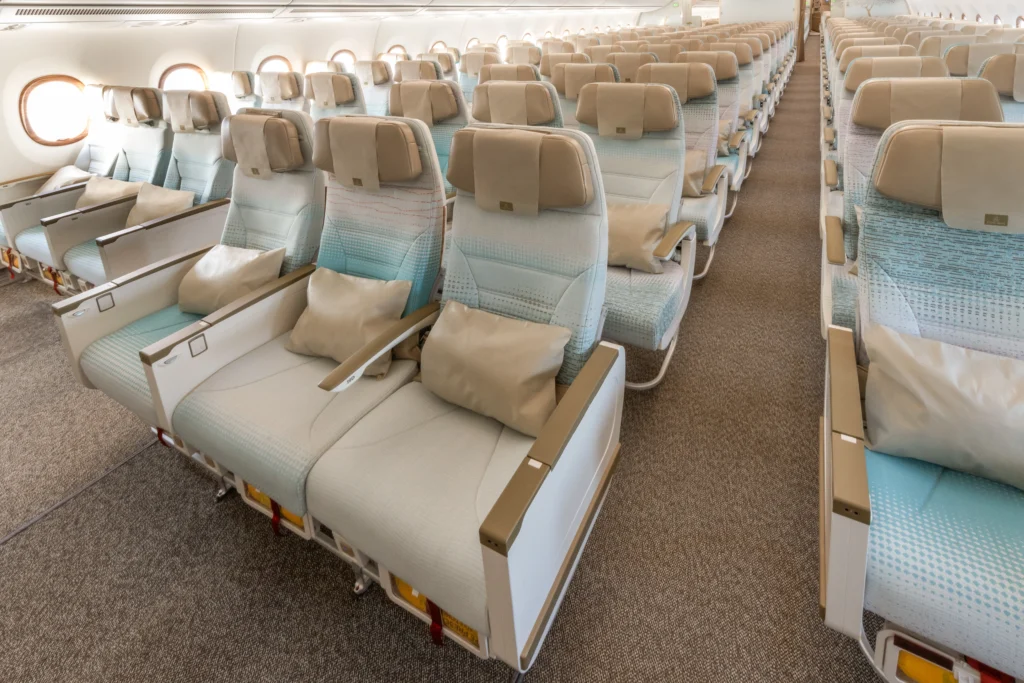
Industry Comparisons and Previous Attempts
Other airlines have been exploring similar projects, with varied outcomes. For instance, Etihad Airways (EY) from Abu Dhabi International Airport (AUH) tried to revamp Economy seating but ran into the same regulatory challenges currently affecting Emirates.
Consequently, Etihad’s design modifications were restricted to a fixed wing headrest instead of a complete seat overhaul.
These scenarios emphasize a larger challenge in the industry: the aspiration to enhance Economy comfort often confronts regulatory and financial limitations. Nonetheless, Emirates remains committed to pushing the envelope.
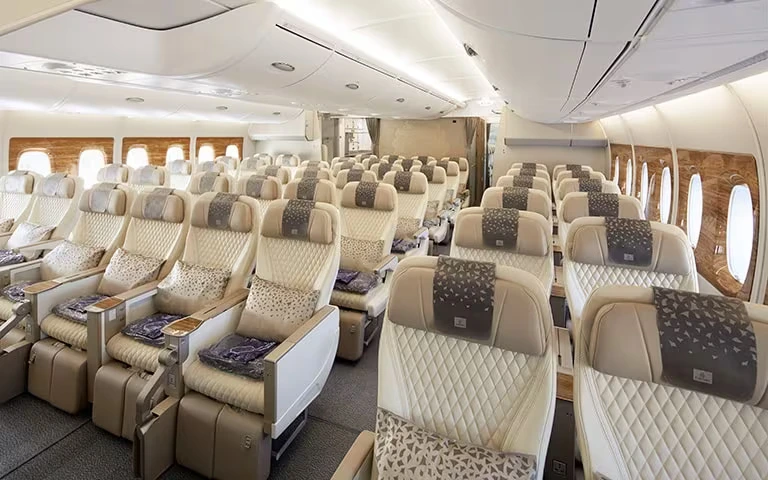
Future Outlook
While Emirates has not disclosed complete details about the new seat design, Clark emphasizes that enhancements will focus on how seats contour the body, provide leg and foot support, and reduce fatigue for passengers. If implemented successfully, this initiative may establish a new benchmark for comfort in long-haul travel.
For now, travelers must be patient as regulators, manufacturers, and airlines work through the intricacies of innovation within the aviation industry’s stringent guidelines.