Revolutionizing Air Travel in India: A New Airport Enhances Immigration

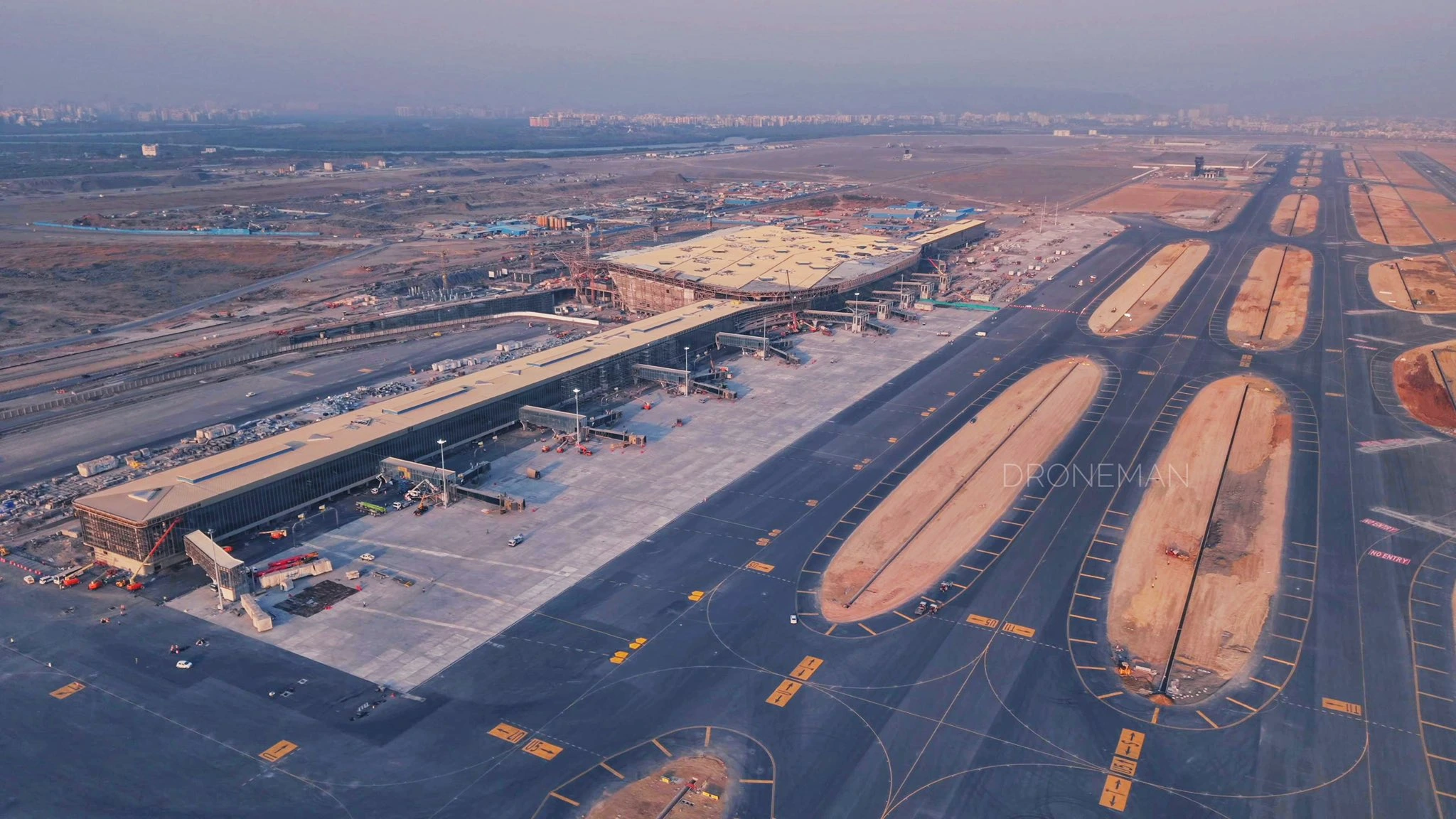
MUMBAI- The launch of the Navi Mumbai International Airport (NMIA) is poised to revolutionize India’s aviation landscape. With the inaugural commercial flight anticipated within the next month, the Modi administration is setting its sights on establishing NMIA as a key international hub.
Initially designed to accommodate 20 million passengers per year, this airport will alleviate congestion at the Chhatrapati Shivaji Maharaj International Airport (BOM) and help advance India’s ambitions of establishing self-sustaining aviation gateways.

Seamless Immigration at Navi Mumbai Airport
The vision for NMIA extends beyond mere congestion relief. By implementing a hub-and-spoke model that integrates various domestic routes, the government aspires to make Mumbai a primary departure point for international travel on Indian airlines.
Officials anticipate that NMIA will feature advanced immigration and security systems, enabling travelers from cities like Ahmedabad (AMD), Surat (STV), and Hyderabad (HYD) to clear immigration before reaching Mumbai.
This initiative aims to replicate the smooth transit experiences found in global hubs such as Dubai (DXB), Doha (DOH), and Singapore (SIN), making the transition from domestic to international flights hassle-free.
Travelers from southern and western India will enjoy the advantage of flying through NMIA with seamless connections to international destinations without enduring additional immigration procedures, reinforcing the “Atmanirbhar Bharat” (self-reliant India) initiative.
Similar advancements are in progress at Delhi’s Indira Gandhi International Airport (DEL), with the upcoming Noida International Airport (NIA) set to support primarily domestic operations.

Enhancing India’s Aviation Ecosystem
Since 2014, the government’s aviation policy has been geared towards empowering domestic airlines.
Through prioritization in bilateral air agreements, Indian carriers have seen their share of international air traffic surge from 30% a decade ago to 46% in 2024. Major airlines, such as Air India (AI), IndiGo (6E), and Akasa Air, are actively expanding their networks, aided by a more flexible leasing policy addressing the challenges posed by Boeing and Airbus.
Future of NMIA
The dual-airport strategy, integrating CSMIA and NMIA, is set to position Mumbai as a premier global aviation gateway. Plans for a third airport at Vadhawan are already in the works.
This combination of robust airport facilities and a growing fleet of Indian airlines is anticipated to shift India’s status from a feeder market for international hubs to a self-sufficient player on the global stage.
Officials emphasize that while the government will facilitate these endeavors, private airlines hold the key to leveraging this new infrastructure effectively.
With long-range aircraft like the IndiGo A321XLRs expected to join fleets next year, Indian airlines are gearing up to offer direct connections to Europe and the Far East—realizing the vision of a globally connected Indian aviation network.

Conclusion
The Navi Mumbai International Airport embodies more than just new infrastructure; it signifies a fundamental transformation in India’s global connectivity.
By simplifying immigration, enhancing connectivity, and empowering local airlines, the government is dedicated to creating a self-reliant aviation hub that rivals its global counterparts.
As NMIA prepares to commence operations, it is set to redefine Mumbai’s role as an international gateway and bolster India’s standing in global air travel.
What are your thoughts on the impact of NMIA on India’s aviation future?