Air China Flight Redirected to Shanghai Due to Cabin Battery Fire

BEIJING– An Air China flight heading from Hangzhou Xiaoshan International Airport (HGH) to Seoul’s Incheon International Airport (ICN) was redirected to Shanghai Pudong International Airport (PVG) on October 18 due to a lithium battery igniting within the cabin.
The airline confirmed that flight CA139 landed in Shanghai without incident. Fortunately, no passengers or crew were harmed, as stated by Air China on Weibo.
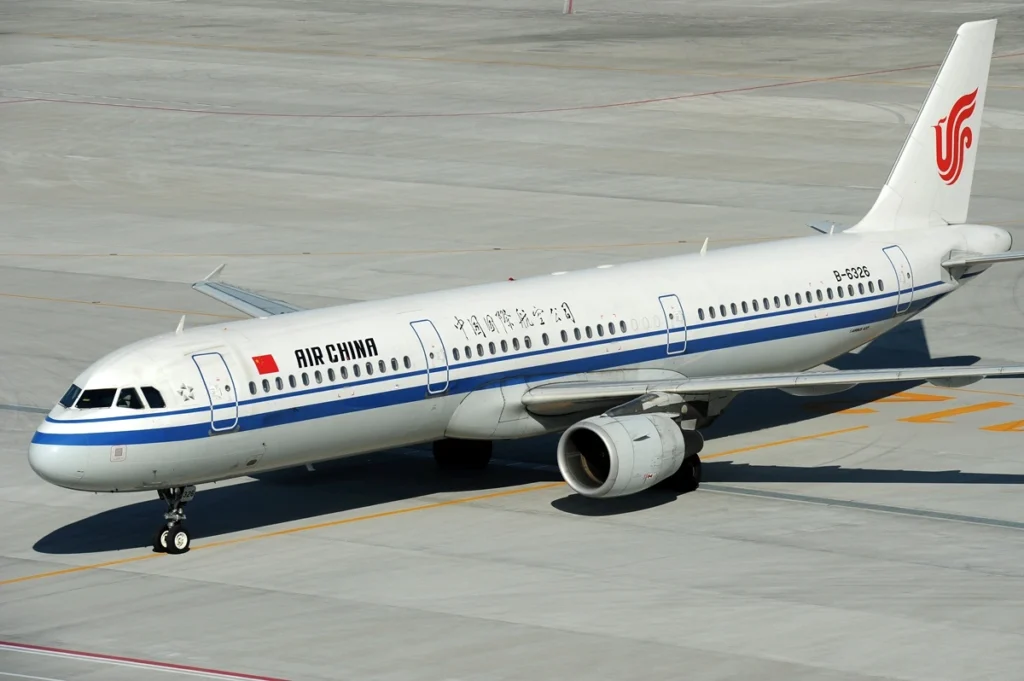
Air China Battery Fire in Cabin
Air China reported that a lithium battery from a passenger’s luggage “spontaneously ignited” in the overhead compartment during the flight. The crew responded quickly, utilizing onboard safety equipment to put out the flames and prevent further damage.
A local media outlet, Jimu News, shared images of flames and smoke billowing from an overhead bin, while passengers helped the crew manage the emergency.
The aircraft left Hangzhou at 9:47 a.m. local time and safely landed in Shanghai around 11 a.m.
Airlines have established rigorous protocols for managing lithium battery fires. Safety gear such as fire containment bags and heat-resistant gloves are standard on many flights, including those operated by U.S. and Asian carriers. When a device ignites, it is isolated, placed in a containment bag, and stored in a secure metal cart until landing.
Experts emphasize that managing battery fires is generally more feasible in the passenger cabin than in the cargo hold.
This concern has fueled international regulations that prohibit storing “smart” suitcases and electronic devices with non-removable batteries in checked baggage.
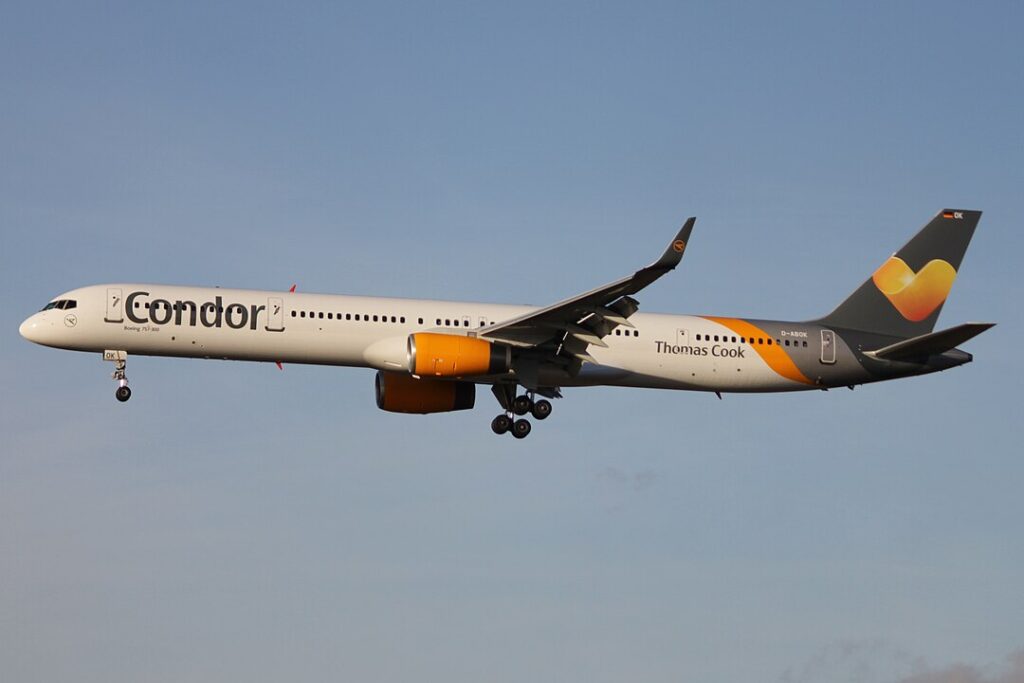
Similar Incident
This incident is not the first of its kind. In August, a Condor Airlines Boeing 757 traveling from Corfu (CFU), Greece, to Düsseldorf (DUS), Germany, was forced to divert to Brindisi, Italy (BDS) after an engine caught fire shortly after takeoff. The plane, carrying 273 passengers, landed safely, with no injuries reported.
This situation highlights how quickly fire emergencies can escalate mid-flight and underscores the vital importance of crew training and emergency protocols in averting disasters.
Safety and Regulation Updates
Aviation authorities worldwide continue to review lithium battery incidents, striving for improved packaging standards and clearer guidelines for passengers.
The International Civil Aviation Organization (ICAO) and the International Air Transport Association (IATA) stress that portable chargers and power banks must remain in the cabin and never be checked as baggage.
As travel resumes and the use of personal electronic devices rises, airlines are increasing their focus on battery safety to prevent future in-flight incidents.
Have you ever experienced an in-flight emergency? What precautions do you think should be taken to ensure passenger safety?