
Delta Air Lines Takes Legal Action Against Marriott Over Trademark Issue

ATLANTA— Delta Air Lines has initiated legal proceedings against Marriott International, claiming that the hotel chain’s Delta Hotels brand violates its trademark rights. The trial commenced this week in the U.S. District Court for the Northern District of Georgia.
Marriott, which acquired Delta Hotels in 2015, continues to manage the brand on a global scale, including in regions already serviced by Delta Air Lines. The airline asserts that this overlap causes confusion for travelers, particularly in markets like Toronto (YYZ) and Vancouver (YVR).


Delta’s Legal Challenge Against Marriott
The case, Delta Air Lines, Inc. v. Marriott International, Inc. (N.D. Ga. No. 1:20-cv-01125), examines whether Marriott’s use of the name “Delta Hotels” infringes upon and dilutes Delta’s registered DELTA trademarks. Delta claims that Marriott’s branding misleads consumers and exploits its established reputation.
During the proceedings, Delta presented survey data and customer feedback illustrating instances of confusion between the two brands.
Marriott’s defense is based on a 2015 agreement that permitted limited use of the Delta name in Hong Kong and China, prior to the acquisition. However, the court previously determined that this agreement does not apply beyond these specific territories.
Delta argues that Marriott has extended the Delta Hotels brand across the U.S. and Canada without adequate distinction, essentially “hijacking” its brand identity, according to reports.
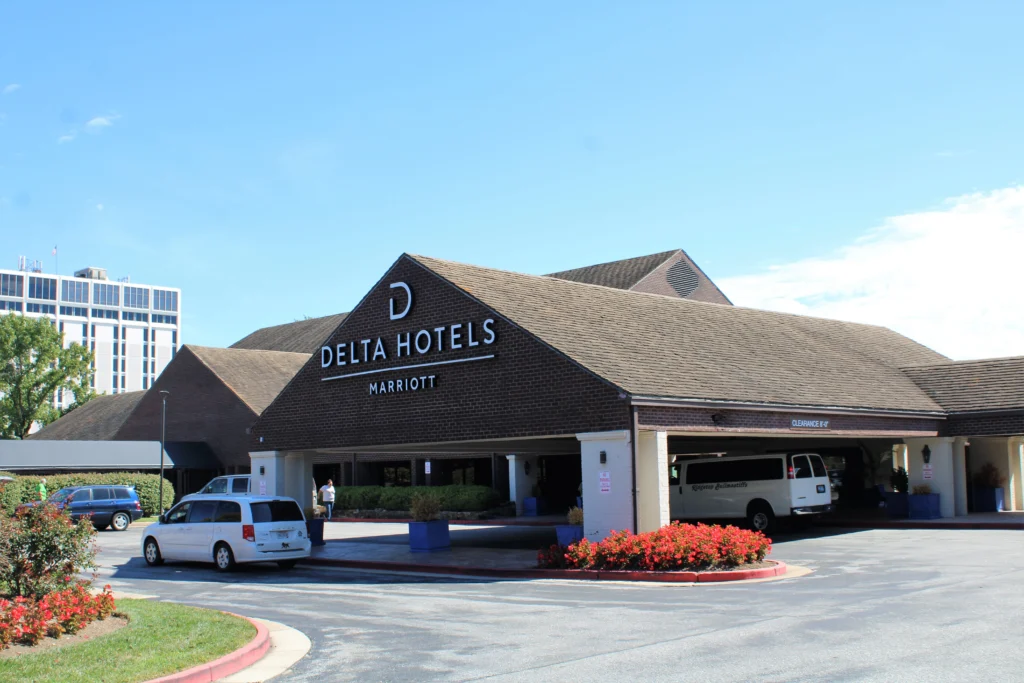
Historical Context and Brand Impact
Delta Hotels has a legacy that dates back over 50 years in Canada and became part of the Marriott portfolio to attract cost-conscious hotel owners.
The Delta brand’s appeal lies in its lower requirements for costly renovations compared to other Marriott hotel categories, as reported by the Wall Street Journal.
Despite this history, the expansion of the Delta Hotels name into U.S. markets has raised questions. While the term “Delta” was inspired by the Mississippi Delta for the airline, its generic nature complicates the enforcement of trademark rights.
Although numerous unrelated businesses utilize the name, Delta Air Lines maintains that shared customer bases and overlapping marketing channels contribute to consumer confusion.
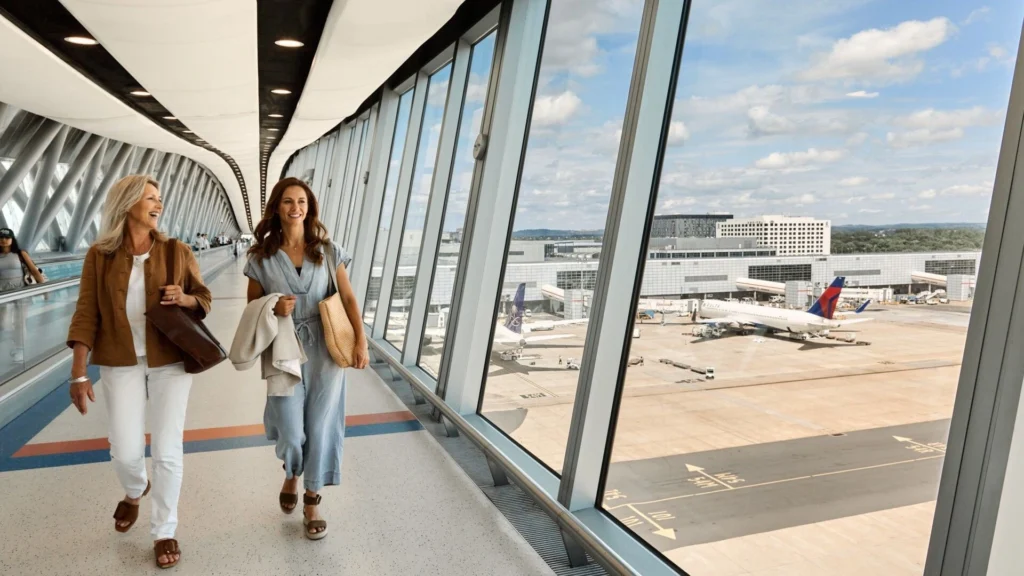
Possible Consequences of the Trial
If the court sides with Delta Air Lines, Marriott could face restrictions on its use of the “Delta” name for hotel services in the U.S. This might necessitate a greater emphasis on “by Marriott” branding, along with disclaimers and changes to visual identity guidelines.
Conversely, if the ruling favors Marriott, it would affirm that Delta Air Lines and Delta Hotels can coexist without misleading consumers. Given Delta Hotels’ Canadian heritage and Marriott’s existing “Delta Hotels by Marriott” branding, the court may see this as a sufficient distinction.
This case highlights the challenges that legacy names face in an increasingly interconnected travel industry where airlines, hotels, and loyalty programs frequently overlap.
What do you think the outcome of this case could mean for both brands involved?