Unexpected Countries Where Planes Can’t Land: A Surprising List

Ever heard the term “catching a flight” to your next adventure? For a unique set of countries, that phrase doesn’t quite hit the mark—because they lack runways!
In a world where airports are as ubiquitous as corner cafes, these few nations have opted out of traditional aviation, embracing alternative methods to welcome visitors willing to venture a bit further.
These six countries remind us that sometimes the most rewarding destinations require a little more effort to reach. ❤️

1. Andorra
Nestled in the Pyrenees between Spain and France, Andorra is the largest country without an airport. This small principality, covering just 468 square kilometers, is renowned for breathtaking mountain views, excellent ski resorts, and duty-free shopping, but it has no commercial runways.
The rugged landscape complicates airport development, although Andorra does have three private heliports, including one for medical emergencies. Most visitors fly to nearby airports in Spain, primarily relishing a scenic drive to the country.
The closest is the aptly named Andorra-La Seu d’Urgell Airport, located a mere 12 kilometers away, making the road trip a delightful part of the experience.

2. Liechtenstein
Sandwiched between Switzerland and Austria, Liechtenstein spans just 160 square kilometers of stunning Alpine scenery. Despite its wealth and advanced infrastructure, it operates without airports, though it boasts a heliport in Balzers for a more glamorous entry.
Most travelers fly into Zürich Airport in Switzerland, then take a train to nearby towns like Buchs or Sargans before hopping on a postal bus into the country. Other options include St. Gallen-Altenrhein Airport and Friedrichshafen Airport in Germany, albeit with limited flight schedules.
This tiny nation is so compact that you can walk its entire length in a matter of hours!

3. Monaco
Despite its renowned Formula 1 culture, Monaco has no airports. Arriving by plane would feel too mundane for a nation that thrives on speed and luxury!
This tiny principality, covering just 2.02 square kilometers of prime coastal land, has no space for runways amidst its bustling casinos and high-end residences.
However, travelers can land at the heliport located in the Fontvieille district, allowing for a stylish seven-minute helicopter ride from Nice Airport.
Most visitors land at Nice Côte d’Azur Airport, just 30 kilometers away, and choose between helicopter services, car rides, or a scenic coastal train trip.

4. San Marino
San Marino, claimed to be the world’s oldest sovereign state since 301 CE, is nestled within Italy. This ancient republic, sitting on Mount Titano, has no airport, yet it maintains a heliport in Borgo Maggiore for special occasions.
A small airfield exists called Torraccia, featuring a grass runway but is primarily used for private pilots and emergencies. Regular visitors often fly into Italy’s Federico Fellini International Airport in Rimini, just 16 kilometers away.
San Marino’s independence since the dawn of time means that how guests arrive at its medieval gates reflects its deep-rooted identity.

5. Vatican City
The smallest sovereign state in the world, Vatican City measures a mere 0.44 square kilometers, making an airport entirely unfeasible. When your entire nation fits within other airports, traditional aviation becomes unnecessary.
Nevertheless, the Vatican does have a heliport utilized specially for visiting dignitaries. This small landing area is used for official arrivals, though Pope Francis often favors simpler modes of transport.
Travelers flock to Vatican City and arrive through Rome’s airports, including Ciampino-G.B. Pastine and Leonardo da Vinci-Fiumicino, before making their way to St. Peter’s Square.
Given its compact size, you can walk across the country in about 20 minutes, so the lack of flights is hardly a hassle.

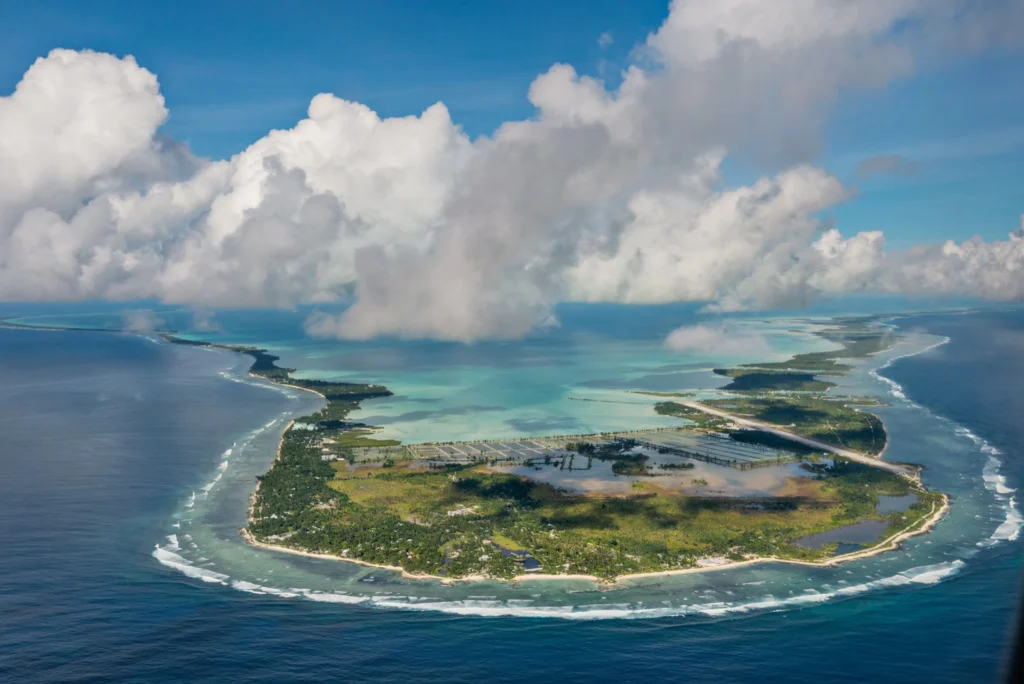
6. Kiribati
While the Republic of Kiribati has some air access—specifically Bonriki International Airport serving South Tarawa—many outer islands lack any airstrips, rendering it largely unreachable by air.
Most of Kiribati’s 33 atolls and reef islands are best accessed via boat. Situated across a vast ocean expanse of 3.5 million square kilometers, this country presents a unique interpretation of accessibility.
Local ferries, cargo boats, and private vessels form the primary transport network in this diverse archipelago.
The Art of Arrival Without Airstrips
These six countries offer an intriguing contrast to our aviation-centric travel culture. While the absence of airports might seem limiting, each nation has adapted uniquely, staying connected while preserving their individuality.
For travelers used to the efficiency of modern airports, visiting these nations offers a refreshing alternative. Perhaps there’s something remarkable about arriving without the usual hassles of baggage claims and security lines—just a gradual journey from one culture to another.
Next time you’re selecting a destination, consider exploring these airport-free realms. Who needs to “fly directly” when you can enjoy scenic routes and stories that elevate your travel experience?