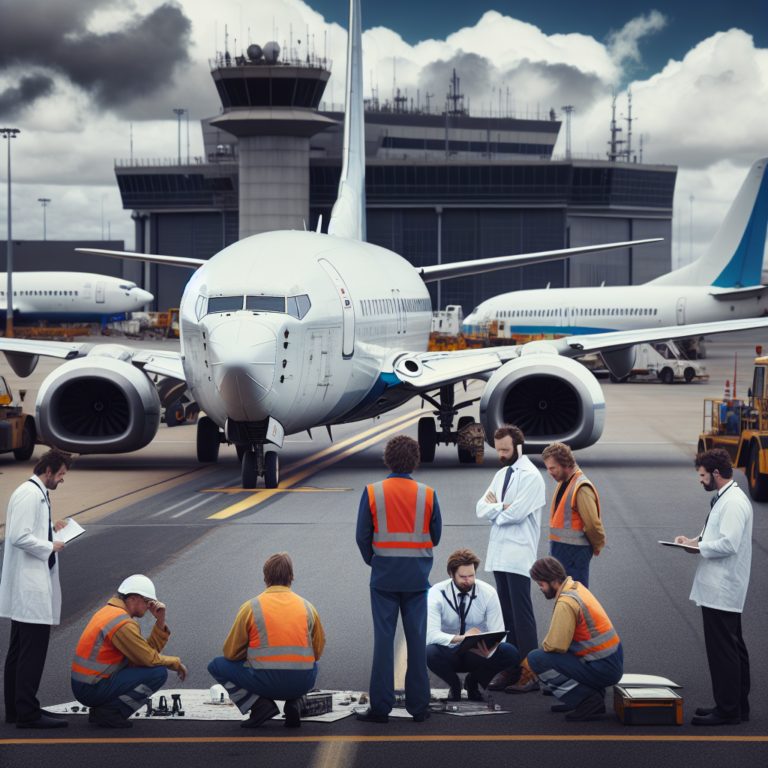
Smoke Odor Prompts Emergency Evacuation of American Airlines Flight in Philadelphia

PHILADELPHIA- An American Airlines flight scheduled for takeoff from Philadelphia International Airport (PHL) was evacuated on Wednesday, November 26, 2025, after passengers detected a smell of smoke.
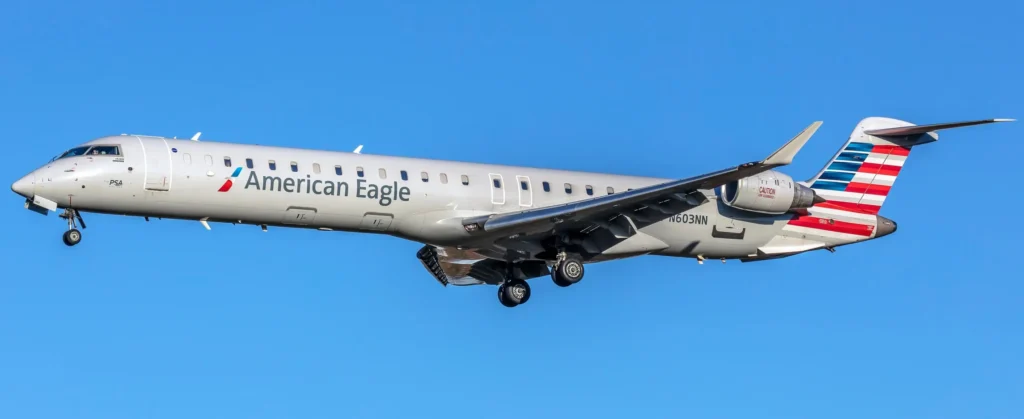
The plane was geared up to depart for Savannah Hilton Head International Airport (SAV) under the American Eagle label when a mechanical issue led to an immediate halt, necessitating the evacuation of the passengers.
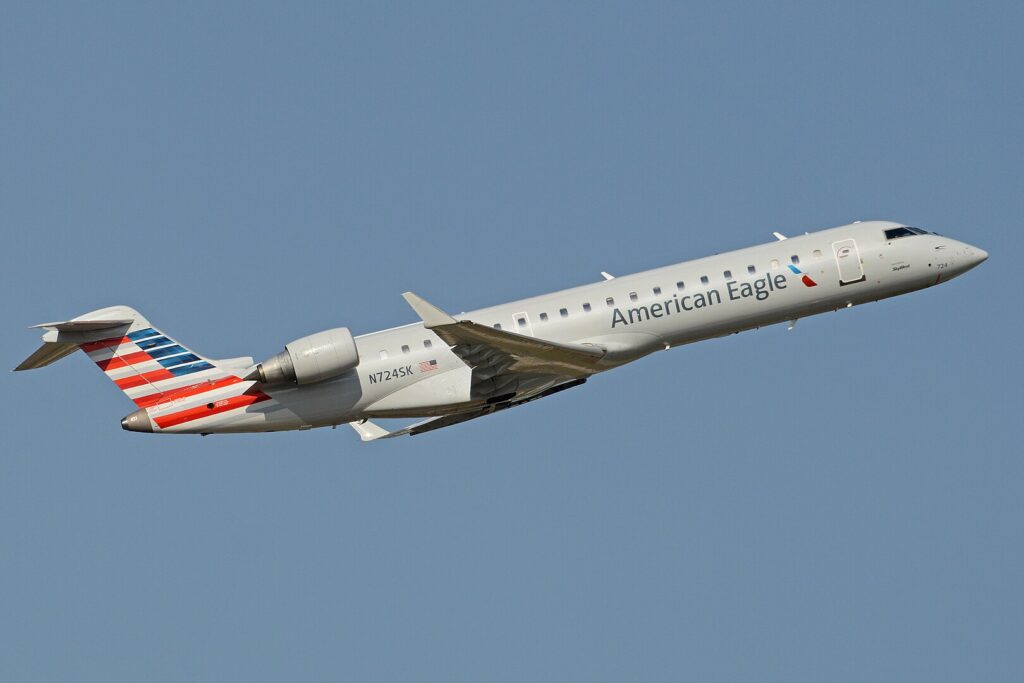
American Airlines Flight Evacuated at PHL
The flight involved was American Eagle 5671, operated by PSA Airlines. Around 10 p.m., ground personnel halted the departure after passengers reported a smoke-like odor in the cabin. Thankfully, all travelers and crew exited without incident, and maintenance teams took the aircraft offline for inspection.
Stranded passengers were sent back to the terminal for rebooking, causing delays for those eager to reach their holiday destinations.
Many guests expressed their worries about the unexpected disruption and the logistical challenges of last-minute travel.
American Airlines acknowledged the mechanical issue and confirmed that proper safety protocols were enacted during the evacuation and examination of the aircraft. They issued an apology for the inconvenience, focusing on getting customers back on track.
This flight operated using a Bombardier CRJ-900, registered as N603NN. The aircraft, nearly 6.6 years old, is powered by CF34-8C5 turbofan engines.
Passenger Impact and Response
Travelers reported long waits for alternate flights and unclear timelines on reaching Savannah. Some passengers found themselves in Philadelphia well into the night as airline staff searched for available seats on later flights.
American Airlines did not specify whether every passenger would be rebooked on a same-day service, citing ongoing operational adjustments.
The airline reassured that customer safety was the top priority and indicated the aircraft would not return to service until further inspections were completed.
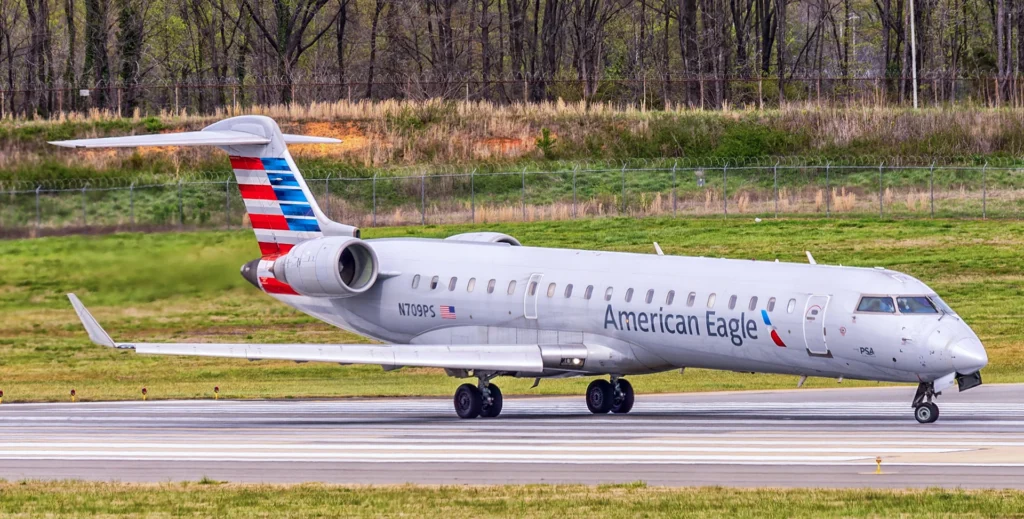
The evacuation was initiated due to a mechanical concern detected before takeoff. Maintenance crews were dispatched to investigate the source of the odor. Although no fire was reported, the aircraft was removed from service as a precautionary measure.
The airline expressed gratitude for the professionalism of its crew during the event and acknowledged the operational disruption caused.
Similar Incident
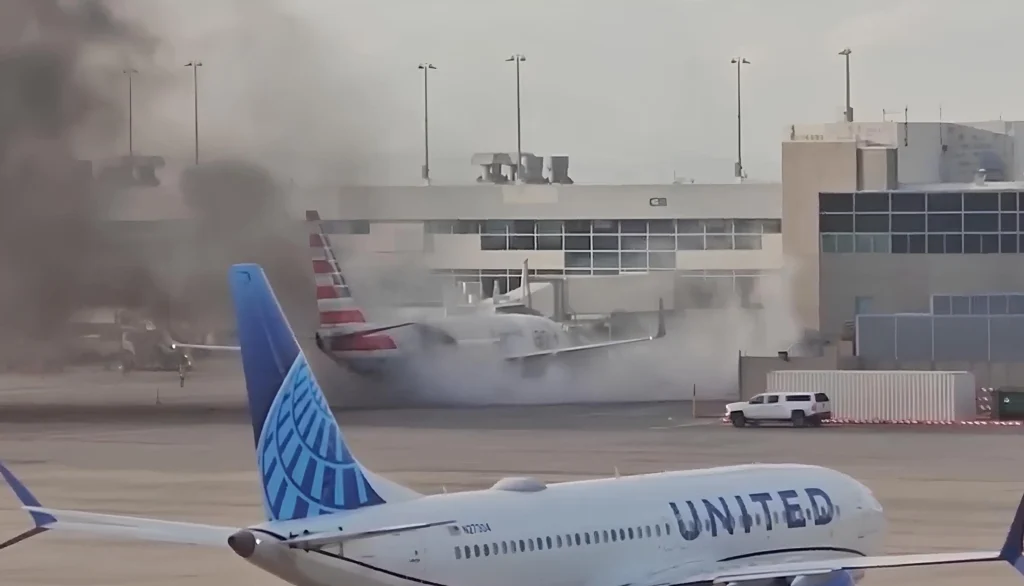
On March 13, 2025, another American Airlines flight was evacuated onto the wing at Denver International Airport (DEN) after an engine fire erupted.
The aircraft diverted from its planned route and landed safely, but the fire that developed during taxiing led to an urgent evacuation.
Emergency Response After Engine Fire
American Airlines Flight AA1006, traveling from Colorado Springs (COS) to Dallas Fort Worth (DFW), made an emergency landing in Denver after vibrations were reported. The Boeing 737 landed around 5:15 p.m. and taxied toward gate C38 when flames burst from one engine.
Thick smoke enveloped the aircraft as the crew issued evacuation orders. The Denver Fire Department confirmed twelve passengers sustained minor injuries and were transported to nearby hospitals. Eyewitnesses described the scene vividly, with passengers evacuating onto the wing amidst heavy smoke.
American Airlines praised the swift actions of its crew and airport personnel, ensuring all passengers were evacuated promptly and safely. The Federal Aviation Administration (FAA) has started an investigation into the incident.
Eyewitness Accounts and Onboard Reactions
Social media captured flames and smoke surrounding the aircraft as passengers rushed to safety. Kristal Leonard, waiting for a flight, reported seeing flames and fearing for those aboard.
Passenger Gabrielle Hibbitts recounted a burning plastic smell that filled the cabin moments before the evacuation, noting the surreal nature of the emergency and expressing relief it happened on the ground.
American Airlines confirmed that luggage was taken off the aircraft, and a replacement plane was dispatched. The rescheduled flight departed late at night for Dallas-Fort Worth.
Investigation Focus and Safety Context
Former NTSB chairman Robert Sumwalt noted that the effective outcome is a testament to the excellent coordination among the crew, airport rescue personnel, and air traffic control. Investigators will look into the origin of the fire and why smoke found its way into the cabin.
This incident adds to the growing number of aviation emergencies this year, which include crashes in Alaska and other urgent situations across the globe. Have you ever experienced an incident while flying? Share your thoughts below!