Cathay Pacific A350 Emergency Landing Leads to Grounding in Hong Kong

HONG KONG- Cathay Pacific (CX) has temporarily grounded one of its Airbus A350-1000 aircraft following a tail strike incident during a missed approach at Hong Kong International Airport (HKG). The flight, arriving from Ho Chi Minh City (SGN), initiated a go-around after an unstable landing attempt but managed a safe landing on its second try, with no injuries reported.
This specific Airbus has been grounded for four days while undergoing engineering inspections and repairs prior to being cleared for commercial flights again. This incident has sparked a review of operational protocols, including enhanced tail-strike prevention technology and pilot training procedures.
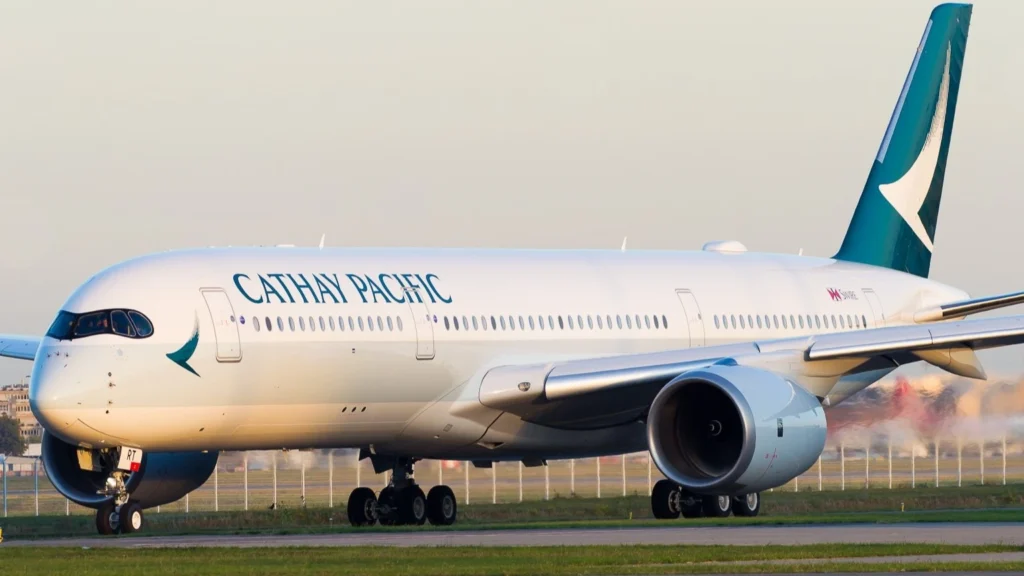
Overview of the Cathay Pacific A350 Tail Strike
A tail strike occurs when the rear underside of an aircraft touches the runway, typically due to an excessive upward pitch during takeoff or landing.
In this situation, the Airbus A350-1000 was approaching Runway 07C at Hong Kong International Airport when it began to drift left in the approach phase.
The flight crew decided to execute a go-around to stabilize the situation, and the impact occurred during this maneuver rather than upon touchdown.
After the tail strike, the aircraft successfully climbed to 6,000 feet before making a second approach to land.
Data from FlightRadar24 indicates that the landing was completed safely, albeit 34 minutes behind the scheduled time, just before midnight local time.
This A350, which is only four years old, has not conducted any commercial flights since the incident.
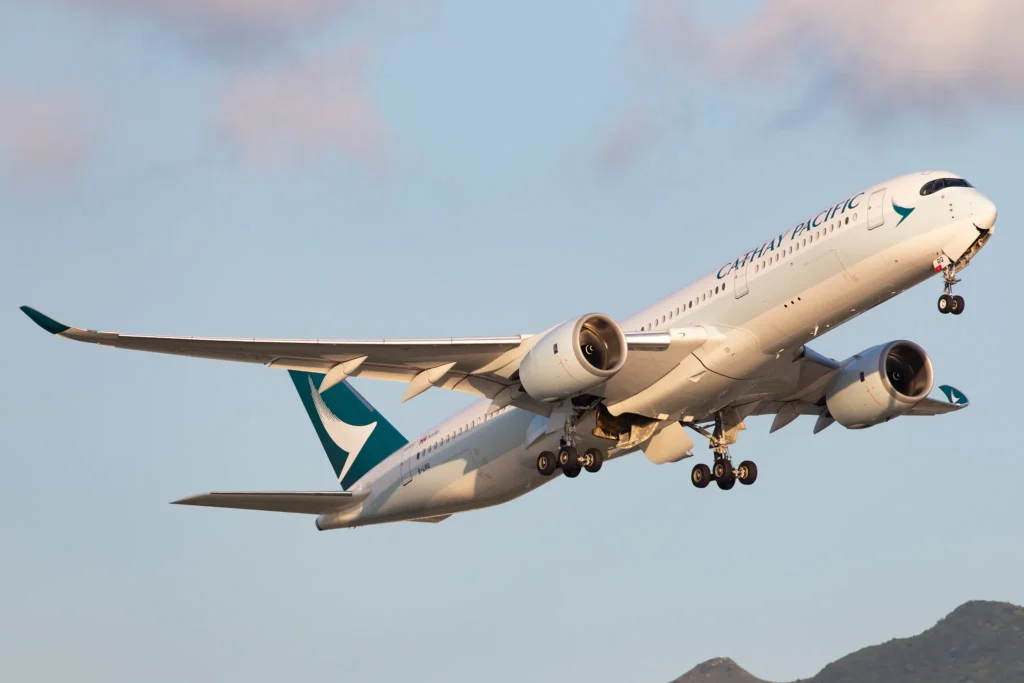
Preventative Measures Against Tail Strikes
Data shows that tail strikes are more frequently reported during landings, with about 65% occurring at this phase compared to 25% during takeoff.
To reduce the chances of these incidents, Airbus has implemented pitch-limit indicators on its Primary Flight Display below 400 feet and provides audible “PITCH PITCH” warnings if pitch thresholds are exceeded.
Boeing has incorporated a Tail-Strike Protection system in its 777-300ER model since 2003, allowing automatic elevator adjustments when the aircraft detects excessive rotation rates during takeoff.
Executing go-arounds requires precise handling, as pilots leverage TOGA thrust and pitch controls simultaneously.
The coordination between autopilot and autothrust systems allows for an acceleration necessary for a safe climb; however, managing the pitch-up moment is crucial to avoid over-rotation and potential structural issues.
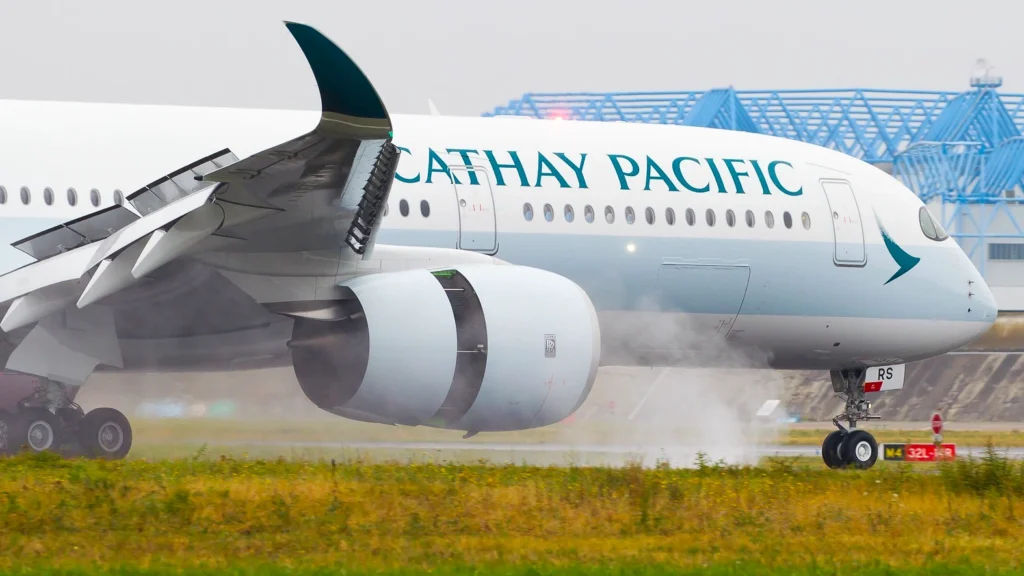
Pilot Training for Abnormal Scenarios
Commercial pilots participate in simulator evaluations biannually to practice manual handling and responses to unusual situations.
These simulated sessions cover critical scenarios such as engine failures, rejected takeoffs, and unstable approaches, thereby reinforcing skills beyond automated flight controls.
During the certification of aircraft, manufacturers conduct controlled tail-strike tests using protective tail-skid apparatus to establish the Minimum Unstick Speed (Vmu).
Vmu is defined as the lowest speed at which an aircraft can take off safely at maximum pitch-up, serving as a vital reference for flight performance.
What do you think are the most effective strategies for preventing tail strikes in aviation? Share your thoughts!