British Airways Explores Premium Perk Changes for Sustainability

LONDON- British Airways (BA) is reaching out to its loyalty members to gauge interest in onboard and pre-flight services that passengers might willingly forego in the name of sustainability.
This inquiry particularly targets Club World and Club Europe travelers departing mostly from London Heathrow (LHR), where expectations for premium services and brand differentiation are notably high.
The survey aims to assess which elements customers would be willing to opt out of without adversely impacting their overall travel experience.
It illustrates the airline’s commitment to reducing waste, minimizing fuel weight, and lowering operational costs while still upholding its promise of premium service.
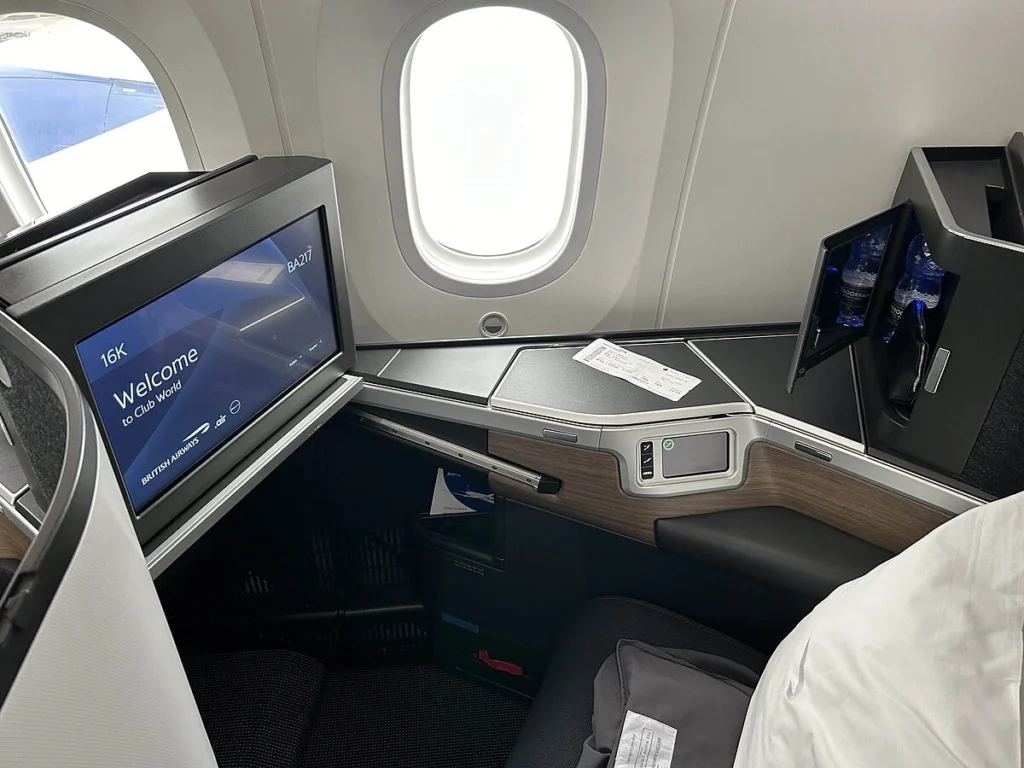
British Airways Rethinks Premium Perks
This survey includes various aspects of the travel experience that could potentially be made optional instead of being automatically provided.
Options under consideration include skipping in-flight meals, reducing the number of checked bags, staying within a lower luggage allowance, rejecting amenity kits or sleepwear, bringing a refillable water bottle, and choosing meals ahead of time. Each suggestion is designed to minimize waste and onboard weight.
As noted by industry experts, the proactive nature of this outreach is quite unique. Generally, airlines tend to implement service reductions first and later cite consumer demand for the changes.
BA’s meal opt-out proposal mirrors an approach used by Virgin Atlantic, which enables travelers to reject meals on overnight flights. This strategy is based on evident weight management benefits and does not need extensive survey validation to demonstrate value.
The previous option to pre-order meals, which existed before the pandemic, has yet to be restored, perhaps partially due to higher-priced options that encourage more lucrative selections.
Nevertheless, this plan benefits both the airline and travelers by offering them more choices while simultaneously addressing food waste issues.
The survey’s questions about baggage allowances hint at potential adjustments or incentives for travelers who pack lighter.
While it may seem several passengers intentionally overpack, many frequent flyers are already inclined to travel with minimal baggage for convenience.
Recently suggested was the reusable water bottle option—British Airways previously eliminated complimentary bottled water on select routes, only to bring it back following negative feedback. The acceptance of reusable bottles may hinge on explicit customer preferences.
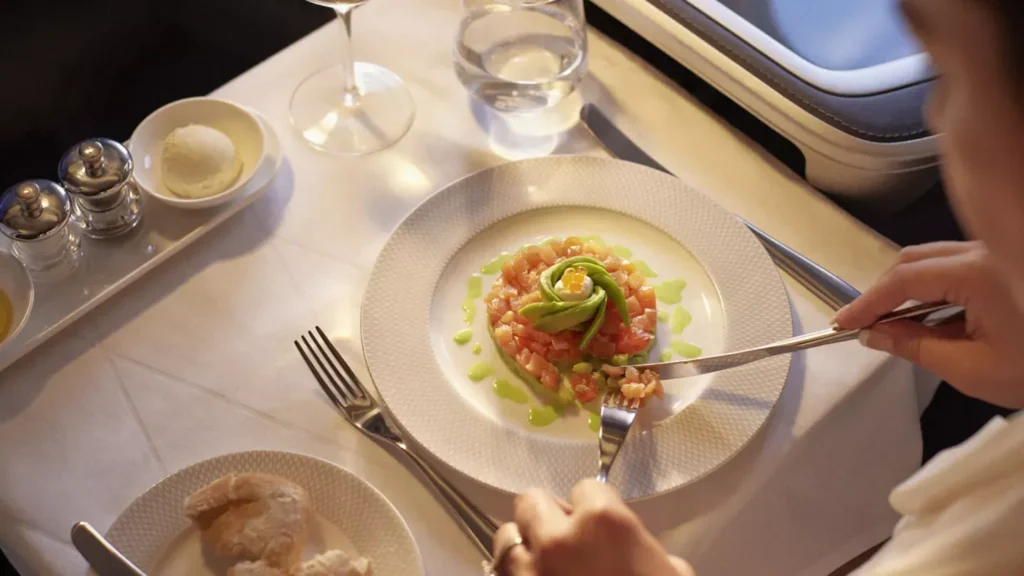
Considering Meal Opt-Outs Before Travel
Passengers may also have the option to refuse sleepwear and amenity kits. British Airways is aware that nearly half of all business travelers opt out of sleepwear, raising questions about how pre-flight opt-out options could improve provisioning.
A more effective strategy might involve collecting size preferences in advance to manage excess inventory better.
Sizing inconsistencies are prevalent in the industry; for instance, Virgin Atlantic’s medium-large option was reported as too small for a teenager, reflecting ongoing challenges with size standards.
Amenity kits can be polarizing, as many travelers require only a few essential items. A practical solution might entail stocking necessary products in on-board restrooms, allowing passengers to take a pouch if they desire.
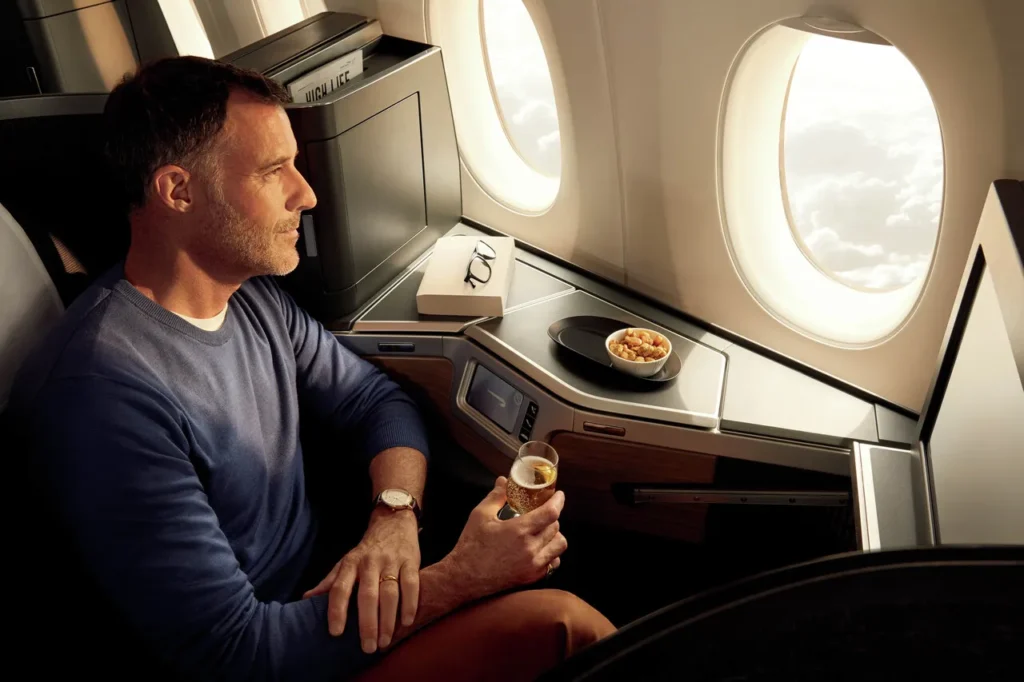
Sustainability in the Premium Travel Space
Streamlining onboard offerings may help to cut down on waste and simplify operations, yet each feature removed could potentially diminish the perceived value of a premium cabin.
Even if many travelers may not need every service provided, having these amenities available reinforces the concept of premium travel.
Visible reductions in service can damage customer trust in the brand. The industry still remembers a prior phase under Alex Cruz, where small luxuries—like flowers in restrooms—were removed, leaving empty holders that served as constant reminders of cost-cutting rather than service improvements.
Implementing Changes Based on Data
If customer feedback is positive, British Airways might implement a system for passengers to specify preferences during booking or check-in. This would enable precise filling of meals, amenity kits, and sleepwear.
Improved resource management could be informed by route, cabin specifications, and demand forecasts. The success of this endeavor hinges on maintaining the premium image of both Club World and Club Europe while optimizing operations.
While travelers may be receptive to voluntary sustainability initiatives, mandatory cutbacks could lead to customer dissatisfaction.