Tragic Crash of World’s Largest Turboprop Aircraft in Russia Claims 7 Lives

The Antonov An-22 Antei, operated by the Russian Ministry of Defence, tragically crashed into the Uvodskoye Reservoir in the Furmanovsky District near Ivanovo (IWA). This incident occurred during a test flight following repairs, resulting in the aircraft leaving behind only wreckage on the water’s surface.
Initial reports suggest that all seven crew members aboard are presumed to have perished. This flight coincided with Russia’s plans to retire this aircraft model from service.
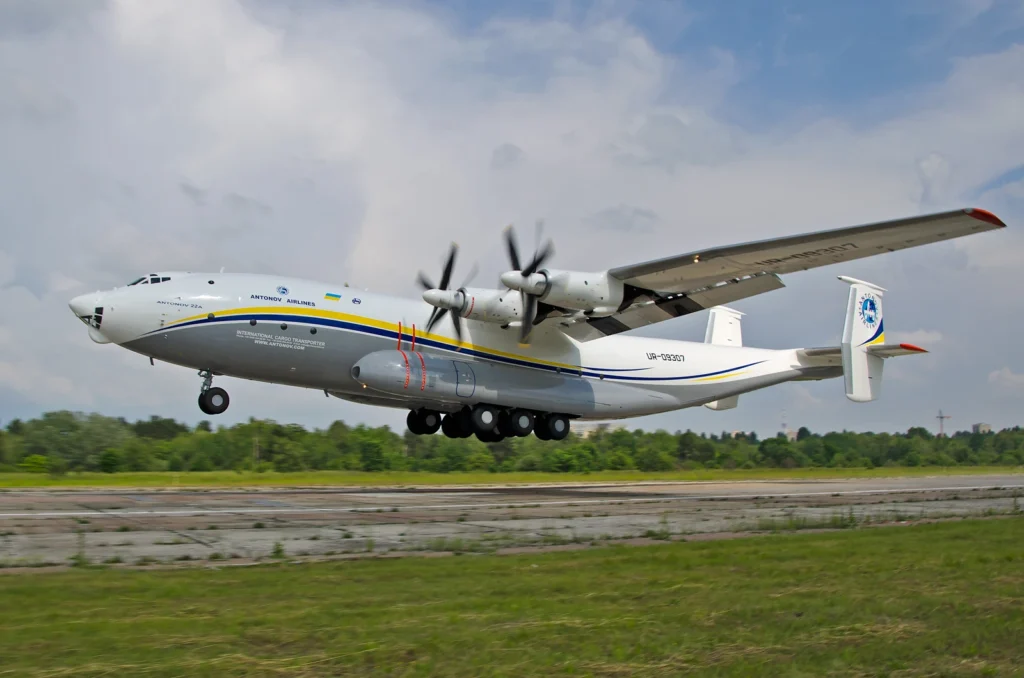
Antonov An-22 Crash Overview
The An-22 had been nearing the end of its service, with officials confirming plans to phase it out by 2024. However, due to ongoing military operations, the demand for heavy-lift aircraft has strained Russia’s transport fleet.
This aircraft was one of the very few remaining in operational condition. As per the Russian Planes database, only three An-22s are still flightworthy, while ten others remain stored.
The number of An-22s has dwindled significantly, with 68 initially built, many of which have been scrapped or lost over the years. The recent test flight reflects an ongoing need to keep aging aircraft operational due to a shortage of modern airlift options like Il-76s and An-124s.
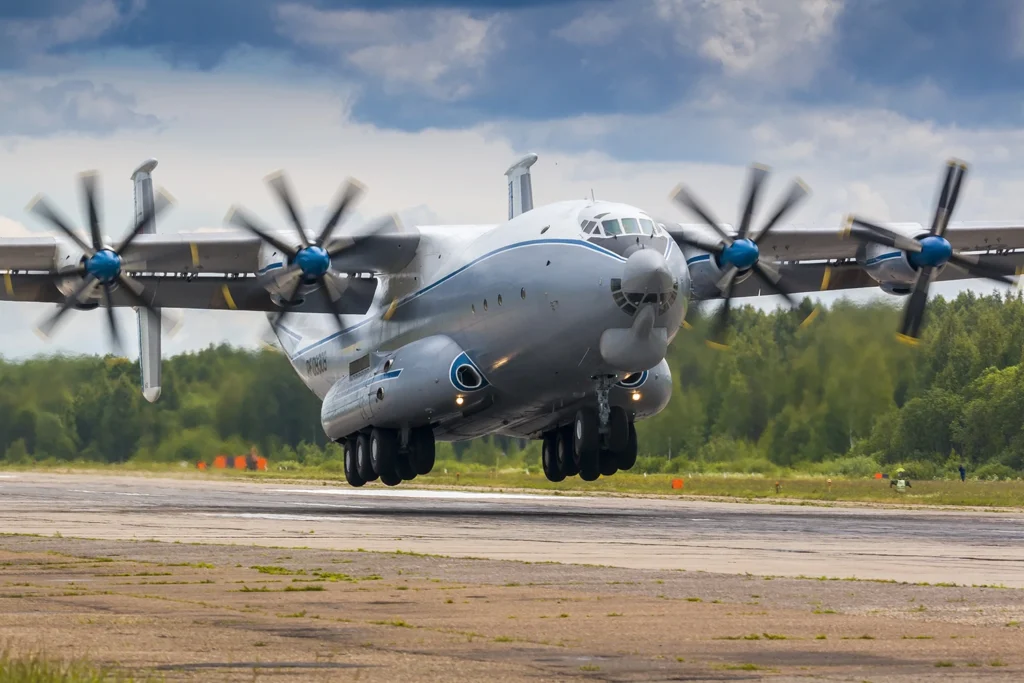
The An-22’s Historical Significance
The An-22 Antei had its maiden flight in 1965, entering military service shortly thereafter. Its debut at the Paris Air Show that same year captured global attention due to its impressive size and engineering.
Equipped with four Kuznetsov NK-12MA turboprop engines, the An-22 delivered unmatched power for a turboprop aircraft, producing over 14,800 horsepower each.
This aircraft, measuring nearly 58 meters in length and boasting a wingspan exceeding 64 meters, was the first widebody cargo plane, capable of transporting armored vehicles and delivering aid to difficult airstrips with a maximum payload of around 80 tonnes.
The An-22 established a remarkable legacy, setting 41 world records in various categories related to performance and payload. It also played a vital role in producing and transporting components for larger aircraft like the An-124 and An-225.

Challenges Facing the An-22
Over the years, maintaining the An-22 has become increasingly challenging due to its age, limited spare parts availability, and rising maintenance requirements. These pressures are steering the aircraft toward retirement.
Russia’s reliance on aging planes escalates safety risks, particularly with an operational tempo demanding the continued use of aircraft that are nearing six decades old.
The recent crash in Ivanovo dramatically reduces the already limited fleet, underscoring the hurdles Russia faces in upholding its military airlift capabilities.
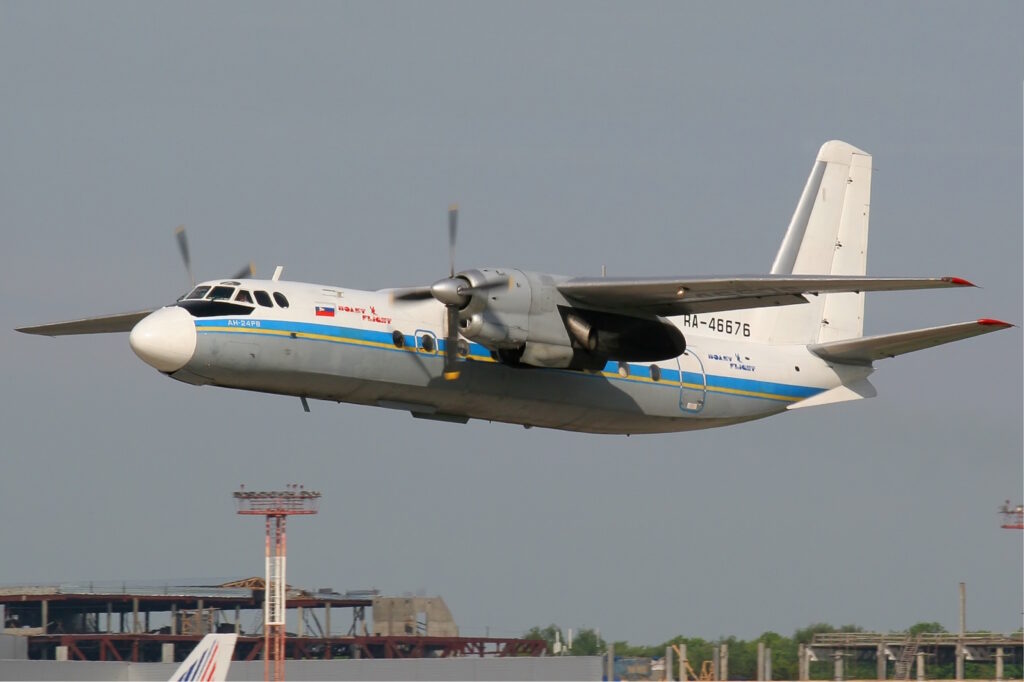
Similar Recent Aircraft Tragedy
Another recent incident involved a Soviet-era Antonov An-24, operated by Angara Airlines AG, which crashed while approaching Tynda Airport (TYD) in Russia’s far east, killing all 48 individuals onboard. This aircraft had taken off from Blagoveshchensk (BQS) and lost communication with air traffic controllers shortly before landing.
Reports indicated that the blazing wreckage of the nearly 50-year-old aircraft was discovered approximately 15 kilometers from Tynda Airport, nestled in a remote mountainous area. Rescue crews reached the site after clearing dense forest terrain with heavy machinery.
Investigation of the Angara Airlines An-24 Crash
Authorities confirmed that 42 of the passengers were civilians, including five children, alongside six crew members on the Angara Airlines AG flight. The aircraft disappeared from radar during its descent toward Tynda, a locality situated in the Amur region near the Chinese border. Subsequent images released by Russian media depicted smoke billowing above the dense woods at the crash site.
A criminal investigation has been launched to scrutinize potential breaches of air and operational safety regulations. Preliminary evaluations suggest either a technical malfunction or human error may be involved. Regional governor Vasily Orlov declared three days of mourning and ordered flags to be flown at half-mast as authorities process the aftermath.
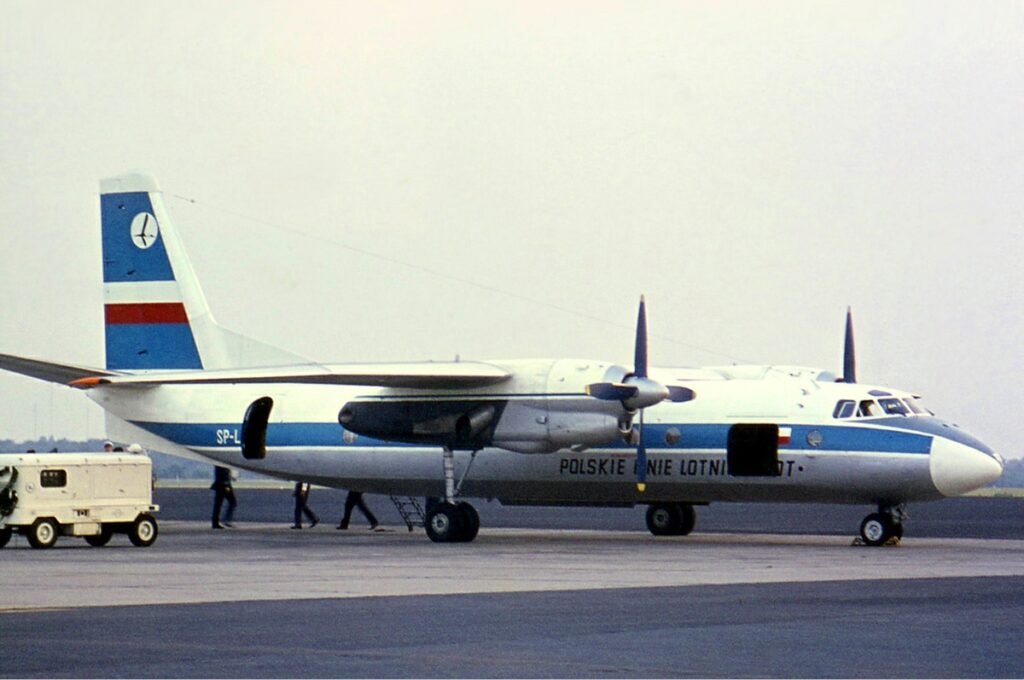
Overview of the An-24’s Operational History
The Antonov An-24 is a twin-turboprop regional aircraft introduced in the late 1950s, becoming a reliable choice for remote regions in Russia and Central Asia due to its robustness and ability to land on unpaved runways. The specific aircraft involved in this incident was manufactured in 1976, categorizing it as among the older units still in operational service.
Since the onset of the Ukraine conflict, Russia has encountered numerous mechanical challenges throughout its aviation sector. Sanctions imposed have restricted access to spare parts for modern aircraft and complicated the maintenance needs of older Soviet-era fleets.
In recent years, several regional operators have petitioned authorities to prolong the service life of the An-24, arguing that sanctions have hindered the replacement of these aging aircraft.
Known Technical Complications with the Aircraft
Historical records reveal that this particular An-24 had experienced at least two technical difficulties since 2022, including a generator failure during a flight in May 2022.
In March this year, the crew was instructed to return to the parking area prior to departure due to issues with radio communication on a flight scheduled from Irkutsk to Kirensk.
This recent crash represents Russia’s first fatal incident in passenger aviation since July 2021, when an An-26 near Petropavlovsk Kamchatsky plummeted to the ground, claiming 28 lives.