Why F-22 Pilots Choose Not to Use F-35 Helmets

The Lockheed Martin F-22 Raptor is renowned as one of the top air superiority fighters globally. However, its pilots do not utilize the advanced Helmet Mounted Display System (HMDS) that characterizes the newer F-35 Lightning II.
In contrast to the F-35’s helmet, which costs approximately $400,000 and replaces the conventional Head-Up Display (HUD), the F-22 relies on standard flight helmets and traditional cockpit displays.
This distinction stems not just from outdated technology, but rather from the varying design philosophies and operational concepts of these two aircraft.
Despite both being fifth-generation stealth fighters, the F-22’s cockpit structure, canopy configuration, and mission objectives render the F-35’s sophisticated helmet unfeasible without extensive redesign efforts.
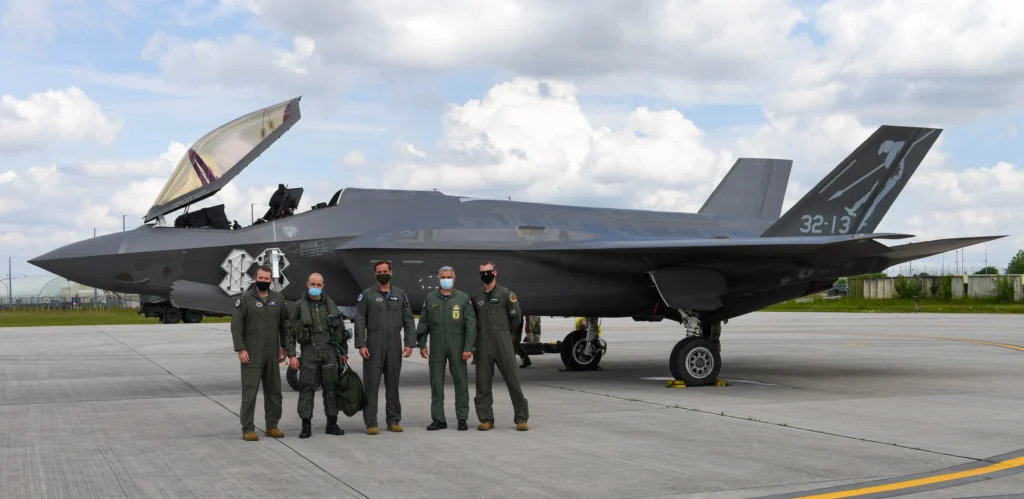
Insights into F-35 Helmet Technology
Unlike many current fighter jets, the F-35 was engineered without a traditional HUD. It instead projects all crucial flight, navigation, targeting, and sensor data directly onto the pilot’s visor via the HMDS, making the helmet the primary flight display.
This helmet integrates with six infrared cameras affixed around the aircraft, granting pilots an unparalleled ability to “see through” the fuselage.
This feature provides a complete 360-degree view of the surrounding airspace, significantly enhancing situational awareness during combat, particularly in low-visibility scenarios or when tracking potential threats.
Each helmet is tailored for its assigned pilot to ensure optimal alignment of the display, contributing to its high cost, which stems from complex manufacturing, advanced electronics, and integrated night vision capabilities.
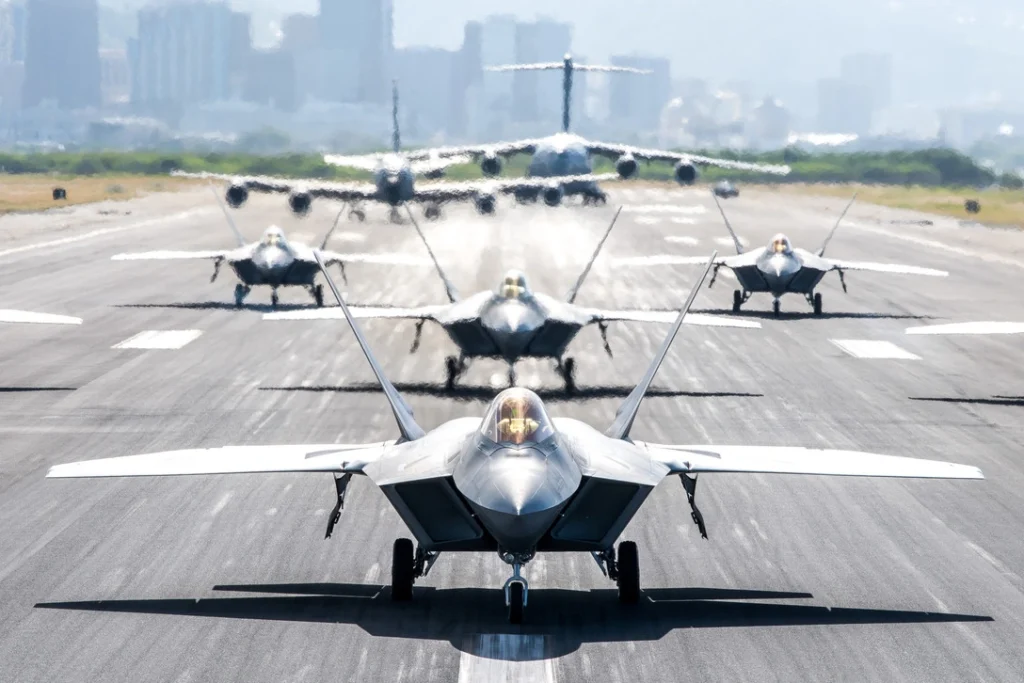
Reasons Behind F-22’s Use of Standard Helmets
The F-22 entered operational service well ahead of the F-35 and was built around a classic cockpit design. It features a large HUD situated above its primary flight displays, providing pilots immediate flight data without the need for visor projections.
Additionally, the compact canopy presents substantial challenges. Designed in the 1990s to minimize radar reflections, the limited space leaves little room for larger helmet systems.
During high-G maneuvers, a bulkier helmet could hinder a pilot’s movement or potentially clash with the cockpit.
Head-tracking technology also poses limitations. Traditional helmet-mounted displays typically rely on magnetic tracking. However, the F-22’s stealth coatings and dense internal systems create a challenging environment for sensor integration.
Moreover, incorporating the necessary computing hardware for an F-35-style helmet would demand extensive updates to the aircraft’s avionics.

Understanding Cost and Mission Priorities
Updating the F-22 fleet would not be cost-effective. With only 187 Raptors produced, justifying large-scale cockpit redesigns is challenging.
The U.S. Air Force focuses on the F-22’s original goal of long-range air dominance. Its stealth capabilities and advanced sensors provide significant advantages in combat.
Since pilots already get crucial flight information from the cockpit’s HUD and displays, the benefits of switching to a new helmet system are minimal.
Consequently, F-22 pilots continue to use lightweight HGU-55/P helmets paired with compact optical devices as needed. This strategy maintains compatibility in the cockpit, minimizing weight during demanding maneuvers and ensuring the aircraft retains its operational capabilities without the high costs of a full cockpit overhaul.
As fighter technology progresses, the differences between the F-22 and F-35 illustrate how design choices from different eras continue to impact pilot equipment. The absence of the F-35’s advanced helmet on the F-22 is not a technological failure but rather a reflection of two distinct engineering philosophies tailored to different operational needs.