Etihad Retires Largest Aircraft for Parts, Aims to Revive Two A380s

Etihad Airways Revives Two A380 Superjumbos
ABU DHABI- Etihad Airways (EY) is gearing up to relaunch two of its Airbus A380 superjumbos as the aviation industry faces significant aircraft shortages and persistent supply chain challenges. The airline’s tenth A380 has been retired, now serving as a source for spare parts to maintain the operational fleet.
The Abu Dhabi-based airline intends to reintroduce its eighth A380 on June 15, 2026, followed by the ninth on January 1, 2027. This decision is designed to meet the rising demand for air travel and to address the backlog of aircraft, as noted by the International Air Transport Association (IATA).
Current Fleet Operations
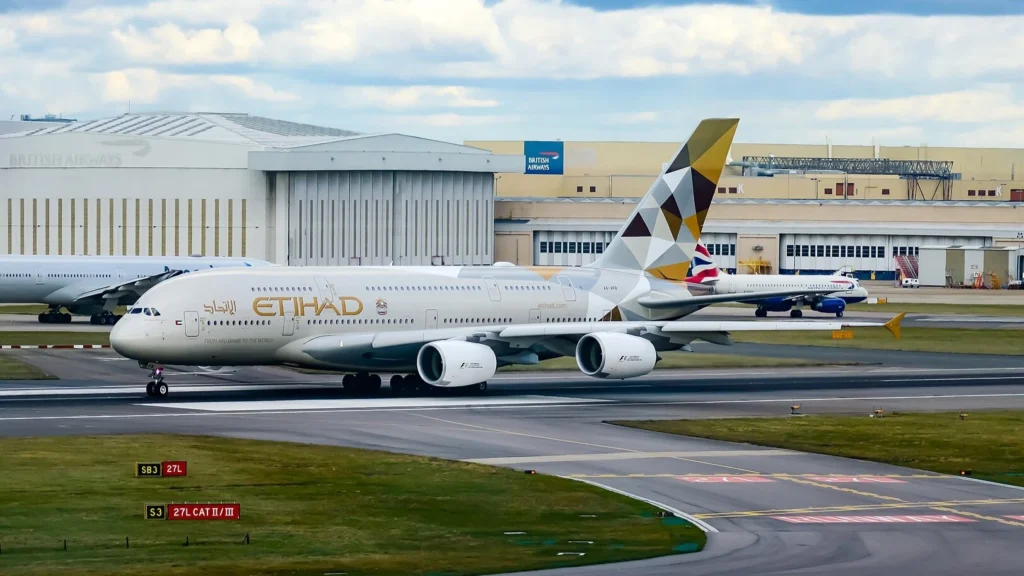
Currently, Etihad Airways operates seven of its ten A380 aircraft and is gradually reintroducing these superjumbos into commercial service. The choice to retire one A380 for parts indicates a strategic move in fleet management, especially given the ongoing production delays faced by Airbus and Boeing.
The global backlog for commercial aircraft has reached an unprecedented total of over 17,000 planes in 2024, an increase from the 13,000 annually recorded between 2010 and 2019. Such a shortage compels airlines around the globe, especially in the Middle East, to cautiously adapt their capacity and operational strategies.
In August 2025, airlines in the Middle East experienced an 8.2% surge in travel demand compared to the previous year, overshadowing the 4.6% growth observed globally. Load factors in this region stood at 83.9%, while overall capacity increased by just 6.9%. Meanwhile, international airlines reported an 86% load factor alongside a 4.5% boost in capacity.
Financial and Operational Implications
The slow pace of aircraft and parts production is anticipated to cost the airline industry over $11 billion in 2025, as suggested by IATA and consultancy firm Oliver Wyman. Consequently, airlines are reassessing their fleet strategies, often opting to extend the lifespan of older aircraft to counteract shortages.
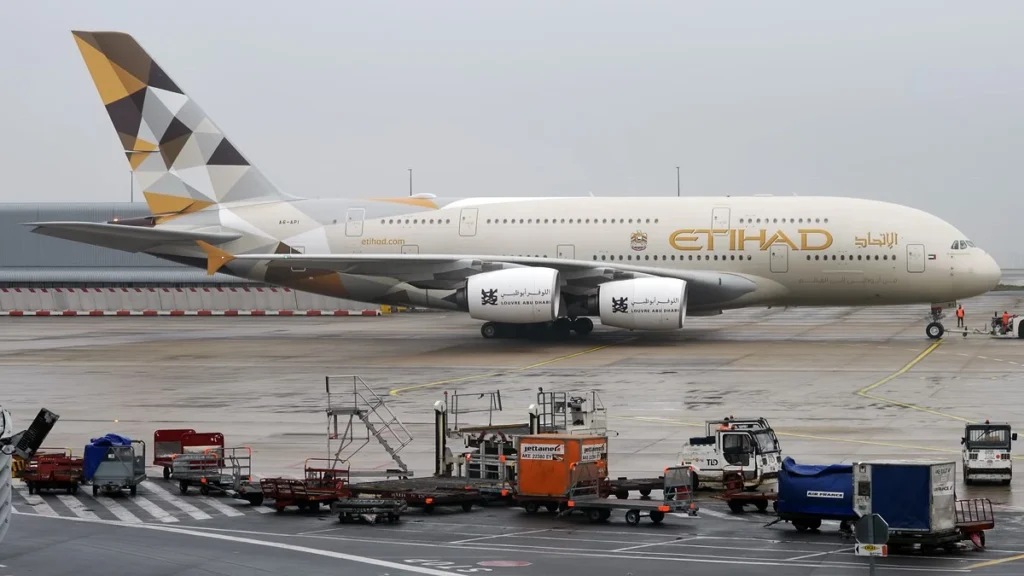
In response to these challenges, Etihad is leasing narrow-body jets and refurbishing older wide-body planes while simultaneously bringing its A380s back into operation. These superjumbos are key to servicing major routes, including London (LHR), Toronto (YYZ), Paris (CDG), and Singapore (SIN).

Premium Experience on the A380
Passengers flying on Etihad’s A380 can book The Residence, an opulent three-room suite featuring a private bedroom, en suite shower, living area, and personal butler service. The aircraft also accommodates first-class apartments and business studios, solidifying Etihad’s status as a leader in premium travel experiences.
In the first nine months of 2025, the airline reported passenger traffic of 16.1 million, reflecting an 18% increase over the prior year. The operating fleet currently consists of 115 aircraft servicing 82 global destinations, with September alone witnessing 1.9 million travelers, marking a 21% rise from September 2024.
Expanding Route Network
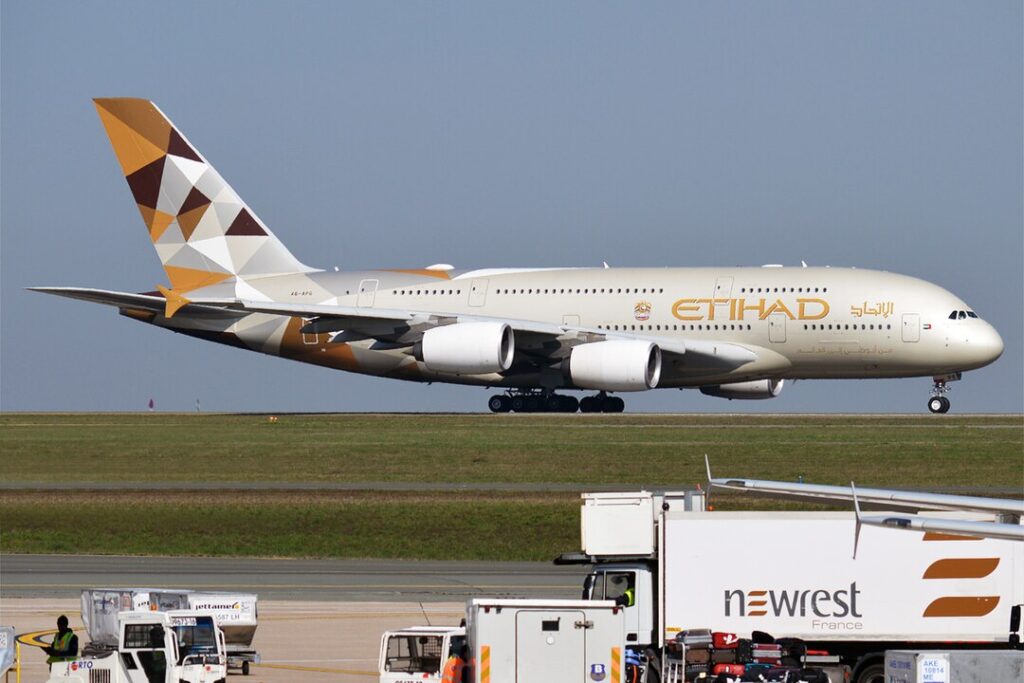
Etihad is strategically launching new routes, recently adding destinations such as Sumatra, Phnom Penh, Addis Ababa, and Krabi. More expansions are scheduled for 2026, including moves into Kabul, Damascus, Palma de Mallorca, and Zanzibar. This growth reflects the airline’s disciplined approach while aiming to maintain high load factors in its operations.
What do you think about Etihad Airways’ plans to reintroduce the A380 superjumbos? Would you consider flying on one of their premium services?