Why Champagne Tastes Better at High Altitudes

The Evolution of Champagne in Air Travel: A 70-Year Journey
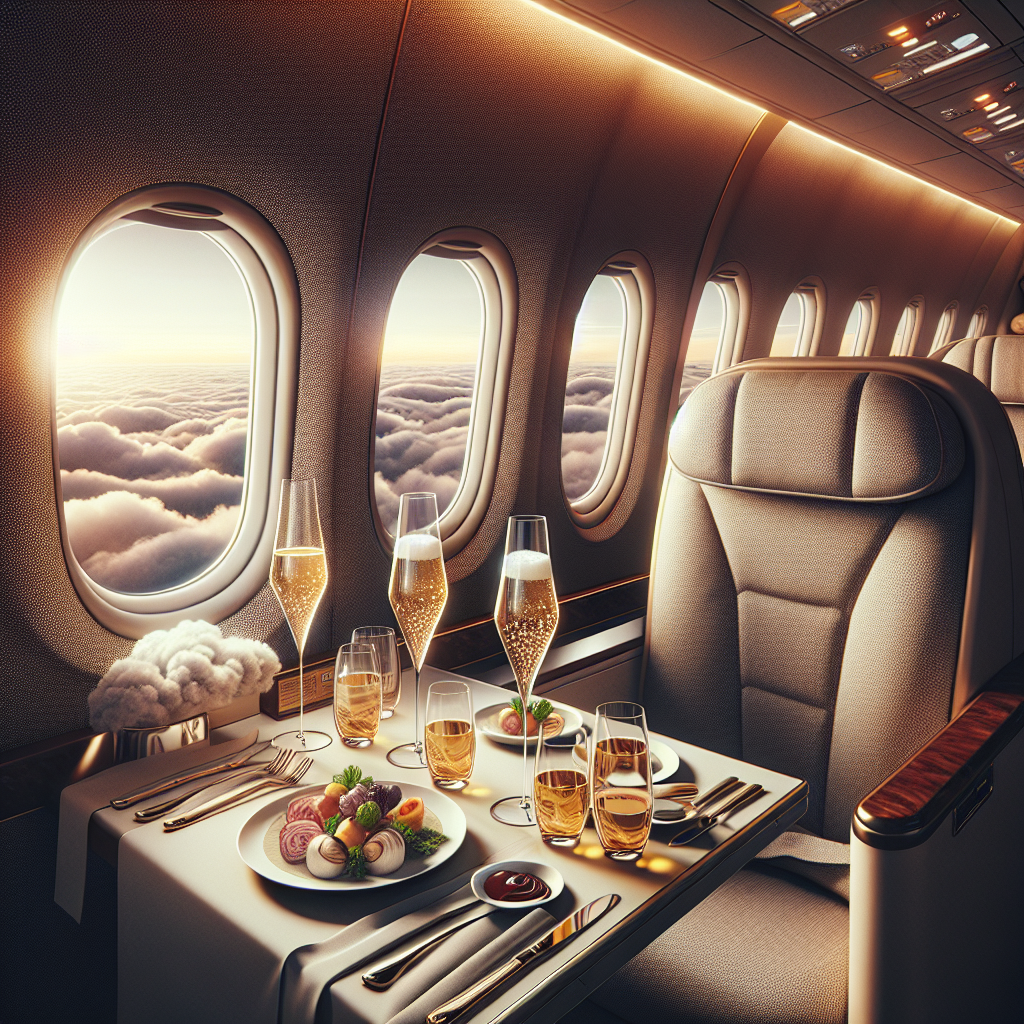
In 1954, the skies witnessed a revolutionary moment when California’s Western Airlines introduced the first bubbles to an aircraft cabin, partnering with Italian Swiss Colony to serve local sparkling wine. Fast-forward to today, and luxury French champagnes have become a staple in premium airline cabins worldwide. As we approach New Year’s Eve, we delve into the fascinating world of in-flight champagne and explore whether the experience truly differs at altitude.
Airlines: Major Players in the Champagne Market
Airlines have become some of the largest consumers of champagne globally. Air France, the flagship carrier of the Champagne region, meticulously curates its champagne selection, serving over a million bottles annually to its passengers.
Notably, many airlines have enlisted master sommeliers to enhance their wine offerings. United Airlines, for instance, has appointed Doug Frost, one of only four individuals globally to hold both Master of Wine and Master Sommelier titles, to curate its wine program.
Premium Selections on Board
Airlines are not skimping on quality when it comes to their wine selections. Japan Airlines serves the exclusive Salon 2013 in First Class, retailing at an impressive $1,100 per bottle. Emirates also offers a range of prestigious options, including Moët & Chandon and Dom Pérignon, available across all classes—though economy passengers must purchase their bubbly.
The Science Behind Champagne’s Taste at Altitude
But why does champagne taste different on a plane? A study commissioned by Lufthansa found interesting results about taste perception at altitude. Key findings include:
- Salt and Sugar Perception: Saltiness is perceived as 20-30% less intense, while sweetness is less intense by 15-20%.
- Dryness Impact: The dry cabin environment diminishes our ability to detect aromas, which play a significant role in flavor perception.
- Umami Enhancement: The fifth flavor, umami, is heightened in-flight, explaining the popularity of drinks like Bloody Marys.
Research published in the Proceedings of the National Academy of Sciences also indicates that cabin pressure affects how quickly champagne’s bubbles burst, impacting the overall aroma and taste experience.
Choosing Champagne Wisely for Your Flight
Wine experts recommend opting for crisp, aromatic wines when flying. Heavy tannins found in wines like Chianti can taste harsh, while lighter wines such as Pinot Grigio may lack flavor. Lisa Redwine, who selects wines for Schubach Aviation, notes that reduced cabin pressure alters our perception of tannins and acidity.
Interestingly, while it may seem that champagne should taste worse at altitude, many passengers claim it tastes better. This phenomenon may be linked to our psychological state; travel often elevates our mood, leading us to perceive experiences—like sipping champagne—as more enjoyable.
The Future of Champagne in Space Travel
As space tourism emerges, could champagne find its way into the cosmos? Currently, drinking in space is far from glamorous. Without gravity, liquids cannot flow freely, forcing astronauts to consume beverages from pouches.
However, designer Octave de Gaulle, in collaboration with champagne producer Mumm, is working on a solution. His design features a ring that transforms pressurized champagne into an orb of foam, allowing it to be enjoyed in microgravity. While alcohol consumption is generally prohibited on the International Space Station, this innovation could pique the interest of space tourism companies like SpaceX and Virgin Galactic.
Conclusion: The Enigmatic Experience of Champagne in the Skies
In summary, while scientific evidence suggests that champagne may not taste better at altitude, the joy of travel and the experience of sipping bubbles in the sky can elevate our perception. Have you ever tried champagne on a flight? Share your thoughts below or explore related articles on the fascinating world of in-flight dining!
For more insights into how airline service is evolving, check out our articles on premium cabin experiences here and the latest trends in airline catering here.