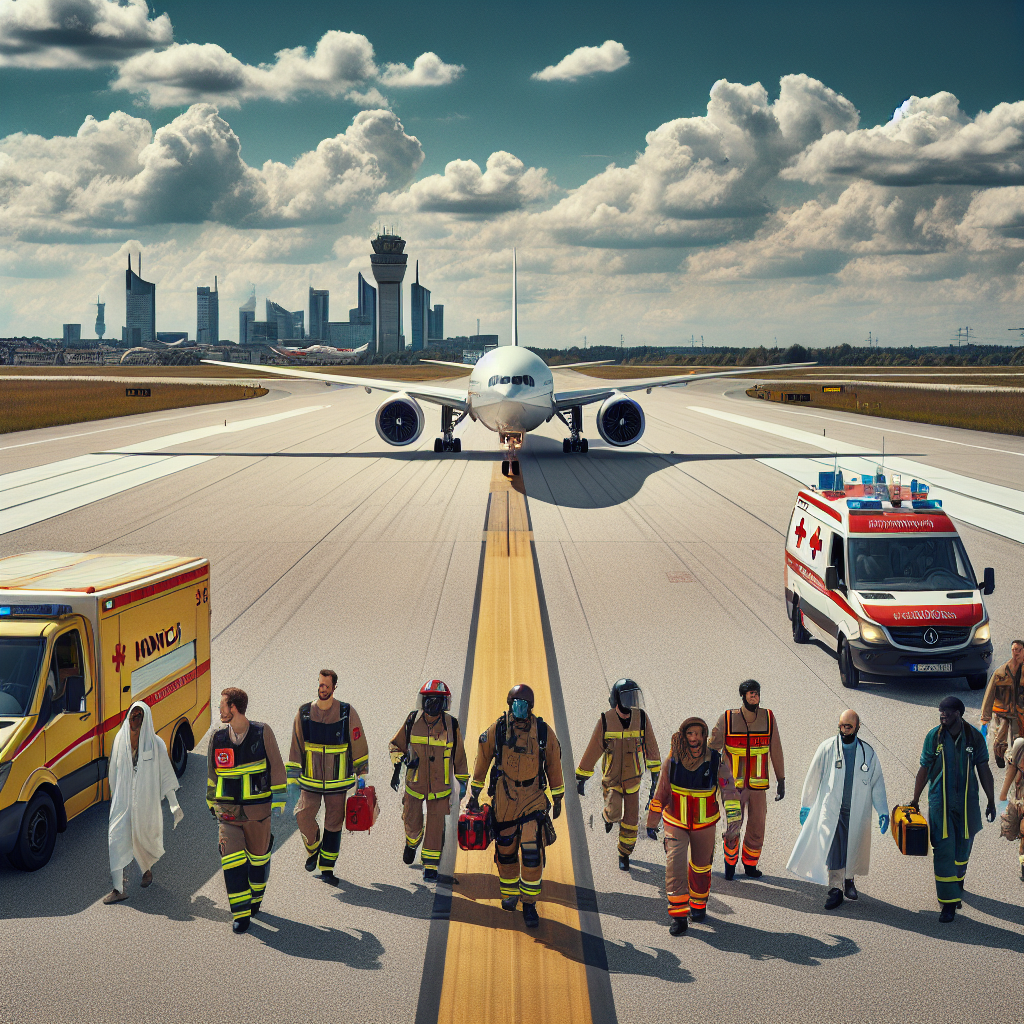
Singapore Airlines Flight Diverts to Munich for Emergency

Singapore Airlines Flight Makes Emergency Landing in Munich Due to Medical Emergency
On January 22, 2025, a Singapore Airlines (SQ) flight from Singapore Changi Airport (SIN) to London Heathrow (LHR) was forced to make an emergency landing in Munich (MUC) after a passenger experienced a medical emergency. This incident underscores the importance of safety protocols in the airline industry and the quick response of flight crews during critical situations.
Singapore Airlines operates multiple daily flights between Singapore and London, with SQ306 being one of the key routes.
Photo: By N509FZ – Own work, CC BY-SA 4.0
Emergency Landing Details of Singapore Airlines Flight
According to data from Flight Radar 24, Singapore Airlines flight SQ306 departed Singapore at 5:33 PM UTC. Approximately 12 hours into the flight, while cruising at an altitude of 36,000 feet, the crew reported a medical complication involving a passenger. At that moment, the flight was en route to Czechia.
To ensure the passenger received timely medical attention, the crew decided to divert to Munich, where the plane landed safely at 6:11 AM UTC. The ground crew was promptly notified by Air Traffic Control (ATC) to be ready for immediate assistance upon landing. Medical personnel were on standby to provide healthcare services to the affected passenger.
Following a brief two-hour ground stop, the aircraft resumed its journey, taking off again at 8:05 AM UTC and landing safely at London Heathrow at 9:36 AM UTC. The flight was operated by a Boeing 777-300ER, registered as 9V-SWY, which is 10.3 years old.
Similar Incidents in Aviation
This emergency landing is not an isolated event in the aviation industry. For instance, on November 30, 2024, an Air India flight (AI106) made an unscheduled landing at Moscow Zhukovsky Airport due to a medical emergency while traveling from Newark to Delhi. Flight tracking data indicates the aircraft diverted after approximately nine hours of flight time.
Recent occurrences also include an Aeroflot Boeing 737 performing an emergency landing in Baku due to a passenger medical emergency, as well as Aer Lingus redirecting its Lisbon-Dublin flight to Porto Francisco Sá Carneiro Airport for similar reasons.
For more information about emergency protocols during flights, you can read about airline safety measures.
Conclusion
The quick actions of Singapore Airlines’ crew in response to a medical emergency highlight the critical training and preparedness of airline staff. As air travel continues to be a vital mode of transportation, such incidents remind passengers of the importance of safety and the effectiveness of emergency protocols in place.
What are your thoughts on airline emergency protocols? Feel free to share your insights in the comments below or check out our related articles on aviation safety and flight experiences.