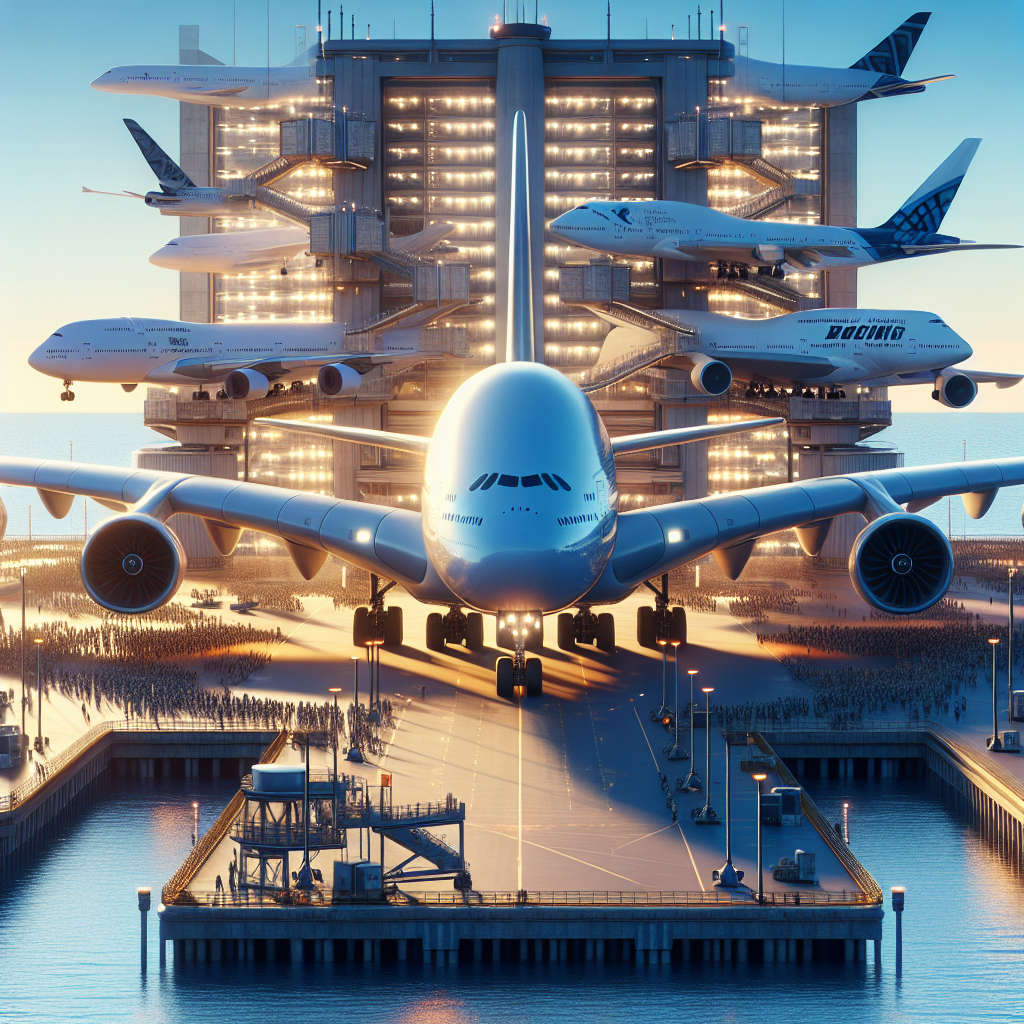
2025’s Top 10 Largest Passenger Planes Revealed

The 10 Largest Commercial Aircraft in 2025: A Countdown of the Biggest Passenger Jets
As the aviation industry evolves, the number of large passenger planes is diminishing. The COVID-19 pandemic accelerated the retirement of older aircraft, including the iconic Airbus A380 and Boeing 747 models. However, many large passenger jets remain active. In this article, we will explore the top 10 largest commercial aircraft in 2025 based on their exit limits—the maximum number of passengers they can safely evacuate in 90 seconds.
The exit limit serves as a practical measure of passenger capacity, even though airlines often configure their aircraft differently. Let’s take a closer look at these impressive flying machines, starting from the smallest to the largest.
10. Boeing 787-10
- Exit Limit: 440
- Typical Seating: 330 (32 business, 298 economy)
- Length: 224 ft (68.28 m)
- Wingspan: 197 ft 3 in (60.12 m)
- Range: 6,330 nautical miles (11,720 km)
The Boeing 787-10, part of the Dreamliner family, debuted in March 2017. Designed to replace older models like the Boeing 767, it emphasizes efficiency and passenger comfort.
9. Airbus A350-900
- Exit Limit: 440
- Typical Seating: 315 (48 business, 267 economy)
- Length: 219.2 ft (66.8 m)
- Wingspan: 212 ft 5 in (67.75 m)
- Range: 8,300 nautical miles (15,372 km)
Launched in January 2015 with Qatar Airways, the Airbus A350-900 competes with the Boeing 777 series. It has become a popular choice among major airlines.
8. Airbus A330-300
- Exit Limit: 440
- Typical Seating: 300 (36 business, 264 economy)
- Length: 193 ft (58.82 m)
- Wingspan: 198 ft (60.3 m)
- Range: 6,340 nautical miles (11,750 km)
In service since November 1992, the Airbus A330-300 has been a reliable workhorse for airlines around the globe. It typically operates with fewer seats than its exit limit suggests.
7. Airbus A340-300/600
- Exit Limit: 440
- Typical Seating: 380 (3-class configuration)
- Length: 247 ft 3 in (75.36 m)
- Wingspan: 208 ft 2 in (63.45 m)
- Range: 7,800 nautical miles (14,450 km)
Although fewer than 70 Airbus A340s remain in service today, the aircraft is known for its impressive range and passenger comfort.
6. Airbus A330-900
- Exit Limit: 460
- Typical Seating: 310 (30 business, 64 premium, 216 economy)
- Length: 208 ft 11 in (63.66 m)
- Wingspan: 201 ft (64 m)
- Range: 7,200 nautical miles (13,334 km)
The A330-900, a more fuel-efficient variant of the A330 family, entered commercial service in late 2018. It boasts significant improvements over its predecessors.
5. Airbus A350-1000
- Exit Limit: 480
- Typical Seating: 369 (54 business, 315 economy)
- Length: 242 ft (73.79 m)
- Wingspan: 212 ft 5 in (64.75 m)
- Range: 8,900 nautical miles (16,500 km)
The A350-1000, introduced in 2018, is the largest variant in the A350 family and continues to gain popularity among airlines for its range and capacity.
4. Boeing 777-300ER
- Exit Limit: 550
- Typical Seating: 365 (22 first, 70 business, 273 economy)
- Length: 242 ft 4 in (73.86 m)
- Wingspan: 212 ft 7 in (64.80 m)
- Range: 7,370 nautical miles (13,649 km)
The Boeing 777-300ER has been a long-haul favorite since its introduction in 1994. Its combination of range and capacity makes it a top choice for many international routes.
3. Boeing 747-8
- Exit Limit: 605
- Typical Seating: 467 (24 first, 87 business, 356 economy)
- Length: 250 ft 2 in (76.25 m)
- Wingspan: 224 ft 7 in (68.5 m)
- Range: 7,730 nautical miles (14,320 km)
As the last in the legendary 747 series, the Boeing 747-8 remains a symbol of luxury air travel, although its numbers in service are dwindling.
2. Boeing 747-400
- Exit Limit: 660
- Typical Seating: 416 (23 first, 78 business, 315 economy)
- Length: 231 ft 10 in (70.7 m)
- Wingspan: 211 ft 5 in (64.4 m)
- Range: 7,285-7,670 nautical miles (13,492-14,205 km)
The Boeing 747-400, a significant upgrade over its predecessors, has been a favorite among airlines since its first flight in 1988. However, its presence is rapidly declining.
1. Airbus A380-800
- Exit Limit: 853
- Typical Seating: 489 (14 first, 76 business, 399 economy)
- Length: 238 ft 7 in (72.72 m)
- Wingspan: 261 ft 8 in (79.75 m)
- Range: 8,000 nautical miles (14,800 km)
The Airbus A380-800 is the largest passenger aircraft ever built and remains a favorite for airlines like Emirates. Despite its challenges in the current aviation landscape, it continues to serve on high-demand routes worldwide.
Conclusion
As we look ahead to 2025, the landscape of large passenger aircraft is changing. While some iconic models are retiring, many still play a crucial role in international travel. For aviation enthusiasts and travelers alike, these towering giants will continue to capture our imagination.
What are your thoughts on the biggest passenger jets? Share your opinions below or explore related articles to stay updated on aviation news!
For more insights, check out Airbus A380: A Legacy of Innovation and Boeing’s 777X: The Future of Long-Haul Travel.