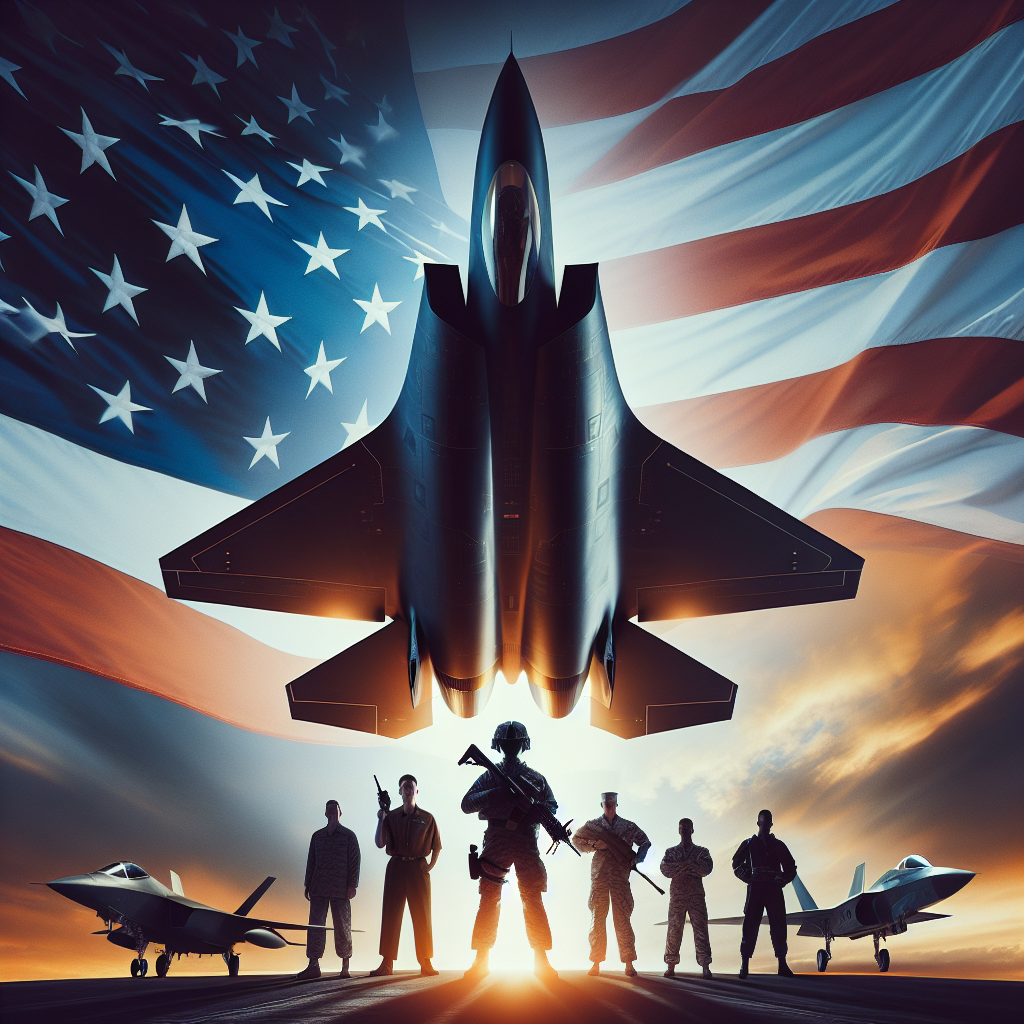
Trump Awards Boeing $20 Billion for Advanced F-47 Aircraft

Boeing Awarded $20 Billion Contract for Air Force’s F-47 Fighter Jet Amid Rising Tensions with China
Introduction
In a significant move for the U.S. military, President Donald Trump announced on March 21 that Boeing has been awarded a $20 billion contract to manufacture the Air Force’s next-generation fighter jet, the F-47. This announcement comes at a time when tensions with China are escalating, highlighting the urgent need for advanced military capabilities.
The F-47, part of the Next Generation Air Dominance (NGAD) program, promises enhanced stealth and penetration capabilities that surpass those of the current fleet, positioning the U.S. Air Force for future aerial dominance.
Donald Trump and the F-47 Contract
At a press briefing, President Trump, alongside Defense Secretary Pete Hegseth and Air Force leadership, unveiled the F-47 designation. Air Force Chief of Staff General David Allvin underscored the program’s significance, stating, “We’re going to write the next generation of modern aerial warfare with this.” Hegseth added that the new fleet sends a robust message to allies, asserting that the U.S. commitment to global security remains steadfast.
Technical Capabilities & Design of the F-47
The F-47 fighter jet is designed to act as the quarterback for an advanced fleet of unmanned aerial vehicles. Key capabilities include:
- Enhanced Stealth: The F-47 will feature unprecedented low observability, crucial for penetrating the air defenses of adversaries like China.
- Extended Range: The aircraft will boast a significantly longer operational range than the current F-35, reducing reliance on aerial refueling.
- AI Integration: Future developments may include an unmanned version of the F-47 as artificial intelligence technology advances.
Although detailed design elements remain scarce, early test flights have reportedly been conducted for five years, with industry renderings suggesting a flat, tail-less design and sharp nose.
Costs & Significance of the F-47 Program
While the initial contract stands at $20 billion, analysts estimate the total cost of the F-47 program could reach hundreds of billions. The Air Force has not disclosed the exact number of units to be produced, but General Allvin hinted that more F-47s would be manufactured compared to the roughly 180 F-22s currently in service.
The designation of F-47 carries historical weight, honoring the legacy of the P-47 fighter from World War II while also recognizing the pivotal role of the 47th President in supporting the development of sixth-generation fighter technology.
Program Review and Selection of Boeing
The decision to proceed with Boeing followed a comprehensive review initiated by the Biden administration, which paused the NGAD program last year for reassessment. This evaluation, which included input from think tanks and academic institutions, determined that the program remains vital for addressing potential conflicts with China.
Boeing was selected based on an independent analysis by the Air Force, which concluded that the company offered the best overall value. This decision comes despite previous scrutiny over Boeing’s performance on other military contracts.
Criticism Over the Need for the F-47
Despite the enthusiasm surrounding the F-47 program, some critics question its necessity and cost amid ongoing challenges with the F-35 production, projected to exceed $1.7 trillion over its lifespan. Dan Grazier, a national security expert, voiced skepticism about whether investing in another advanced fighter jet aligns with the evolving nature of warfare, particularly as drone technology and space capabilities become increasingly important.
As the competition heats up, a separate Navy contract for its version of the NGAD fighter is still under evaluation, with Northrop Grumman and Boeing vying for the opportunity.
Conclusion
The F-47 fighter jet represents a crucial advancement in U.S. military capabilities, particularly in light of rising tensions with potential adversaries like China. As the program progresses, it will be vital to monitor its development, costs, and the broader implications for U.S. defense strategy.
What are your thoughts on the F-47 program? Share your opinions in the comments below or explore related articles for more insights into the future of military aviation.