American Airlines CEO Responds to United’s Scott Kirby

American Airlines CEO Robert Isom Challenges United Airlines’ Scott Kirby Amid Industry Decline
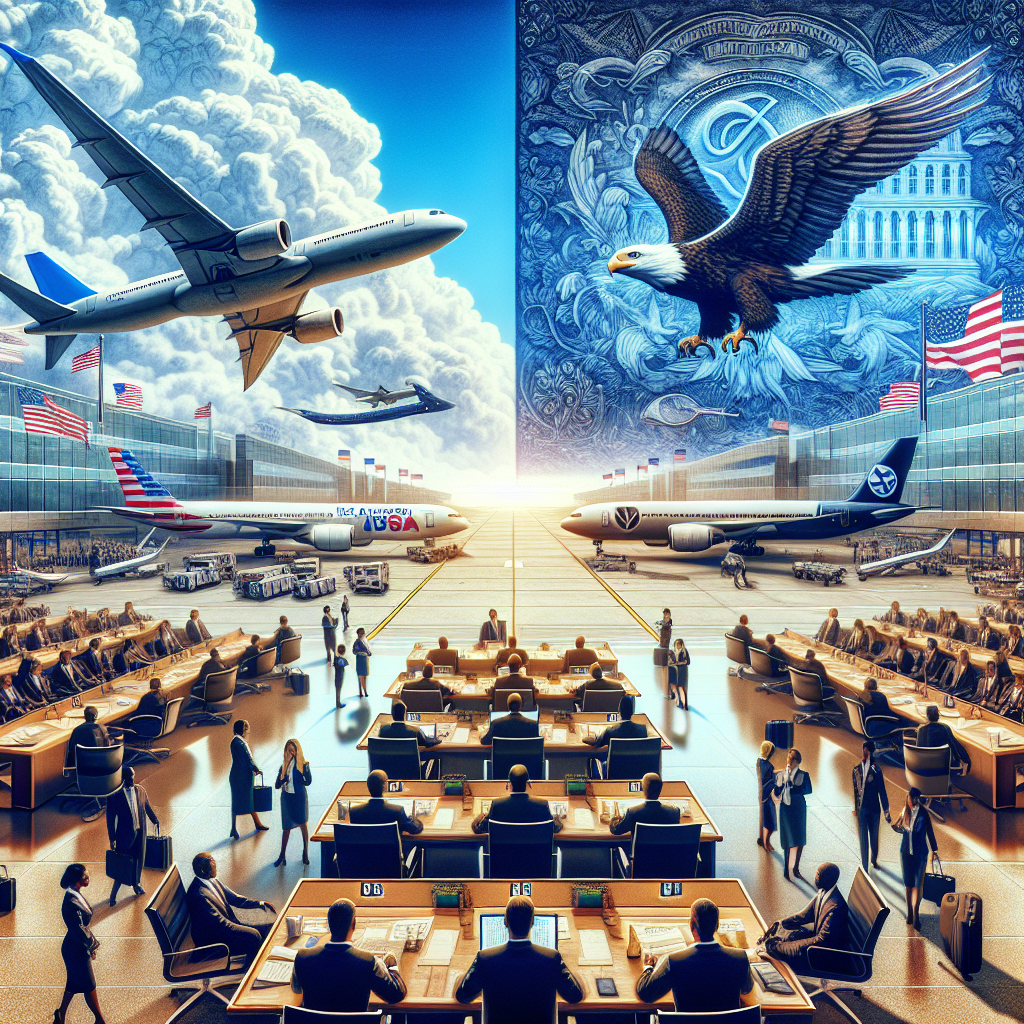
In a surprising turn of events, American Airlines (AA) CEO Robert Isom publicly confronted United Airlines (UA) CEO Scott Kirby during a recent JP Morgan investor conference, breaking his silence on Kirby’s ongoing criticisms. This exchange comes at a time when the airline industry is facing broader expectations of decline, making Isom’s remarks even more significant.
Kirby has consistently claimed that United has achieved a premier airline status, while American Airlines is lagging behind. He reiterated this viewpoint earlier this week, underscoring United’s strong performance at Chicago O’Hare (ORD) and the profitability of all seven of its hubs, contrasting them with competitors that struggle to maintain profitable operations.
Isom Responds to Kirby’s Criticism
During the conference, when prompted by JP Morgan analyst Jamie Baker about Kirby’s ongoing disparagement, Isom took the opportunity to respond directly. “I worked for Scott and with Scott for a long time,” Isom acknowledged, praising Kirby’s intellect but firmly stating, “In this case, he’s dead wrong.”
Isom pointed out the challenges American faced during and after the pandemic, including a significant pilot shortage that left 250 aircraft grounded. “Scott says this kind of stuff because he would like nothing better than to not have American Airlines as a competitor,” he asserted, emphasizing the competitive landscape between the two airlines.
Defending American Airlines’ Position
Isom highlighted American Airlines’ strengths, asserting that the company is a “premium product competitor.” He mentioned the airline’s modern fleet, expanded operations in Dallas and Charlotte, and a strategic partnership with Japan Airlines (JAL) as key advantages. “American’s not going anywhere,” Isom concluded confidently.
A Long-Standing Professional Relationship
The rivalry between Isom and Kirby is rooted in a long professional history that dates back to their time at America West Airlines. Both executives experienced significant career developments, with Kirby rising to become the president of United Airlines and later its CEO, while Isom took on the role of president at American Airlines.
According to Dennis Tajer, a spokesman for the Allied Pilots Association representing American pilots, “Robert punched back at Kirby: it was good to see.” He noted that while Kirby has built a formidable network at United, Isom’s response demonstrates a healthy competitive spirit.
Market Response and Future Outlook
Despite a strong performance in 2024, airline stocks have faced a downturn in 2025. American Airlines shares dropped 8% recently, reflecting a 33% decline year-to-date. This drop followed a revised first-quarter guidance projecting a loss between 60 and 80 cents per share, significantly worse than the earlier forecast of a 20 to 40 cents loss.
Isom attributed the revised guidance to several factors, including challenges at National Airport, a historical profit center for American, as well as the adverse impact of the crash of American Flight 5342 on January 29. He also cited economic uncertainty, wildfires in Los Angeles, and severe weather disruptions as contributing factors to the airline’s challenges.
Conclusion
The ongoing rivalry between American Airlines and United Airlines is set against a backdrop of industry challenges, making Isom’s bold defense of his airline noteworthy. As the competitive landscape continues to evolve, it will be interesting to see how both airlines navigate these turbulent times.
For further insights on the airline industry and the latest corporate strategies, feel free to share your thoughts or explore related articles.