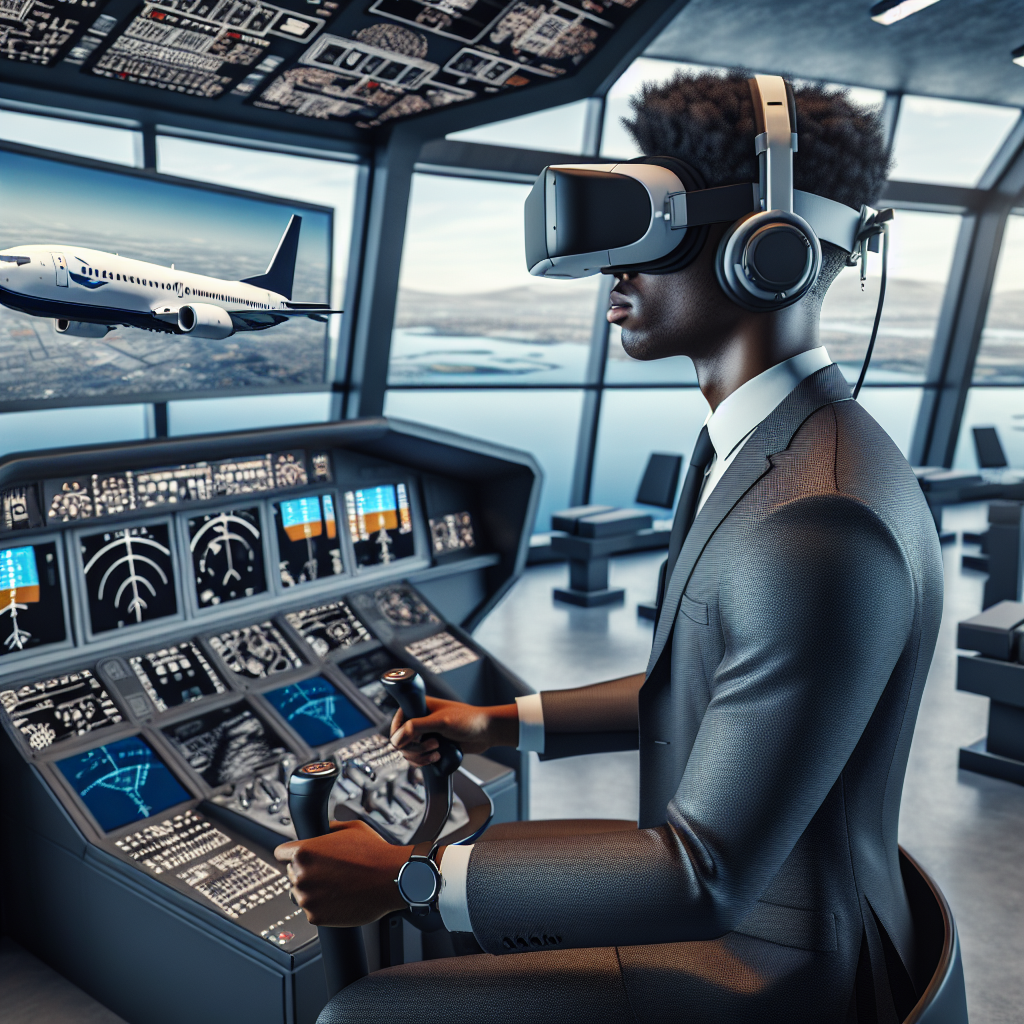
Alaska Airlines Launches B737 Pilot Training with VR Simulators

Alaska Airlines Invests in Groundbreaking Boeing 737 Virtual Reality Simulator
Alaska Airlines is taking a significant step forward in pilot training by investing in the development of the first hyper-realistic, full-motion Boeing 737 virtual reality (VR) simulator. This innovative technology aims to enhance the airline’s commercial pilot training program using extended reality (XR) technology. By incorporating advanced simulation techniques, Alaska Airlines is set to redefine how pilots are trained for real-world flying scenarios.
Revolutionizing Pilot Training with VR Technology
The Boeing 737 VR simulator is being developed by Loft Dynamics, a Swiss aviation simulation company renowned for creating the only FAA- and EASA-approved VR helicopter flight simulator. With the backing of Alaska’s pilot training team, Loft Dynamics is now applying its expertise to design a cutting-edge VR simulator tailored for fixed-wing aircraft.
Key Features of the Boeing 737 VR Simulator:
- Six-Degrees-of-Freedom Full-Motion Platform: This feature provides force feedback and haptic sensations, creating a realistic flying experience.
- 360-Degree Panoramic 3D Visuals: Pilots can enjoy enhanced spatial awareness through immersive visuals.
- Full-Body Pose Tracking: This technology ensures precise movements within the simulator, allowing for a more accurate training environment.
- Customizable Training Scenarios: Instructors can create tailored environments for diverse training needs.
- Virtual Demonstration Mode: This allows instructors to record and replay training sessions for better feedback.
Compared to traditional Boeing 737 simulators, the new VR model boasts a compact design that occupies just one-twelfth of the space. This smaller footprint could enable Alaska Airlines to deploy simulators at various bases, thereby providing pilots with more frequent opportunities to refine their skills.
Looking Toward the Future: FAA Certification and Enhanced Training
While the ultimate aim is to achieve FAA certification for the simulator, Alaska Airlines plans to enhance existing FAA-approved programs in the meantime. Jeff Severns, Managing Director of Flight Operations Training at Alaska Airlines, commented on this transformative approach: “Pilot training has significantly evolved over the past 30 years. With Loft’s hyper-realistic VR simulator, we could be transforming commercial pilot training as we know it today.”
Severns emphasized that these VR simulators could offer a fully immersive, data-driven experience that replicates real-world flight scenarios—all within a compact device suitable for office spaces. “We are committed to offering the most advanced training solutions available, including VR, and look forward to being Loft’s first fixed-wing customer,” he concluded.
This investment aligns with Alaska Airlines’ strategic vision, facilitated through Alaska Star Ventures, the airline’s corporate venture capital arm. By embracing innovative technologies, Alaska Airlines aims to stay at the forefront of pilot training and safety.
Conclusion: Embracing the Future of Aviation Training
Alaska Airlines is setting a precedent in aviation training with its investment in the Boeing 737 VR simulator. Such advancements not only enhance training effectiveness but also pave the way for safer and more skilled pilots in the skies.
What are your thoughts on the future of pilot training? Share your opinions in the comments below, and for more insights into aviation innovations, check out our related articles on virtual reality training and aviation safety advancements.
For more information about Alaska Airlines and their initiatives, visit Alaska Airlines Official Site and Loft Dynamics.