Hawaiian Airlines Flight to Tokyo Declares Emergency Due to Fire

Mid-Air Emergency on Hawaiian Airlines Flight: Cell Phone Fire Raises Safety Concerns
A recent mid-air emergency on a Hawaiian Airlines flight from Honolulu (HNL) to Tokyo Haneda (HND) has sparked significant safety discussions following a passenger’s cell phone catching fire at 40,000 feet. The incident, linked to a lithium-ion battery, prompted the flight crew to declare an emergency and request a priority landing, highlighting ongoing concerns about mobile device safety during flights.
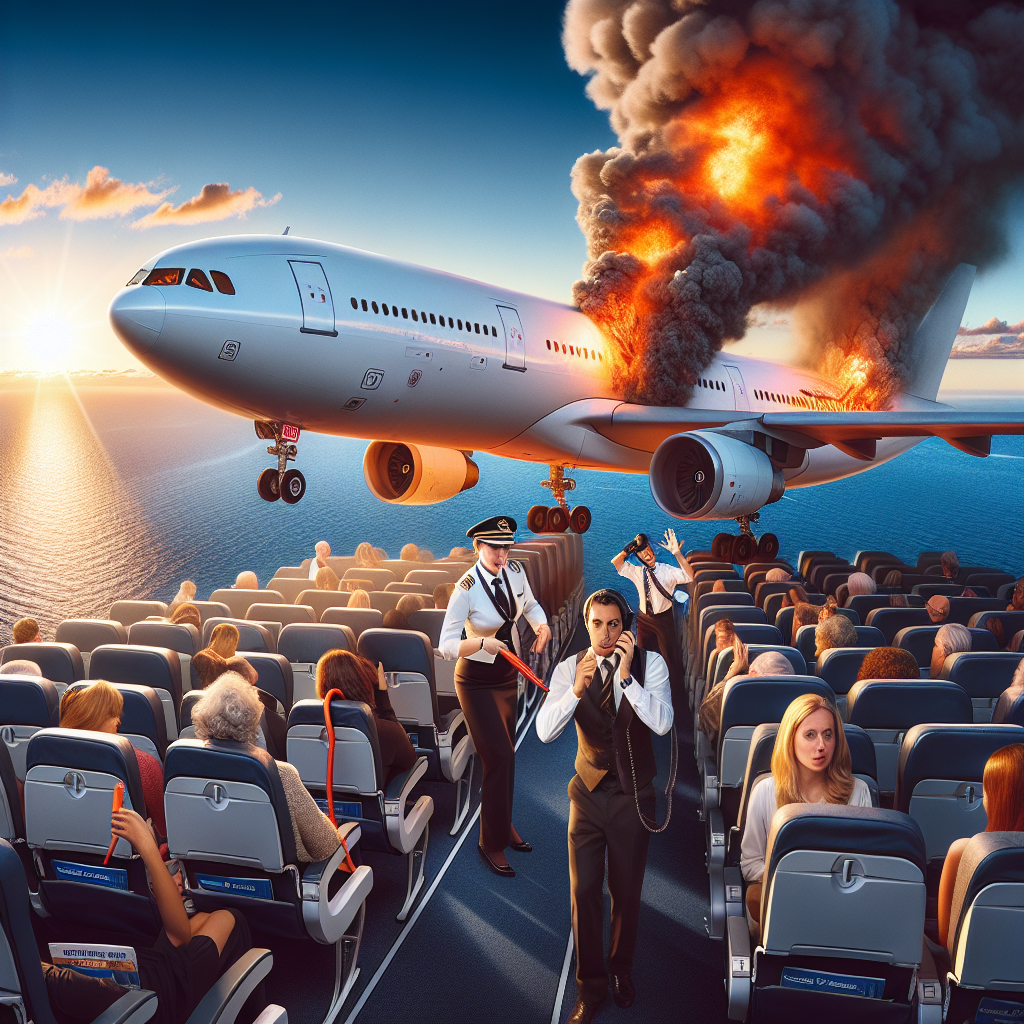
The emergency unfolded aboard Hawaiian Airlines Flight HA457, as passengers began noticing a strong burning smell while cruising over the Pacific Ocean. Fortunately, the aircraft landed safely, and no injuries were reported. This incident serves as a stark reminder of the potential dangers associated with lithium-ion batteries in confined spaces like aircraft cabins.
Hawaiian Airlines Flight Catches Fire: What Happened?
While flying over a remote area of the Pacific, passengers aboard Flight 457 alerted the flight crew to a burning odor. After investigating, flight attendants discovered that a mobile phone had become jammed and damaged within a passenger seat, causing the alarming situation.
- Quick Response: The flight attendants promptly retrieved the phone and secured it in a fire containment bag, a standard safety tool for managing lithium-ion battery incidents.
- Emergency Declaration: The pilots declared an emergency, achieving a priority landing at Tokyo Haneda Airport. The Airbus A330, carrying approximately 140 passengers, landed without injuries.
- Inspection Required: The aircraft was grounded for an extended period to allow engineers to inspect the seat for damage, emphasizing the need for thorough safety protocols.
Lithium-ion battery fires can be particularly challenging to extinguish due to a phenomenon known as "thermal runaway," where the battery overheats uncontrollably. In this case, the crew’s swift actions effectively prevented the situation from escalating further.
Rising Concerns of Lithium-Ion Fires in Aviation
The risks associated with lithium-ion batteries are of growing concern in aviation safety. These batteries are commonly found in everyday devices, including cell phones and laptops, and recent high-profile incidents have raised alarms.
- Notable Incidents: In January, an Air Busan Airbus A321 was destroyed at Gimhae International Airport after a passenger’s battery pack ignited in an overhead bin. Although all passengers and crew evacuated with minor injuries, the aircraft was a total loss.
- Heightened Regulations: Such occurrences have led airlines to tighten restrictions on portable battery packs and implement updated safety protocols. Passengers are now advised against adjusting seats if a device is lost, to prevent damage that could lead to fire.
Fire Containment vs. Alternative Methods
To mitigate the risks of lithium-ion battery fires, airlines utilize fire containment bags, which limit oxygen to extinguish flames. However, the effectiveness of these bags has come under scrutiny.
- Fire Triangle Principle: This principle suggests that removing heat, fuel, or oxygen can extinguish fires. While water is not always feasible in-flight, it remains a potential method for eliminating heat and oxygen in certain scenarios.
- Standard Practices: Most commercial airlines, including Hawaiian Airlines, still rely on fire containment bags as part of their safety kits, but ongoing research and crew training are essential to refine these techniques.
Airline Responses to Lithium-Ion Battery Risks
In light of the increasing incidents involving lithium-ion batteries, airlines and regulatory bodies are enhancing safety measures.
- Regulatory Guidelines: Many airlines are now limiting the size and number of lithium-ion devices allowed on board. The International Air Transport Association (IATA) provides guidelines for safely transporting these devices, emphasizing proper storage and handling.
- Ongoing Scrutiny: Japan’s Ministry of Transport, which oversees operations at Tokyo Haneda, reported no regulatory violations in the Hawaiian Airlines incident. However, this event may lead to further examination of existing policies surrounding lithium-ion batteries and in-flight safety.
As aviation continues to evolve, addressing the risks associated with lithium-ion batteries will remain critical for ensuring passenger safety.
Share Your Thoughts
What are your thoughts on the safety measures surrounding lithium-ion batteries in aviation? Have you experienced any similar incidents while traveling? Feel free to share your experiences or read more articles related to aviation safety and technology.
For further reading, check out the IATA’s guidelines on transporting lithium-ion batteries and more about airline safety protocols.