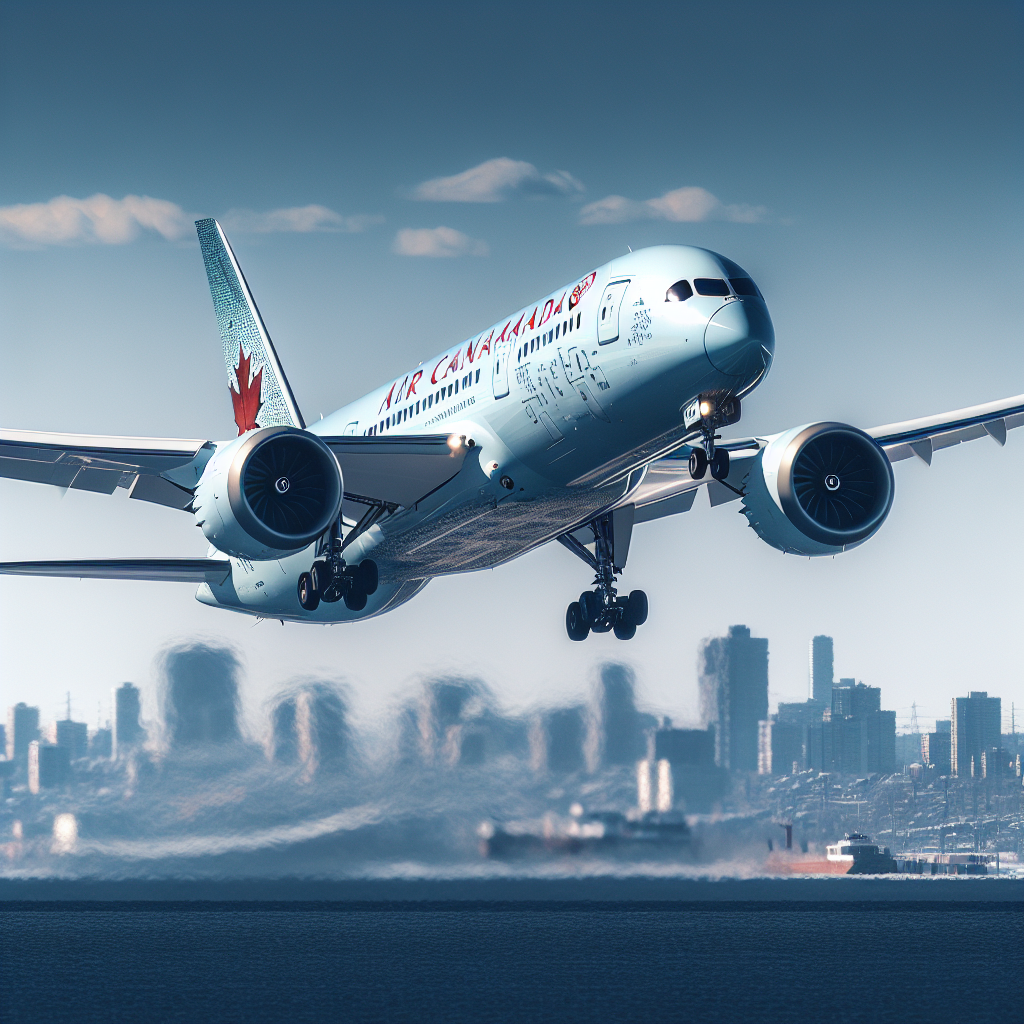
Air Canada Pilots Forget 787 Landing Gear After Takeoff

Air Canada’s Boeing 787-9 Takes Off with Landing Gear Down: A Vital Safety Protocol Explained
MONTREAL – In a remarkable aviation event, Air Canada’s Boeing 787-9 Dreamliner took off recently with its landing gear intentionally left down after liftoff. This unusual maneuver was not a mechanical failure but a deliberate action by the flight crew, adhering to strict safety protocols outlined in the aircraft’s Minimum Equipment List (MEL) 32-12-01. This MEL addresses the issue of missing door seals in the landing gear bay, allowing for a safe flight under specific operational constraints.
By following this protocol, the pilots ensured that essential safety measures were maintained, demonstrating the airline’s commitment to passenger safety and compliance with aviation regulations.
Understanding the Importance of Extended Landing Gear
When operating under specific MEL conditions, such as the absence of landing gear door seals, flight crews must implement compensatory procedures to uphold safety standards. Here are the key reasons for maintaining the landing gear in an extended position for approximately ten minutes post-takeoff:
- Cooling of Brake Components: Leaving the landing gear down allows for proper cooling of brakes that may have heated up during taxiing and takeoff.
- Optimal Airflow Maintenance: This configuration helps maintain airflow patterns crucial for fire detection systems when door seals are compromised.
- Complete Wheel Spin-Down: The pilots ensure that the wheels come to a complete stop before retracting the landing gear, minimizing stress on the system.
- Compensation for Fire Detection Limitations: With the gear extended, the aircraft can better monitor for potential fire hazards.
While this procedure results in increased fuel consumption—approximately 1,200 kg of additional fuel burn—it reflects a calculated safety trade-off that allows continued operations despite equipment limitations.
Boeing 787 Landing Gear System: Key Features
The Boeing 787 Dreamliner boasts several distinctive features related to its landing gear operation, which are particularly significant in situations like this one:
- Automatic Landing Gear Door Operation: Upon liftoff, the landing gear doors open automatically, preparing for gear retraction.
- Automatic Closure Mechanism: If the pilots do not select "gear up" within a specified timeframe, the doors will close around the extended gear.
- Quick Retraction During Normal Operations: Typically, the landing gear retracts within ten seconds after takeoff.
- Automatic Braking: The system applies braking to the wheels during retraction to prevent gyroscopic forces from damaging the landing gear.
These advanced features ensure the safety and efficiency of the Boeing 787’s operations, even when faced with specific MEL conditions.
The Role of the Minimum Equipment List (MEL)
The MEL is a vital regulatory document that details which equipment may be inoperative while still allowing for legal flight operations. For Air Canada and other airlines, the MEL:
- Specifies Temporarily Inoperative Components: It outlines which systems can be non-functional without grounding the aircraft.
- Prescribes Safety Procedures: It requires specific actions to be taken to ensure safe operation under these conditions.
- Sets Repair Time Limits: It establishes timeframes within which repairs must be completed to avoid grounding.
- Maintains Safety Margins: It ensures that safety remains paramount, despite equipment deficiencies.
In this instance, MEL 32-12-01 mandates that the landing gear remain extended temporarily after takeoff, underscoring that such configurations are often the result of meticulous safety planning rather than emergencies.
Advanced Braking Technology in the Boeing 787
The Boeing 787 Dreamliner features state-of-the-art braking technology, developed by Safran Landing Systems. Key elements include:
- Fully Electric Brake Actuation: This system enhances reliability and performance.
- Electronic Brake Actuators (EBAs): There are 32 EBAs distributed across all wheels, providing precise control.
- Carbon Brake Packs: These are optimized for weight and thermal efficiency.
- Redundant Electrical Pathways: The system is designed to operate even in dual-engine failure scenarios.
This innovative braking architecture ensures that the 787 can maintain operational integrity, even under challenging conditions.
Key Thermal Management Considerations
Temperature management is crucial for the safe operation of the landing gear. For the 787 and similar aircraft:
- Brake Temperature Guidelines: Brake temperatures should remain below 200°C before pushback. Exceeding 300-400°C during taxi may necessitate a return to the stand.
- Overheated Brakes: Potential fire hazards in gear bays can arise if brakes are retracted too quickly after overheating.
These thermal management protocols further justify the necessity of keeping the landing gear extended under certain MEL conditions, ensuring adequate cooling and preventing heat-related incidents.
Conclusion
The decision by Air Canada’s flight crew to keep the Boeing 787-9’s landing gear down after takeoff was a calculated and necessary safety measure, compliant with aviation regulations. This incident highlights the importance of understanding the protocols surrounding the Minimum Equipment List and the advanced features of modern aircraft.
For more insights into aviation safety and technology, feel free to share your thoughts or explore related articles.