EU Lifts 19-Year Liquid Ban at Airports Amid Varying Implementation

The European Union has begun to ease its long-standing carry-on liquids restriction at selected airports. This notable shift is primarily attributed to new security scanning technology, implemented at places like Frankfurt (FRA), Amsterdam (AMS), and Milan Linate (LIN).
Travelers on EU airlines such as Lufthansa, ITA Airways, and Ryanair can now bring liquids in containers exceeding 100ml at certain security checkpoints. Nevertheless, this rollout is inconsistent, potentially leading to confusion among passengers across different member states.
EU Liquid Rules Spark Confusion
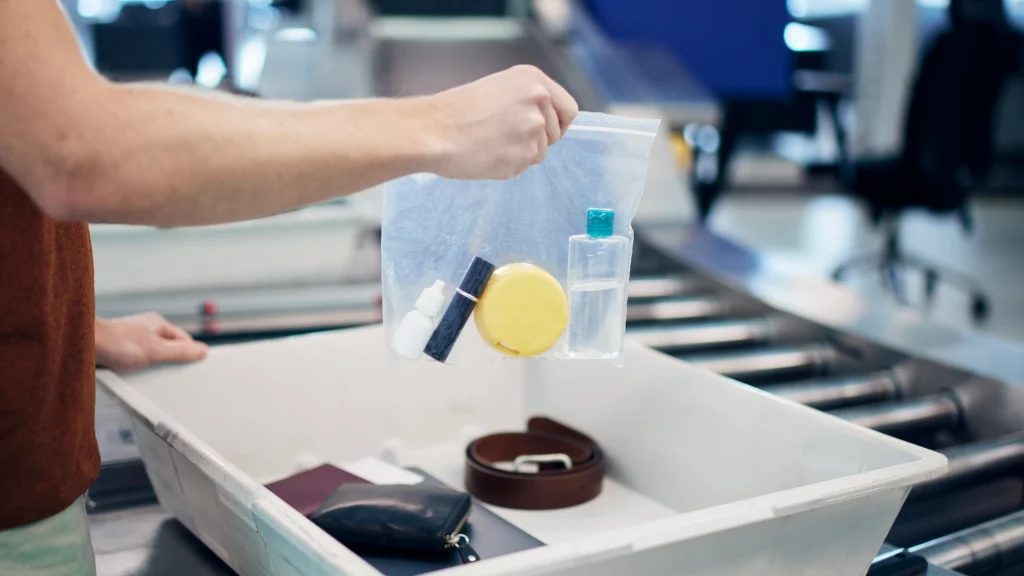
This easing of the liquids ban is a significant change in airport security rules that have been enforced since 2006.
The new guidelines permit travelers to carry up to two liters of liquids in their hand luggage, but only at checkpoints equipped with advanced CT scanners, particularly those created by Smiths Detection.
While some airports start to implement these changes, the rollout remains uneven. Only terminals that utilize Smiths Detection devices qualify for the updated regulations.
Regrettably, CT scanners from other manufacturers like Nuctech and Rapiscan currently do not fulfill the EU’s updated technical standards.
Airports such as Milan Linate, Dublin, and Barcelona are beginning to adopt these new measures, but the final decision to lift the ban rests with individual countries and airports. As such, travelers should check the current regulations both when departing and returning to avoid any misunderstandings.

Technology Determines Security Policy
The modification of liquids rules aligns directly with the introduction of specific CT scanners, which provide detailed 3D imaging of carry-on items, enhancing threat detection without the need to open bags.
Approximately 700 of these advanced scanners are either installed or in the process of being installed across 21 EU nations, including Germany, Italy, and Spain.
However, the presence of different brands of scanners at the same airport can result in inconsistent experiences for travelers. For instance, at Milan Linate Airport, some terminals lift restrictions while others maintain them, complicating matters even further.
Member States Control Implementation
While EU regulators have approved the easing of restrictions, the final responsibility for implementation rests with national governments and airport operators.
Major airports like Rome Fiumicino, Munich, and Madrid Barajas have the potential for upgrades, but a timeline for these changes remains unclear.
A partial lift previously attempted in summer 2024 was reverted due to “temporary technical vulnerabilities.” That issue appears to have been resolved, and the EU is now cautiously proceeding with the rollout, prioritizing safety.
Limited Predictability for Travelers
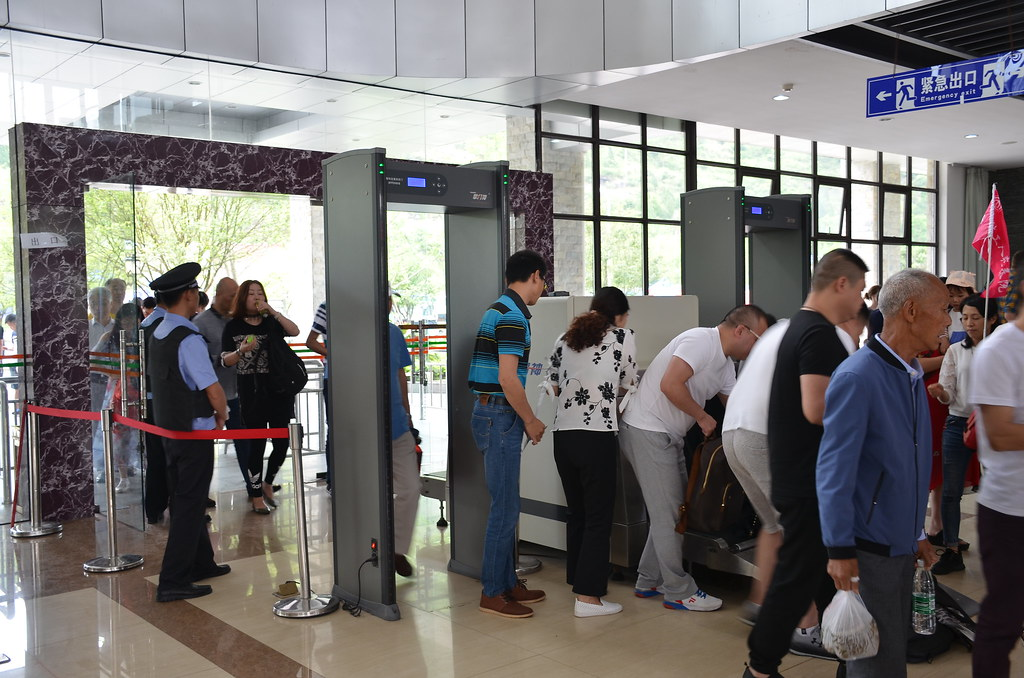
Although this policy change is a welcome move towards modernizing air travel, it brings considerable uncertainty. Travelers might find themselves departing from a terminal with relaxed rules only to return through one with the traditional 100ml limit.
As a precaution, it’s wise for travelers to stick to the original liquid limits unless explicitly instructed otherwise at their departure terminal.
For now, the best strategy is to operate under the assumption that the old liquids policy is still applicable unless airport signage or staff indicate otherwise. How will you prepare for your travels given these updates?