Iberia’s A321XLR Faces Bird Strike, Returns to Madrid for Repairs

MADRID- An Iberia (IB) Airbus A321XLR was involved in a serious incident where it sustained noticeable damage to its nose section after encountering a bird strike shortly after takeoff from Madrid-Barajas Airport (MAD). This unfortunate event compelled the crew to initiate an emergency return to the airport.
The aircraft was executing flight IB579, destined for Paris Orly Airport (ORY), when the bird strike occurred. Fortunately, there were no injuries reported, and the aircraft made a safe landing back in Madrid on August 3, 2025.

Iberia A321XLR Bird Strike Incident
The bird strike happened soon after takeoff, leading the flight crew to declare an emergency. The Airbus A321XLR on flight IB579 promptly turned back to Adolfo Suárez Madrid–Barajas Airport (MAD), landing safely without any additional complications.
The incident resulted in visible damage to the nose radome—the rounded front section of the aircraft that contains the weather radar antenna. This area, along with the radar system, is vital for detecting and navigating through adverse weather, making it imperative for the aircraft to return.
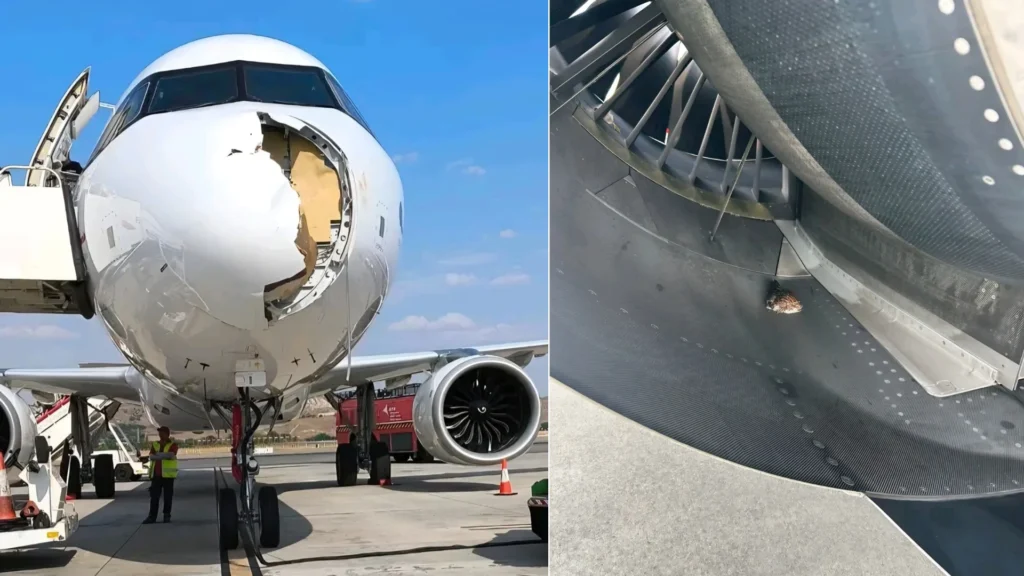
Smooth Emergency Landing
Iberia has stated that all safety measures were properly enacted and commended the flight crew for their prompt and efficient actions. The airline noted that bird strikes of this nature are uncommon, especially for the Airbus A321XLR, one of the latest models in their fleet.
The decision to return to MAD shortly after departure was pivotal in safeguarding both passengers and crew. While it might have startled some passengers, the aircraft landed without issue, and overall airport operations remained largely unaffected.
A bird strike, such as the one damaging the nose radome, necessitates thorough structural inspections and often leads to protracted maintenance. The weather radar, located within this section, is crucial for detecting and avoiding poor weather, particularly on longer routes spanning destinations like Madrid to Paris.
The aircraft will stay out of service while Iberia’s engineering and maintenance teams, in close collaboration with Airbus, perform all necessary assessments and repairs. Such damage often requires mandatory reporting to aviation authorities.
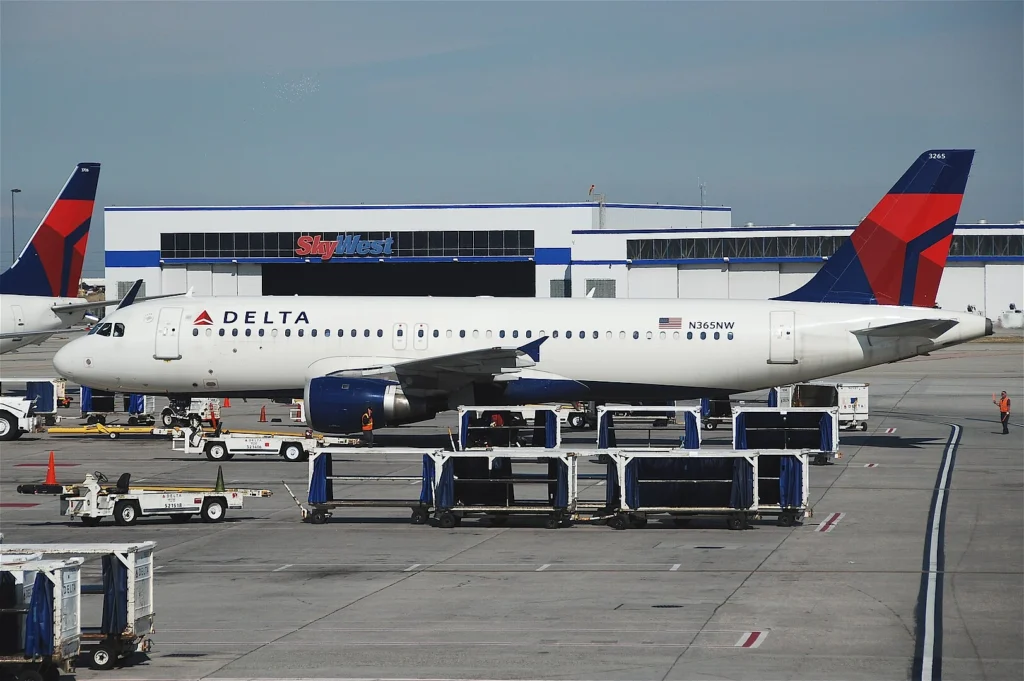
Related Incident Involving Bird Strike
A recent case involving Delta Air Lines (DL) flight DL1279 highlights another incident of a bird strike. This occurred on January 29, 2025, during its descent from Tampa International Airport (TPA) to Raleigh-Durham International Airport (RDU).
The Airbus A320, operating the evening flight, landed safely despite the bird strike. No injuries were reported, and the aircraft continued its schedule following a thorough inspection.
Flight DL1279 took off from Tampa (TPA) at 8:45 PM UTC, according to FlightRadar24. As the aircraft approached Raleigh-Durham International Airport (RDU), the flight crew reported a bird strike.
The incident took place during the final descent, yet the pilots opted to proceed with landing rather than executing a go-around. The aircraft successfully landed at 10:10 PM UTC on Runway 23R-5L and taxied to the terminal without further complications.
Once the passengers and crew disembarked, Delta’s TechOps examined the aircraft on the ground at RDU. Fortunately, no significant damage was found, allowing the aircraft to continue its operation.
The aircraft in question was an Airbus A320 equipped with CFM56-5A engines. Despite its 33 years of service, it remains operational on domestic routes. After post-landing checks were cleared, this aircraft proceeded on its next leg from Raleigh-Durham (RDU) to Orlando International Airport (MCO) without delays.
What are your thoughts on the importance of safety measures in aviation, especially regarding bird strikes? Let us know in the comments!