Air France Flight from San Francisco to Paris Diverts for Emergency in Canada

PARIS- Air France (AF) had to divert flight AF81 from San Francisco (SFO) to Paris Charles de Gaulle (CDG) due to a medical emergency involving a passenger. The aircraft made an unexpected landing in St. John’s (YYT), Canada.
The situation escalated as the upset passenger reacted aggressively, gesturing to the crew while being transported off the plane, which surprised many on board during the captain’s announcement.

Air France Medical Emergency
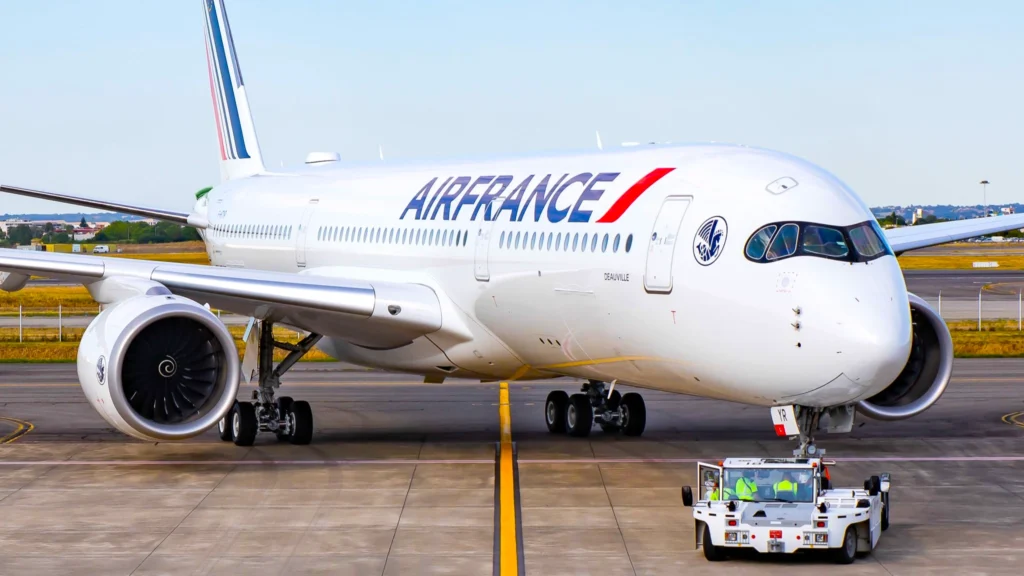
In the midst of a long-haul flight, a passenger fell ill, prompting the crew to take immediate action to ensure their safety. The Airbus A350-900 had taken off from San Francisco at 9 PM on June 13, 2025, with a destination of Paris Charles de Gaulle.
Five hours into the flight, and at an altitude of 39,000 feet over Canada, the pilots decided to change their course after consulting with medical experts, as there were no doctors on board.
The captain informed passengers of the need to land in St. John’s (YYT) to provide urgent care for the ill passenger. Emergency responders, including ambulances and fire trucks, awaited the plane’s arrival.
After a two-hour descent and a brief stop of 90 minutes, the flight continued on its journey. Once airborne again, the captain provided an update, revealing that the passenger, whose life was saved, had expressed anger while leaving the aircraft and remained irate at the hospital.
This incident captured widespread attention when content creator Ishan shared the captain’s announcement on TikTok, showcasing the passenger’s unexpected reaction, which struck many as ironic considering the crew’s efforts to ensure safety during the flight.
Air France Diversion Process
The flight plan included crossing the US, Canada, Greenland, and the Atlantic, which typically takes about ten hours. However, the diversion added significant time, necessitating a northeast route to the nearest airport.
Pilots work closely with ground-based medical teams through satellite communications, evaluating the passenger’s condition and the resources available on the plane.
Airlines often utilize aero medicine services for round-the-clock medical advice. The onboard doctor assesses whether in-flight care is feasible or if a diversion is needed, coordinating ground support for safe treatment. In this case, the medical experts concluded an in-person examination was necessary to avoid risks during the ocean crossing.
Costs and Industry Measures
Diversions can cost airlines roughly $120,000 each, accumulating to an estimated $552 million spent industry-wide annually. Due to these high costs, airlines prefer to avoid diversions unless absolutely essential.
To lessen unnecessary stops, many airlines invest in telemedicine technologies. Emirates, for instance, is planning significant investments in equipment that can transmit vital signs like pulse, temperature, and glucose levels via Wi-Fi. Enhanced video capabilities allow real-time assessments by medical professionals, guiding crew members in providing proper care.
Air France is committed to similar measures, ensuring passengers’ well-being while balancing operational efficiency.
What are your thoughts on the measures airlines should take in situations like these?