EVA Air 777 Encounters Turbulent Landing Amid Typhoon Podul

TAOYUAN- An EVA Air Boeing 777 cargo plane encountered significant difficulties during Typhoon Podul on August 13, 2025. The challenging conditions at Taipei Taoyuan Airport (TPE) led to a rough landing, where reverse thrust was unexpectedly deployed mid-air.
This event shed light on the potential hazards of stormy weather, as the aircraft experienced a bounce after landing prematurely. Pilots had to contend with intense winds, raising concerns about the stability of their approach.
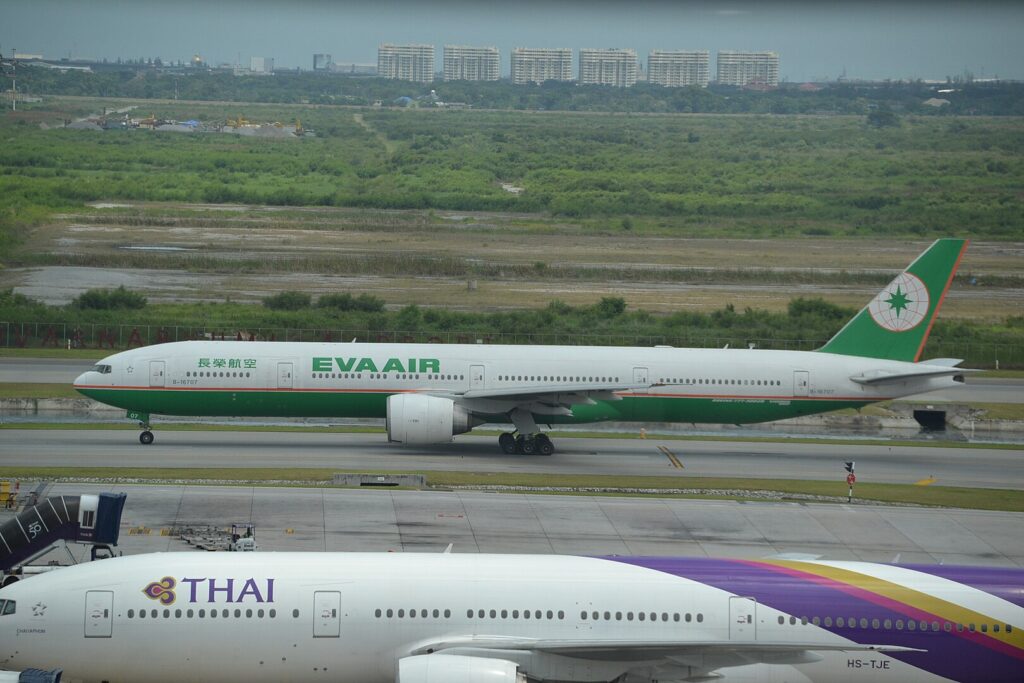
EVA Air 777 Cargo Rough Landing
Typhoon Podul caused substantial disruptions at Taipei Taoyuan Airport (TPE) and created harsh conditions for incoming flights.
In this instance, an EVA Air (BR) Boeing 777 freighter faced extreme crosswinds, leading to a premature touchdown. The aircraft temporarily lifted off again, during which reverse thrusters activated unexpectedly.
This resulted in a hard bounce upon re-contact with the runway. Videos captured the sequence, revealing the aircraft’s struggle amid the storm.
There is some speculation regarding the exact flight involved. Some sources suggest it was BR6062 from Hanoi (HAN), arriving at 3:42 PM, operated by an aircraft with registration B-16782.
However, others indicate it was BR609 from Los Angeles (LAX), landing at 3:06 PM, registered as B-16781. Evidence points toward the Los Angeles flight, as it performed two go-arounds before successfully landing on the third try. Footage from one prior go-around illustrated similar challenges related to wind conditions.
Aviation experts noted that the unexpected deployment of reverse thrust while airborne violates standard procedures, as no situation should call for such action in flight. The systems might have auto-deployed after the initial landing, failing to account for the brief subsequent lift-off.
Safety Concerns
A pilot who specializes in Boeing 777 aircraft reviewed the footage and questioned the choice to continue the landing approach. The unstable conditions should have prompted a go-around, but the pilots proceeded nonetheless.
This was likely the third attempt after a long-haul flight from Los Angeles (LAX), where fatigue and the drive to land might have influenced the decision. As the aircraft approached minimum fuel levels after two unsuccessful attempts, diverting could have been a necessary option.
Fortunately, the aircraft suffered no structural damage and successfully returned to service without extended downtime, showcasing robust design resilience.
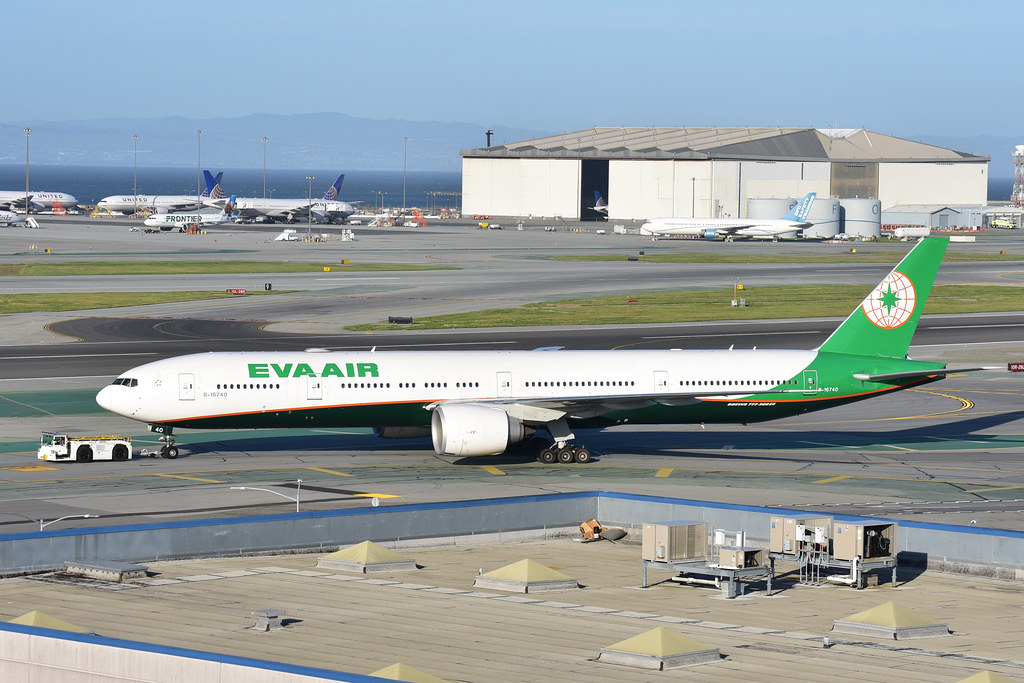
On the same day, another dramatic incident occurred at Taipei Taoyuan Airport (TPE). A UPS Boeing 747-8 from Hong Kong (HKG) scraped its right engine on the runway, igniting flames.
This flight, 5X61, was grounded for weeks due to the necessary repairs. Both incidents underscore the impact of Typhoon Podul on aviation safety.
While operations resumed as weather conditions improved, these situations accentuate the importance of sticking to established go-around protocols during adverse conditions.
Bottom Line
The EVA Air Cargo Boeing 777 freighter’s turbulent landing amidst Typhoon Podul at Taipei Taoyuan International Airport (TPE) was alarming yet unique.
The unusual mid-air usage of reverse thrust emphasized the seriousness of the event, although the aircraft avoided any lasting harm.
This occurrence, alongside other storm-related incidents, reveals the hazards of flying in extreme weather and underscores the crucial need for stable landing approaches.
Would you like to know more about the challenges encountered by pilots during extreme weather conditions?