Asian Airline Halts International Flights: What Travelers Need to Know

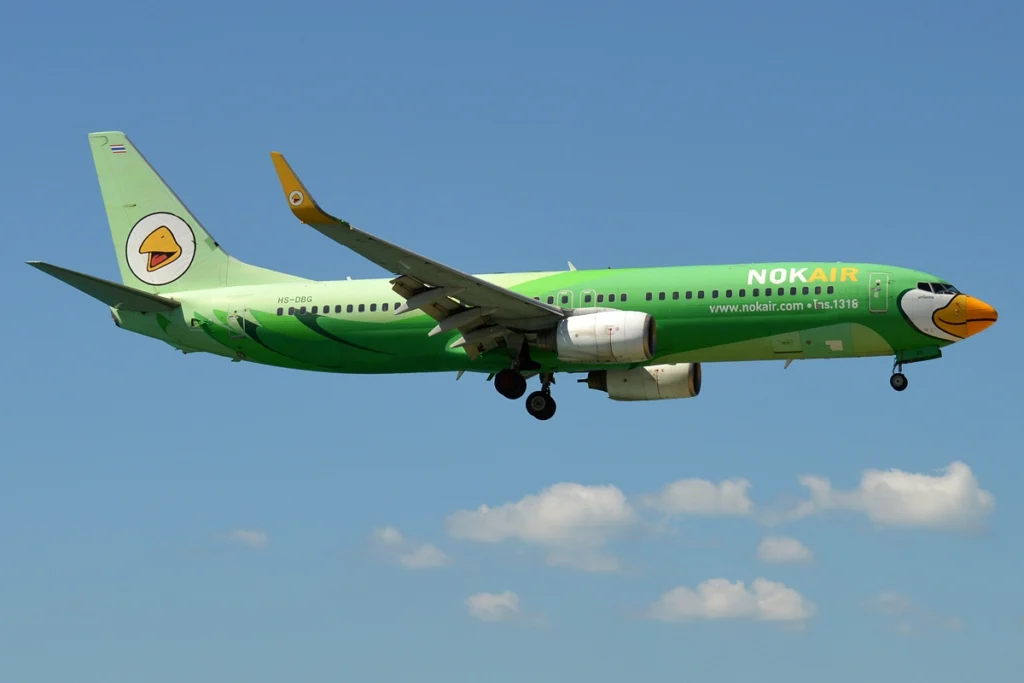
BANGKOK– The Civil Aviation Authority of Thailand (CAAT) has instructed Nok Air (DD) to halt its international flights due to ongoing safety issues. The airline has reported that a malfunctioning engine was promptly replaced following a previous incident.
Currently, Nok Air is not running international services, as it is the low season. During busier months, the airline operates routes to destinations in China (NKG, NNG, CAN) and India (DEL, CCU).

Nok Air Stops International Flights
The CAAT’s directive, issued on August 25, mandates that Nok Air cease international operations and delay any route expansion efforts. This decision followed multiple reports concerning safety and performance issues, including incidents of in-flight engine failures, runway excursions, hard landings, and tail strikes taking place between 2023 and 2025.
The most concerning event involved an engine failure on January 8, 2024, during a flight to Nanning (NNG). Fortunately, the aircraft landed safely using its remaining engine.
While Nok Air assured that the defective engine was promptly dealt with, CAAT’s request for a root cause analysis could not be met since the airline no longer had the removed engine.
Response from Nok Air and Safety Protocols
Nok Air’s CEO, Wutthiphum Jurangkool, expressed that the airline is formulating a formal response to the allegations and is optimistic about having restrictions lifted within a month. He highlighted that, in its 21 years of operation, Nok Air has not faced any fatal accidents.
Jurangkool acknowledged a 2022 runway excursion at Chiang Rai Airport (CEI) attributed to adverse weather, denying claims of operational negligence.
The airline’s safety measures adhere to the International Air Transport Association’s (IATA) Operational Safety Audit standards and comply with CAAT requirements.
Concerns About Safety Culture and Regulatory Compliance
CAAT raised alarms regarding Nok Air’s safety culture, citing recent resignations among pilots, instructors, and inspectors. Jurangkool connected these departures to recruitment competition from another low-cost airline, rather than implying safety issues.
He noted that Nok Air pilots are averaging 60–70 flight hours monthly, significantly below the 90-hour maximum limit.
Additionally, he suggested that the ongoing investigation may correspond with CAAT’s own audits by the International Civil Aviation Organization (ICAO), which could lead to more rigorous regulatory enforcement across Thai airlines.
What do you think about the current safety concerns surrounding Nok Air and their operational changes?