
DGCA Directs Air India to Re-Evaluate RAT Devices on Boeing 787 Fleet

DGCA has mandated that Air India conduct a thorough re-evaluation of the RAT systems across its fleet of Boeing 787 Dreamliners. This requirement comes in light of a recent incident where the RAT deployed unexpectedly as an aircraft landed in Birmingham, UK. Additionally, Boeing has been requested to gather reports from other operators of the 787 regarding similar occurrences.
As highlighted by the Times of India, the Directorate General of Civil Aviation (DGCA) has directed Air India to inspect the Ram Air Turbine (RAT) for proper stowage, especially in aircraft that have had their power conditioning module (PCM) replaced recently.
The RAT serves as an emergency backup mechanism designed to deliver hydraulic and electrical power when the primary engines fail. It operates by utilizing the aircraft’s forward motion to activate a turbine, which deploys from the aircraft’s underside, thereby maintaining power to essential flight systems and avionics.
This system is crucial during emergencies, such as when a dual-engine failure or complete electrical failure occurs. The RAT was previously deployed during a serious incident involving AI flight 171 in June 2025, which resulted in a crash shortly after takeoff in Ahmedabad.
The recent advisory arose from an event on October 4, 2025, when Air India flight AI117, traveling from Amritsar (ATQ) to Birmingham (BHX), experienced the automatic deployment of the RAT at around 500 feet during its descent. Thankfully, the aircraft landed safely, and all systems were reported to function normally during the flight.
According to the DGCA’s advisory, Air India has been instructed to assess the procedures followed during the ‘D’ Check concerning the module change for any possible discrepancies. The regulator noted that the RAT typically activates only in significant failure scenarios, making its deployment noteworthy.
Air India affirmed that, despite the uncommanded activation of the RAT on flight AI117, the aircraft’s electrical and hydraulic systems were reported to be functioning normally during the flight.
On October 6, 2025, following the incident, the Federation of Indian Pilots (FIP) urged the DGCA to evaluate the electrical systems across all Boeing 787 aircraft operating in India.
In a letter addressed to the DGCA, FIP President GS Randhawa highlighted that the Aircraft Health Monitoring (AHM) system had picked up a fault in the Bus Power Control Unit (BPCU), which could have triggered the RAT’s activation. The BPCU is vital for managing the aircraft’s electrical power distribution, and any failure could lead to significant disruptions.
The FIP expressed concerns about potential systemic vulnerabilities within the Boeing 787 aircraft, emphasizing the need for comprehensive inspections of the entire fleet in India.
In response, India’s Civil Aviation Minister Ram Mohan Naidu assured that the DGCA is actively investigating the matter. He indicated that once more details are available, the necessary steps would be taken to prevent similar incidents in the future.
Beyond Air India, the DGCA has broadened its inquiry and has requested Boeing to submit a detailed report outlining preventive measures regarding the uncommanded RAT deployment incident.
Moreover, the regulator has sought specific information from Boeing concerning other instances of uncommanded RAT deployments globally within the 787 fleet to identify any patterns or commonalities.
What are your thoughts on the recent RAT incident and its implications for aviation safety?
Similar Posts
United Flight from Honolulu to L.A. Makes Emergency Landing
A United Airlines flight, Flight 1169, was forced to return to Honolulu due to a bomb threat discovered in the lavatory. The Boeing 777, carrying 339 passengers, took off late Tuesday night but returned about an hour later after the crew found a threatening message. Upon landing early Wednesday, law enforcement conducted a security sweep, and passengers were rebooked on another flight to Los Angeles. This incident followed a similar bomb threat involving a Hawaiian Airlines flight from San Diego, where a passenger was arrested for making a false claim. Both incidents highlight ongoing air travel security challenges.

Southwest Airlines CEO Praises Boeing’s Significant Progress
Southwest Airlines CEO Bob Jordan recently announced strategic changes to boost profitability and customer satisfaction. Key updates include the introduction of assigned seating and global partnerships, aimed at modernizing the airline’s offerings while maintaining efficiency. The airline is enhancing international connectivity through a partnership with Icelandair, allowing seamless transatlantic travel. Jordan expressed confidence in Boeing’s progress and highlighted the importance of modernizing U.S. airspace infrastructure. Additionally, Southwest is focusing on sustainability by incorporating Sustainable Aviation Fuel (SAF) and transitioning to a full Boeing 737 MAX fleet. Despite industry challenges, the airline targets $1 billion in cost savings as part of its long-term strategy.
Finnair CEO Celebrates Finnish Resilience in Overcoming Airline Challenges
Finnair’s Leadership Reflects on Resilience In a recent announcement, the CEO…
Emirates Reveals Winter 2024-25 Flight Schedule Changes
Emirates Airlines has announced major updates to its Winter 2024-25 international flight schedule, responding to changing passenger demand. Key modifications include the introduction of new Airbus A350-900XWB routes and service upgrades across various regions. Notable changes include increased daily flights to Addis Ababa, reduced services to Algiers, and transitions to A350-900XWB for several routes in the Middle East. Additionally, enhancements in Asia Pacific include resumed service to Adelaide and doubled flights to Ho Chi Minh City. In Europe, Amsterdam and Barcelona will see A380 upgrades. The adjustments aim to improve service quality and cater to customer preferences.

South Korea: 1 in 4 Flights Delayed in 2024
In 2024, over 25% of flights operated by South Korean airlines were delayed, with an average delay rate of 25.7% for both domestic and international flights, according to the Korean Transport Ministry. Factors contributing to the delays include increased international flights leading to congestion, frequent turbulence, and airspace restrictions. Air Seoul reported the highest delay rate at 46.6%. Recent incidents, including a fatal crash involving Jeju Air and a fire on an Air Busan flight, have further raised safety concerns. Rapid growth in the aviation sector post-COVID-19 has strained infrastructure, prompting worries about maintaining operational standards.
Riyadh Air Launches Flat-Bed Business Class on 787s
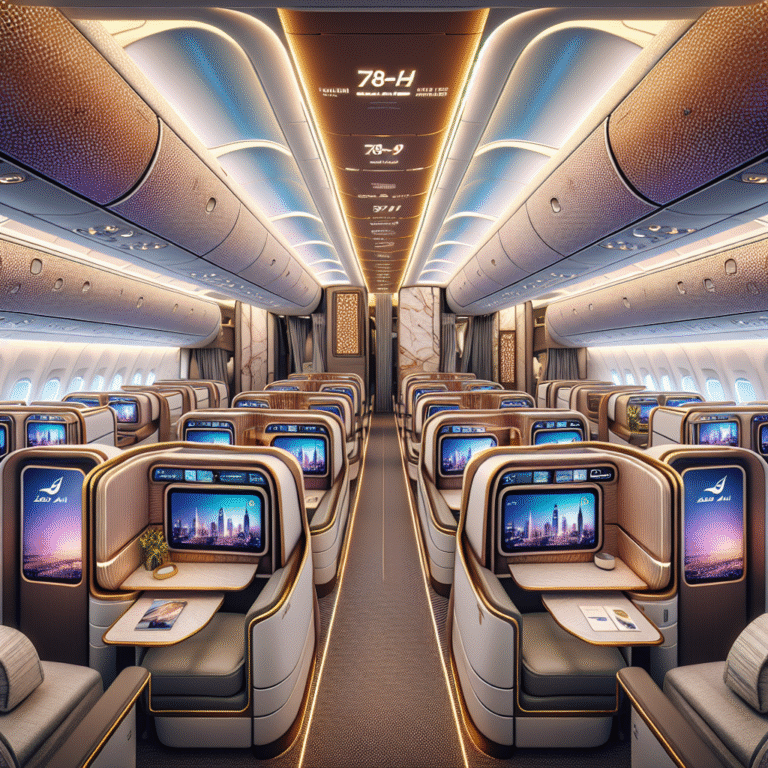
Riyadh Air, set to launch in 2025, has unveiled its innovative cabin interiors for its Boeing 787-9 fleet, emphasizing passenger comfort and advanced technology. The airline will offer three cabin classes—Business Elite, Business, Premium Economy, and Economy—with a total capacity of 290 passengers. Key features include large 4K OLED entertainment screens, luxurious seating configurations, and a blend of Saudi heritage-inspired aesthetics. Business cabins feature fully flat beds and high privacy walls, while all loyalty members will enjoy complimentary high-speed Wi-Fi. The design aims to redefine air travel with a seamless, tech-driven experience.