British Airways Halts A380 Operations at World’s First Jetliner Airport

LONDON- British Airways (BA) is set to make significant adjustments to its U.S. routes in the years 2025 and 2026, aiming to enhance its fleet and optimize route performance. The airline will cease Airbus A380 operations to Washington Dulles (IAD), reinstate A380 flights to Dallas/Fort Worth (DFW), and introduce the Airbus A350-1000 on the London Heathrow (LHR)–Nashville (BNA) route.
Additionally, there will be a fleet transition on the London (LHR)–Cincinnati (CVG) route, switching from the 787-8 to Boeing 777-200ER aircraft starting March 29, 2026. These modifications underscore BA’s evolving long-haul strategy across its U.S. network.
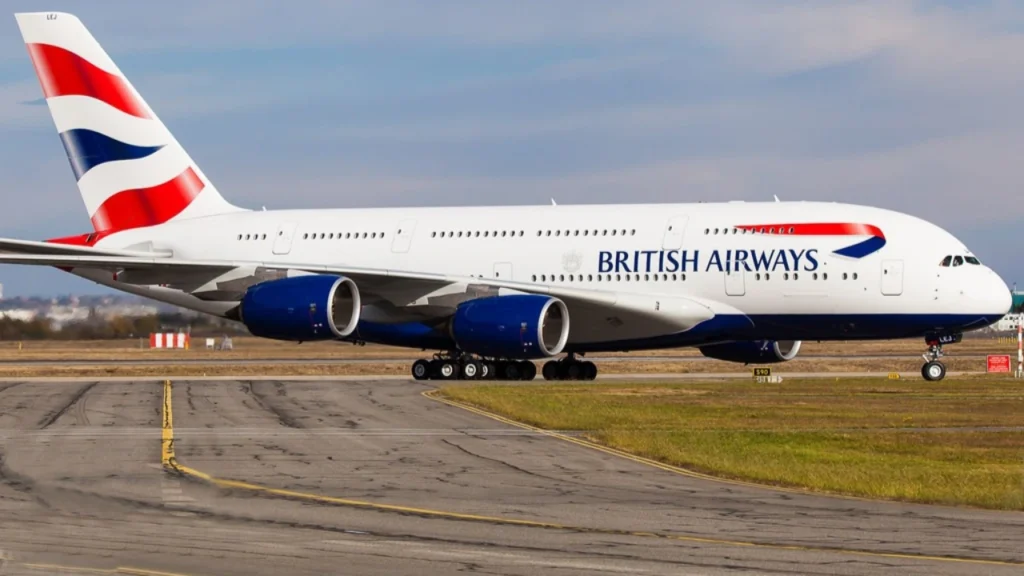
British Airways Suspends A380 Flights to IAD
Beginning November 7, 2025, British Airways will suspend Airbus A380 flights on its London Heathrow (LHR) to Washington Dulles (IAD) route, which currently operates daily. Following the suspension, the route will maintain service using smaller, widebody aircraft to meet demand effectively.
Conversely, the A380 will make a comeback on the London (LHR)–Dallas/Fort Worth (DFW) route as of May 21, 2026. This reintroduction emphasizes a strong demand for both business and leisure travel to Texas.
In another development, British Airways will resume using the Boeing 777-200ER on the London (LHR)–Cincinnati (CVG) route from March 29, 2026, replacing the smaller Boeing 787-8. This shift is aimed at enhancing overall capacity, especially for business travelers, due to increasing transatlantic demand.
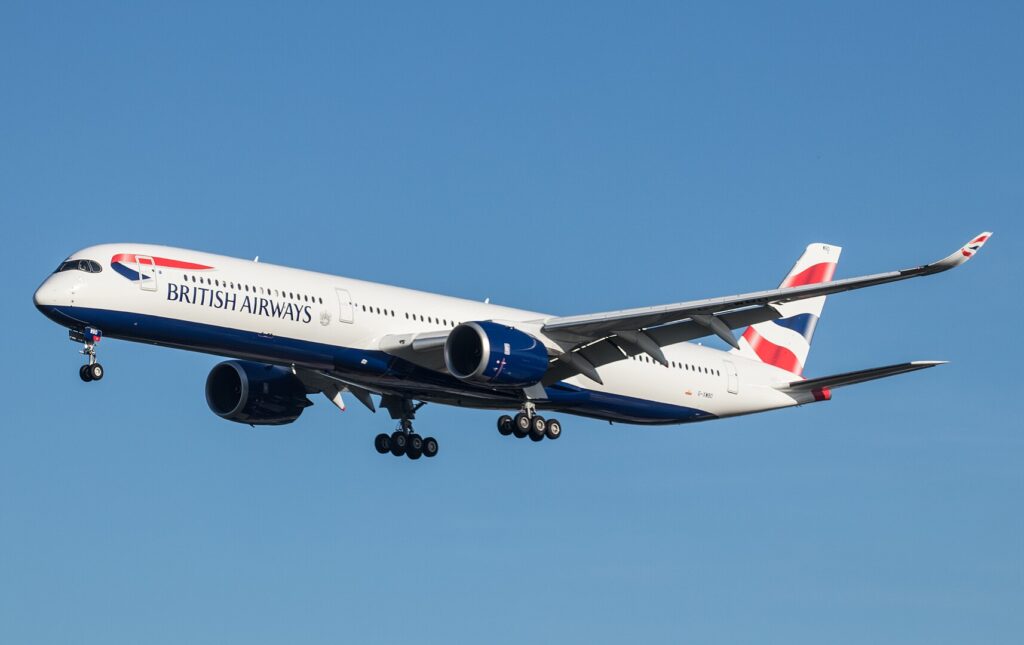
A350 to Replace 777 on Nashville Route
Effective March 29, 2026, British Airways will introduce the Airbus A350-1000 on its daily London Heathrow (LHR)–Nashville (BNA) service, taking over from the Boeing 777-200ER for the entire summer schedule. This move is a part of BA’s fleet modernization as it expands A350-1000 operations in North America.
The A350-1000 configuration will feature 331 seats across three classes: 56 Club Suites, 56 World Traveler Plus, and 219 World Traveler seats, adding 59 seats compared to the 777-200ER it replaces.
With both aircraft utilizing similar business and premium economy seats, passengers can expect a consistent experience. Economy passengers will enjoy slightly wider seats due to the A350’s efficient 3-3-3 layout versus the 777’s 3-4-3 configuration.
British Airways offers year-round service on this route, using the 787-8 during the winter months. Flight numbers will remain BA223 (LHR–BNA) and BA222 (BNA–LHR), with scheduled flight times of 9 hours and 10 minutes outbound and 8 hours and 10 minutes inbound.
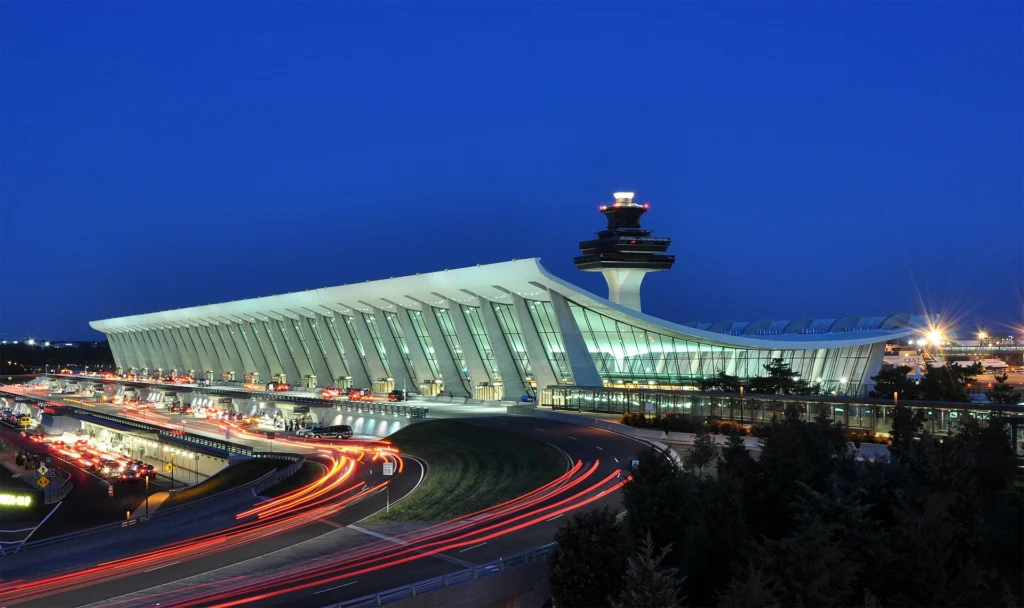
Washington Dulles: The World’s First Airport Built for Jetliners
Located about 26 miles (42 km) west of Washington, D.C., Washington Dulles International Airport (IAD) serves as a key gateway for the Washington–Baltimore metropolitan area. It is managed by the Metropolitan Washington Airports Authority and accommodates over 23 million passengers each year, connecting travelers to more than 125 destinations worldwide.
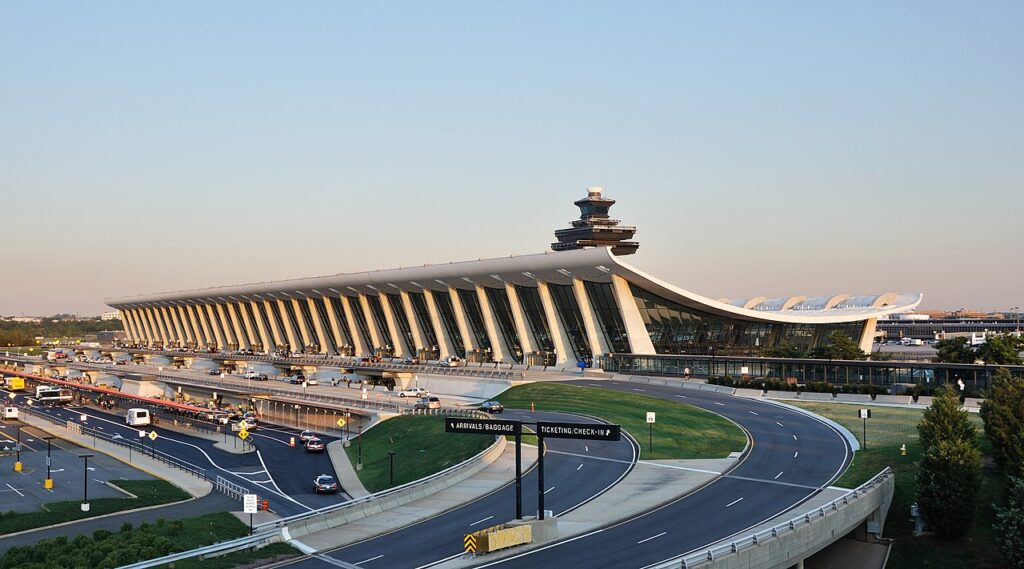
Designed by Eero Saarinen, Dulles is recognized for its unique main terminal, which reflects modern architectural innovation. It plays a significant role as the busiest airport in Virginia, serving a vital function in both domestic and international travel.
The Airport That Shaped Washington’s Air Network
Named after John Foster Dulles, a former U.S. Secretary of State, Dulles International was established to satisfy the rising demand for air travel in the post-World War II era. The Washington Airport Act of 1950 authorized its construction, leading to the airport’s opening in 1962 with Eastern Air Lines operating the inaugural flight from Newark (EWR).
Initially, Dulles faced challenges with traffic due to its distance from downtown Washington. However, as air travel grew and suburban regions expanded, it became an essential hub for air traffic.
Today, IAD stands alongside Ronald Reagan Washington National Airport (DCA) and Baltimore/Washington International Thurgood Marshall Airport (BWI) as a premier travel hub, handling a record 27.25 million passengers in 2024.
Development and Expansion
Dulles was envisioned as a futuristic airport situated in a rural setting, with its iconic wing-like roof symbolizing modern architectural trends. While its early years were marked by low passenger volumes, perimeter restrictions at National Airport allowed long-haul operations to flourish at Dulles, facilitating traffic growth.
Major domestic and international airlines established operations at IAD, leading to infrastructure enhancements, including additional runways and expanded terminals. Innovations like the AeroTrain system improved the airport’s capacity and passenger convenience.
Historical Roots and Site Selection
Prior to Dulles, Washington’s main airfield was Hoover Field, succeeded by Washington National Airport in 1941. In response to the postwar surge in air travel, the Civil Aeronautics Administration explored potential sites for a second airport in 1948. The Washington Airport Act of 1950 eventually funded the project.
Choosing the Dulles location resulted in displacing the Willard community and overlapping the site of Blue Ridge Airport, Loudoun County’s first airfield established in 1938. This area has since transformed into the Dulles Air Freight complex and the Washington Dulles Airport Marriott.
Modern Role in Regional and Global Aviation
Dulles has become a critical international hub, accounting for about 90% of the Washington–Baltimore area’s international air traffic. It connects travelers to over 139 destinations globally and supports approximately 60,000 daily passengers.
While Reagan National dominates short-haul routes, Dulles continues to be essential for long-haul and transatlantic services. Although competition from BWI has impacted domestic passenger volumes, Dulles remains committed to growth through enhanced global connections and ongoing infrastructure developments.
As part of its long-term vision, Dulles plans to expand cargo facilities and improve passenger amenities to maintain its status as a key regional leader in aviation.
What do you think about these changes in British Airways’ operations?