
Iberia Hit by Cyberattack: $6 Million Ransom for Stolen Passenger Data

MADRID- The recent cyberattack by the Everest ransomware group has compromised Iberia Airlines (IB), Spain’s national airline based at Adolfo Suárez Madrid–Barajas Airport (MAD).
The hackers are demanding a ransom of $6 million to prevent the release of 596 GB of stolen passenger information. This data includes names, email addresses, birth dates, and masked credit card details, along with booking histories.
Iberia alerted its Iberia Club members about the breach via email last Sunday, signaling that personal information may have been exposed.
This Russian-connected Everest group had previously disrupted check-in systems at major European airports in September.
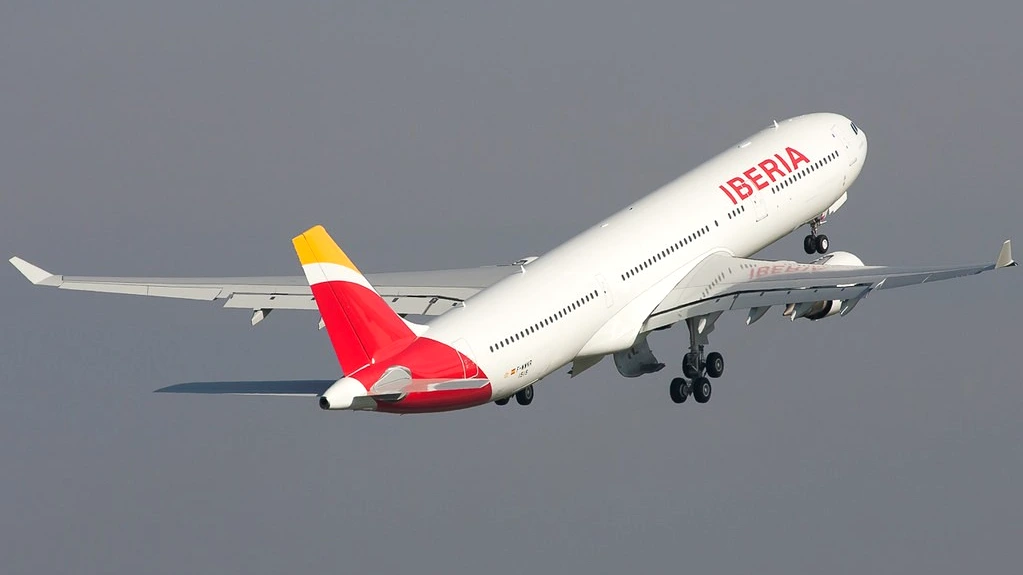
Iberia Confronts $6 Million Ransom Demand
The Everest group reportedly accessed Iberia’s data through a third-party vendor, acquiring 596 GB of sensitive information. This includes around 430 GB of emails with over 5 million editable records.
A member of the Everest group suggested that a complete data leak could lead to severe repercussions for both customers and the airline, resulting in a significant increase in spam and fraud.
They are threatening to release or sell the data unless Iberia complies with their $6 million demand. While full credit card numbers were not exposed, the masked card data, along with personal information, enables potential phishing attacks.
Data Confirmed Stolen from Iberia
Iberia (IB) has confirmed that the breach impacts frequent flyer accounts and includes:
- First and last names
- Email addresses
- Loyalty card numbers
- Contact details
- Dates of birth
- Travel and booking information
The airline has reassured that complete bank card details are safe, despite Everest’s claims of possessing partially masked card information.
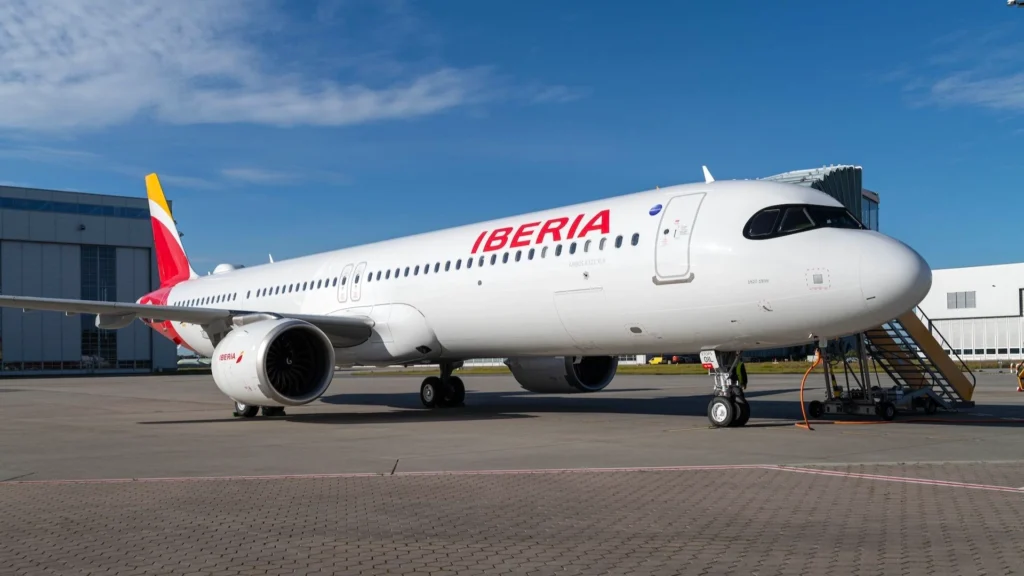
Customer Notification and Official Statement
In their communication, Iberia (IB) informed members, “Currently, we have no evidence that any fraudulent activities related to this data have occurred.”
They also advised customers to be vigilant against any suspicious communications and suggested reporting anomalies to their call center.
This isn’t the first time Everest has targeted the aviation industry. The group previously attacked the MUSE check-in system developed by Collins Aerospace, affecting flights across multiple European airports.
It’s unclear if Collins Aerospace paid the ransom during that incident.

The Growing Cyber Threat to Aviation
The breach affecting Iberia (IB) illustrates a continued pattern of the Everest group targeting the aviation sector for significant operational and financial gain.
Experts caution that personalized phishing emails, masquerading as communications from Iberia Club, could soon inundate inboxes, aimed at obtaining complete payment details or distributing malware.
How do you think airlines can enhance their data security to protect customers in light of these increasing threats? Feel free to share your thoughts!
Similar Posts

Singapore Airlines, Amex Boost Business Credit Card Perks
Singapore Airlines and American Express have launched an upgraded Business Credit Card for Small and Medium Enterprises (SMEs), effective April 23, 2025. The revamped card features enhanced travel rewards, including a conversion limit of up to 150,000 HighFlyer points to KrisFlyer miles at a 1:1 ratio. New members receive 10,000 HighFlyer points after their first flight booking. The card offers up to 8 HighFlyer points per S$1 spent on eligible Singapore Airlines and Scoot flights, along with benefits like 0% interest on six-month installments for flights and Accor Plus membership. The annual fee is S$400.

Air India Upgrades Boeing 777 for US and Canada Routes
Air India, part of the Tata Group, is initiating a temporary refresh of its Boeing 777 fleet due to global supply chain disruptions affecting full retrofits. This program will upgrade 13 aircraft servicing U.S. and Canadian routes, enhancing passenger comfort with new seat covers, cushions, curtains, and carpets. Collaborating with SIA Engineering, Air India aims to complete these updates by December 2025. CEO Campbell Wilson highlighted challenges in seat manufacturing, projecting a two-year timeline for comprehensive retrofits. The airline’s broader strategy includes investing $400 million to retrofit 67 aircraft, aiming to elevate its service standards and market position.
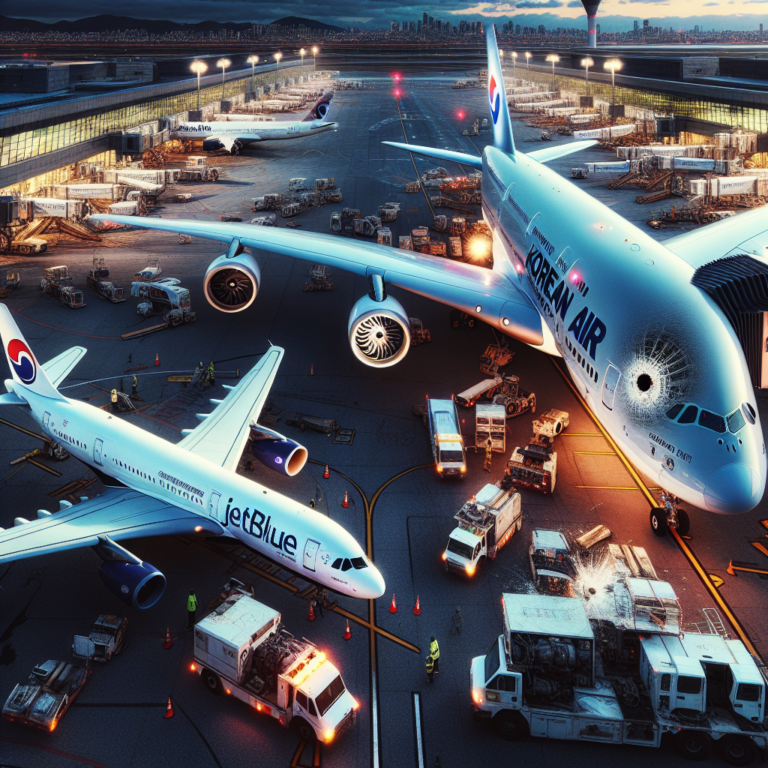
Korean Air A380 Blast Damages JetBlue A321 Windshield in NYC
On December 5, 2024, a Korean Air Airbus A380’s jet blast damaged the windshield of a JetBlue Airbus A321 at JFK Airport while the JetBlue plane was taxiing. The incident occurred around 7:20 PM as the JetBlue aircraft was in front of Terminal 5, with debris striking the left-side windshield and shattering it. The FAA has been notified and is set to investigate the event, which thankfully resulted in no injuries. This incident raises concerns about aviation safety, particularly regarding jet blasts at busy airports, prompting calls for enhanced safety measures and protocols.
Why F-22 Pilots Choose Not to Use F-35 Helmets
The Lockheed Martin F-22 Raptor is renowned as one of the…

2025’s Busiest Airlines: No. 6 Will Surprise You!
As air travel demand surges towards 2025, the aviation industry is poised for a significant resurgence. American Airlines leads with 5,994 daily flights, followed by Delta Air Lines and United Airlines, operating 4,819 and 4,477 flights respectively. Southwest Airlines ranks as the largest low-cost carrier in the U.S. with 3,837 flights daily, while Ryanair dominates Europe with 2,480 flights. IndiGo and China Eastern Airlines are key players in Asia, operating 2,207 and 2,173 flights respectively. The industry’s growth is driven by operational strategies and passenger demand, ensuring busy skies ahead.

All Nippon Airways Orders 77+ Aircraft for Rising Demand
All Nippon Airways (ANA) is enhancing its fleet with a significant order of up to 77 new aircraft, including 68 firm orders and nine options, to meet rising passenger demand. This includes 18 Boeing 787-9s for long-haul routes and 20 Embraer E190-E2 regional jets for domestic operations, set to improve flexibility and profitability. Additionally, ANA is modernizing its fleet with 14 Airbus A321neo and 12 Boeing 737-8 aircraft, and investing in its low-cost subsidiary, Peach Aviation, with 13 new Airbus aircraft. By 2030, ANA aims for a fleet of around 320 aircraft, with 91% being next-generation models.