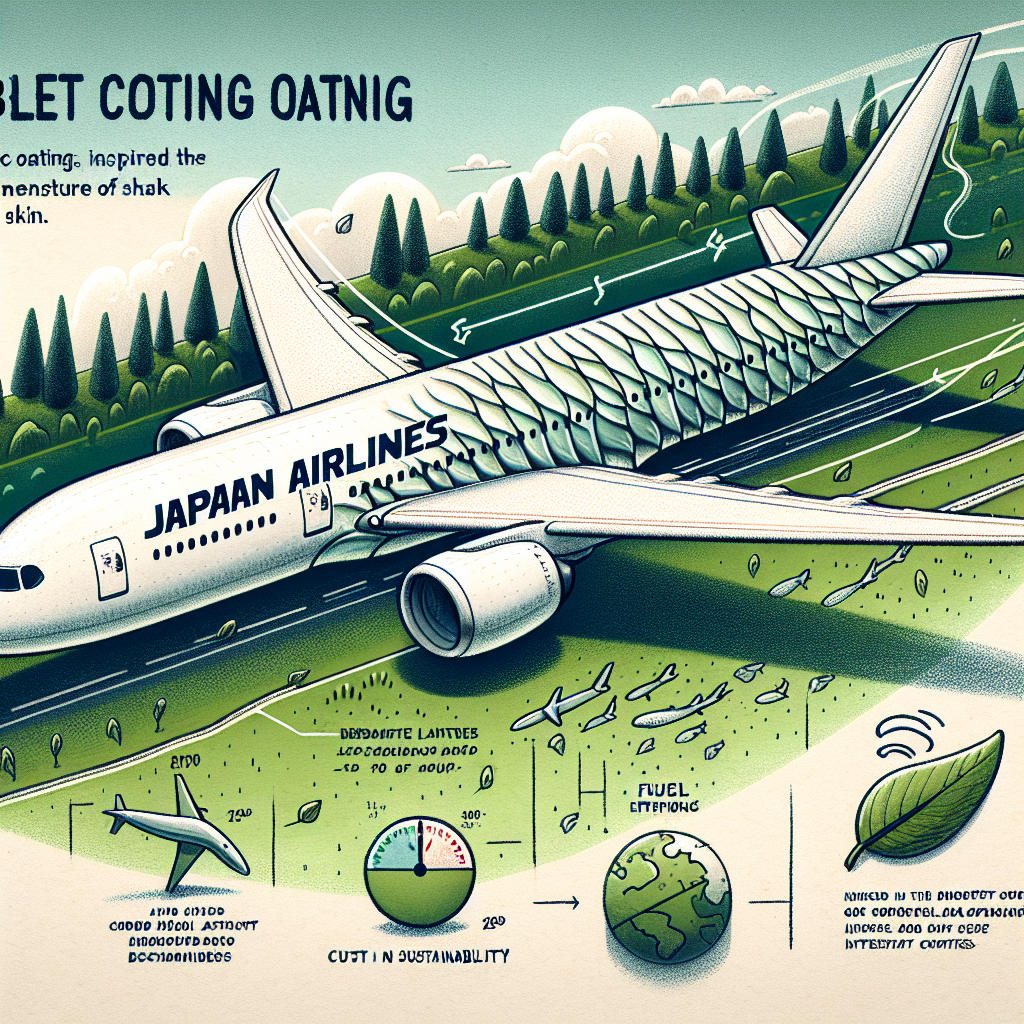
Japan Airlines to Use Riblet Coating on B787 International Flights

Japan Airlines Innovates with Riblet Coating to Enhance Fuel Efficiency and Sustainability
Japan Airlines (JAL) is making waves in the aviation industry by introducing a riblet-shaped coating on its B787-9 aircraft, specifically designed for long-haul international flights. This groundbreaking initiative, developed in collaboration with the Japan Aerospace Exploration Agency (JAXA), the industrial paint company O-Well, and Nikon, aims to significantly reduce fuel consumption and carbon emissions. The riblet design, inspired by the unique texture of shark skin, helps to minimize water resistance, contributing to a greener future for aviation.
The Science Behind Riblet Coating
The riblet coating technology, which has been under testing since 2022, is the first of its kind to be applied to aircraft exteriors. Riblets are fine grooves that effectively reduce drag during flight. According to JAL, the application of this innovative coating has shown promising results, demonstrating a drag reduction rate of 0.24% during cruise conditions. This reduction is projected to lead to an annual decrease of approximately 119 tons of fuel consumption and about 381 tons of CO2 emissions. To put this into perspective, the emissions reduction is equivalent to the annual CO2 absorption of nearly 27,000 cedar trees.
Collaborative Efforts in Decarbonization
JAL’s commitment to sustainability extends beyond just riblet coating. The airline is actively collaborating with JAXA and O-Well to further validate the coating’s durability, aesthetic appeal, and fuel efficiency on long-haul flights. The ongoing research aims to expand the application of riblet coatings across its fleet, reinforcing JAL’s role in promoting decarbonization within the aviation sector.
Key Benefits of Riblet Coating for Aviation
- Enhanced Fuel Efficiency: Reduces drag, leading to lower fuel consumption.
- Lower Emissions: Contributes to significant reductions in CO2 emissions.
- Sustainable Practices: Aligns with global efforts to achieve carbon neutrality in aviation.
Looking Ahead: The Future of Aviation Innovation
As Japan Airlines continues to innovate with riblet coating, the aviation industry watches closely. This initiative not only highlights JAL’s commitment to sustainability but also sets a precedent for other airlines to adopt similar technologies. The potential environmental benefits could be transformative for the industry as it navigates the challenges of climate change.
For more information on sustainable aviation practices and innovations, visit JAL’s Official Sustainability Page or explore JAXA’s Research on Aerodynamics.
Join the Conversation
What are your thoughts on Japan Airlines’ innovative riblet coating technology? Share your insights in the comments below or check out our related articles on sustainable aviation trends.