Midair Collision Risk: Black Hawk Altimeter Failure

Investigation Launched into Black Hawk Helicopter Collision with American Airlines Jet
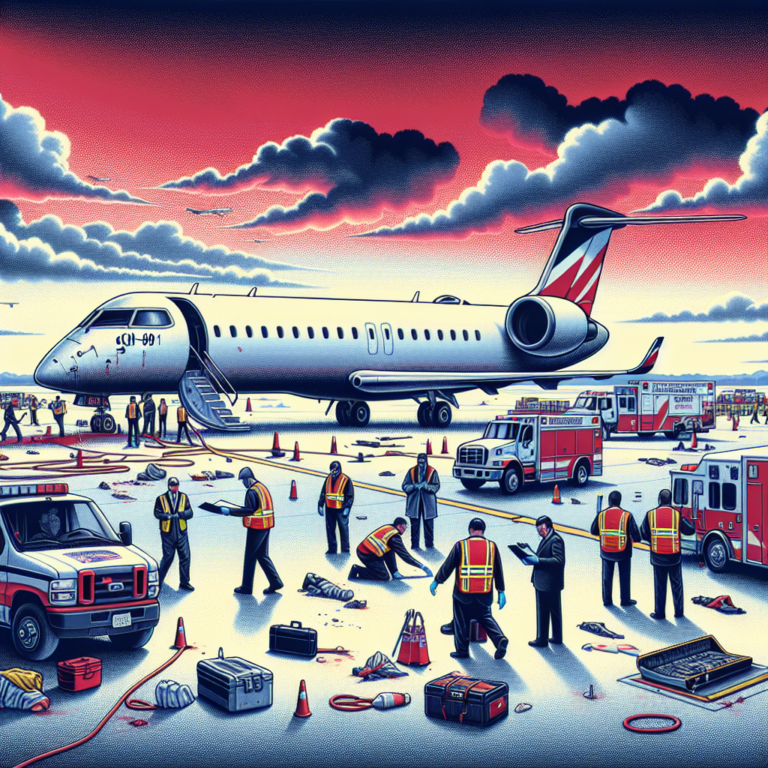
Washington, D.C. – A significant investigation is underway regarding the altimeter readings of the Sikorsky UH-60 Black Hawk helicopter involved in a tragic collision with an American Airlines (AA) CRJ700 regional jet. The incident, which occurred near Ronald Reagan Washington National Airport (DCA) on January 29, 2025, resulted in the loss of all 64 passengers aboard the CRJ700 and three crew members on the Black Hawk. This article delves into the details of the investigation, focusing on the critical role of the helicopter’s altimeter readings.
Black Hawk Altimeter Issues Under Scrutiny
The National Transportation Safety Board (NTSB) revealed on February 14 that the helicopter’s flight data recorder failed to capture accurate altimeter readings. According to NTSB branch chair Sean Payne, the discovery of invalid pressure altitude data raises questions about the integrity of cockpit altimeters and other related aircraft systems.
- Investigators aim to determine whether the corrupted altimeter data affected only the flight data recorder or if it had broader implications for the helicopter’s systems.
- The NTSB’s investigation seeks to clarify the precise altitude readings visible to the pilots during the flight, which is critical for understanding the circumstances leading up to the collision.
Fatal Collision Details
The catastrophic incident occurred at 20:48 when the Black Hawk struck the descending CRJ700 passenger jet as it was nearing landing at Reagan National Airport. The impact forced both aircraft into the Potomac River, resulting in a significant loss of life.
- NTSB chair Jennifer Homendy confirmed that the Black Hawk maintained an altitude of 278 feet above the Potomac River at the moment of impact, indicating a possible violation of altitude regulations.
Airspace Violation Investigation
The investigation is focused on the Black Hawk’s altitude violation, as it exceeded the designated 200-foot altitude restriction in its flight corridor. Such an elevation limit can only be surpassed with explicit authorization from air traffic control.
- The NTSB has noted that the Black Hawk crew likely operated with night-vision goggles during the flight, prompting investigators to assess their impact on the pilots’ situational awareness regarding the approaching passenger jet.
A crucial discrepancy arose five minutes before the collision when the Black Hawk’s pilot reported flying at 300 feet, while the instructor pilot indicated 400 feet. This inconsistency in altitude reporting remains unresolved.
Critical Communications Before Impact
Seventeen seconds before the collision, air traffic control instructed the Black Hawk to maneuver behind the CRJ. However, a 0.8-second radio transmission from the helicopter may have obstructed this vital directive from reaching the crew.
Additionally, the CRJ700’s Traffic Collision Avoidance System was activated, issuing a "Traffic Traffic" alert to its flight crew. One second before impact, the commercial jet attempted an emergency maneuver, pitching its nose up by nine degrees. The aircraft’s elevators reached their maximum upward deflection during this final evasive action.
Conclusion
The ongoing investigation into the Black Hawk helicopter collision emphasizes the critical importance of altimeter accuracy and communication in aviation safety. As the NTSB continues to gather evidence and analyze the data, the findings will be crucial in preventing future tragedies.
For more insights on aviation safety and incident investigations, feel free to share your thoughts in the comments or read our related articles on aircraft safety protocols and the importance of accurate flight data.
Sources: