United Airlines’ 787 Flight from New York to Cape Town Makes Surprising U-Turn

CHICAGO- A United Airlines (UA) Boeing 787-9, flying from Newark (EWR) to Cape Town (CPT), had to make an unexpected U-turn mid-flight due to an issue with the spoiler system. The plane was well on its way across the Atlantic when the crew declared an emergency and turned back towards Newark Liberty International Airport.
Passengers were informed by the captain that a part of the plane’s wing had been compromised. Flight UA1122 landed safely at EWR, but the aircraft remained grounded for over a day following the incident.
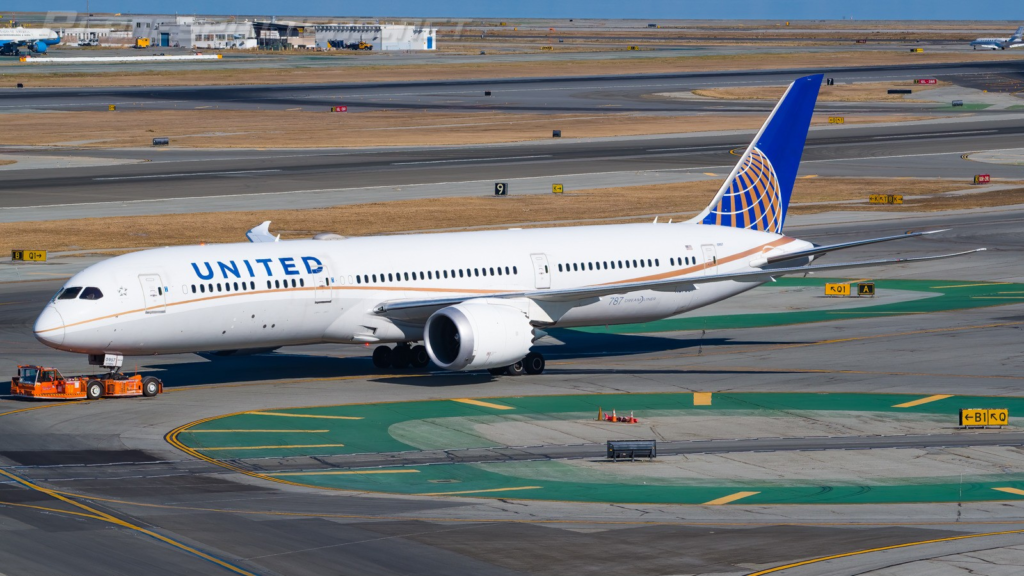
United 787-9 Makes U-Turn to Newark
This incident took place on August 3, involving United Airlines flight UA1122, operated by a Boeing 787-9 with the registration N23983.
The flight departed Newark International Airport (EWR) at 21:22 local time, experiencing a one-hour delay from its originally scheduled time of 20:10. It was heading towards Cape Town International Airport (CPT) when the problem arose.
Flight tracking data indicated that the aircraft reached an altitude of 33,000 feet when the crew detected the spoiler malfunction, located about 250 nautical miles southeast of Newark.
By 22:00, the team decided to return, dumping fuel as a precaution. The aircraft landed safely on Newark’s runway 22R at 23:37.
According to reports, passengers experienced vibrations approximately thirty minutes into the flight. The captain informed them about the situation, clarifying that a spoiler panel issue was at fault—rather than loss of a wing segment. The plane returned safely, adhering to standard emergency protocols.
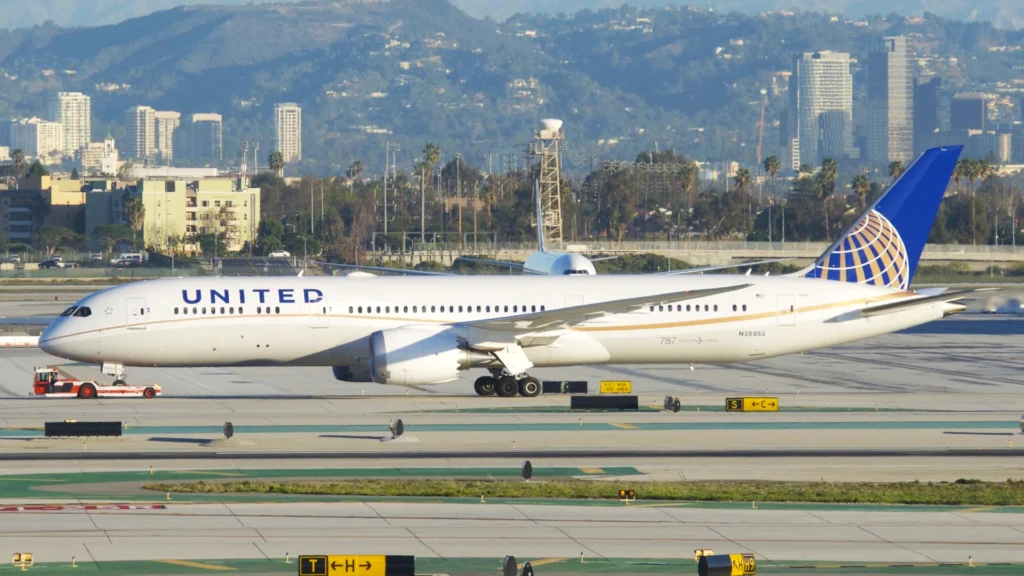
United 787-9 Dreamliner Grounded
After the incident, the flight was canceled, and the aircraft was taken out of service for about 37 hours.
Following thorough inspections and maintenance, the Boeing 787-9 resumed service, initially operating a domestic flight from Newark to Houston before continuing on an international route to Tokyo Narita.
The aircraft involved is relatively young, having been delivered to United Airlines in September 2020. Despite its age, it has faced several technical issues in recent months.
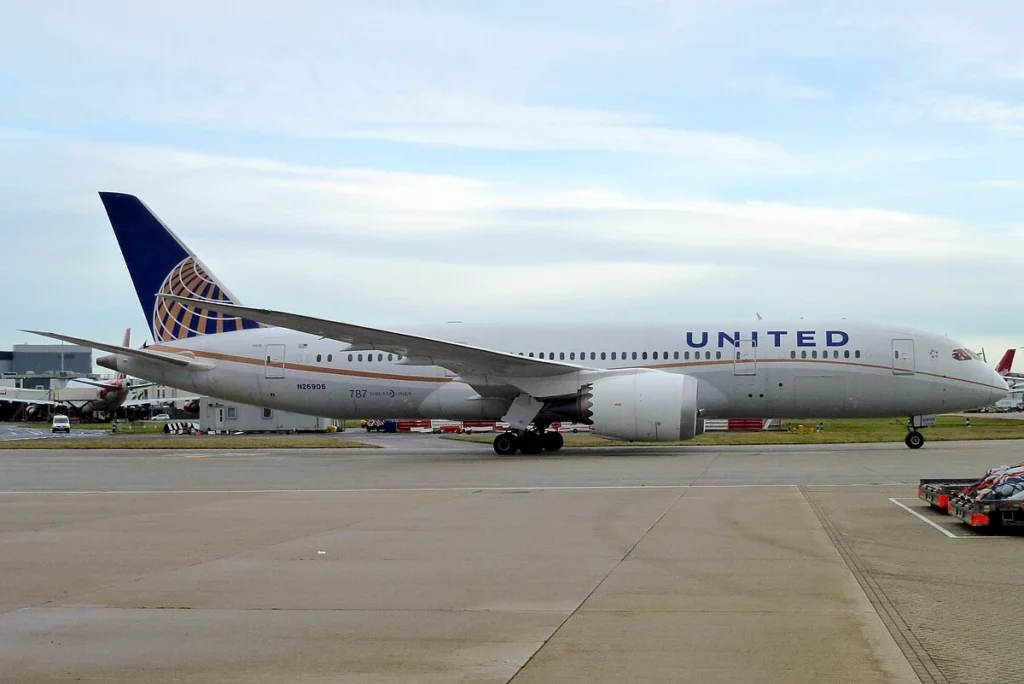
Previous Incidents
Just weeks prior to the August 3 event, the same aircraft, N23983, was forced to return mid-flight while operating UA82 from Newark (EWR) to Delhi (DEL).
At cruising altitude above the Gulf of Maine, the crew declared an emergency due to a malfunction in the electronics cooling system.
This problem is crucial for aircraft safety, impacting the cooling of avionics. The plane safely returned to Newark, where inspections were performed. While this issue was distinct from the spoiler malfunction, the series of problems raises concerns about recurring technical alerts.
In a separate event, a United Boeing 787-8 with registration N27901 was en route on flight UA108 from Washington Dulles (IAD) to Munich (MUC). Shortly after takeoff on July 31, the aircraft experienced a left engine failure while climbing through 5,000 feet.
The crew issued a mayday, dumped fuel, and returned safely to IAD. All 219 passengers and 11 crew members exited without incident. United Airlines confirmed a mechanical failure and made alternate travel arrangements for impacted passengers.
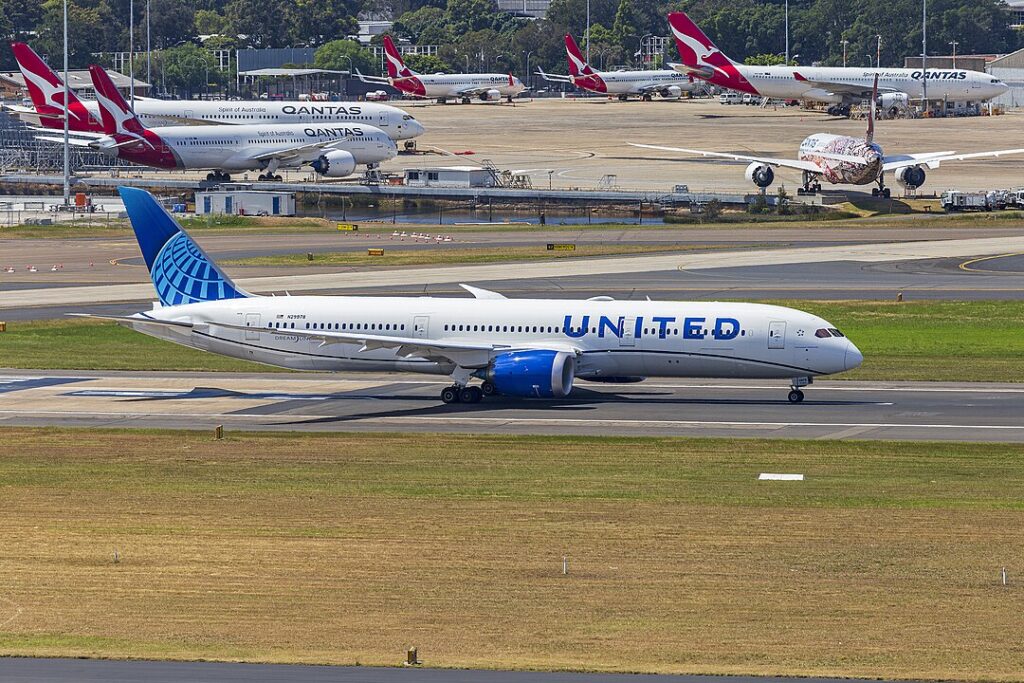
Recent 787 Safety Concerns
Boeing 787 aircraft are generally celebrated for their efficiency and long-distance capabilities. However, recent incidents underline the critical nature of ongoing technical evaluations and proactive maintenance efforts.
The need for mid-flight returns due to mechanical faults, particularly in the same aircraft, has caught the attention of aviation experts and regulatory bodies alike.
With the rising concerns about the Boeing 787’s technical reliability, what steps do you think airlines should take to ensure passenger safety?