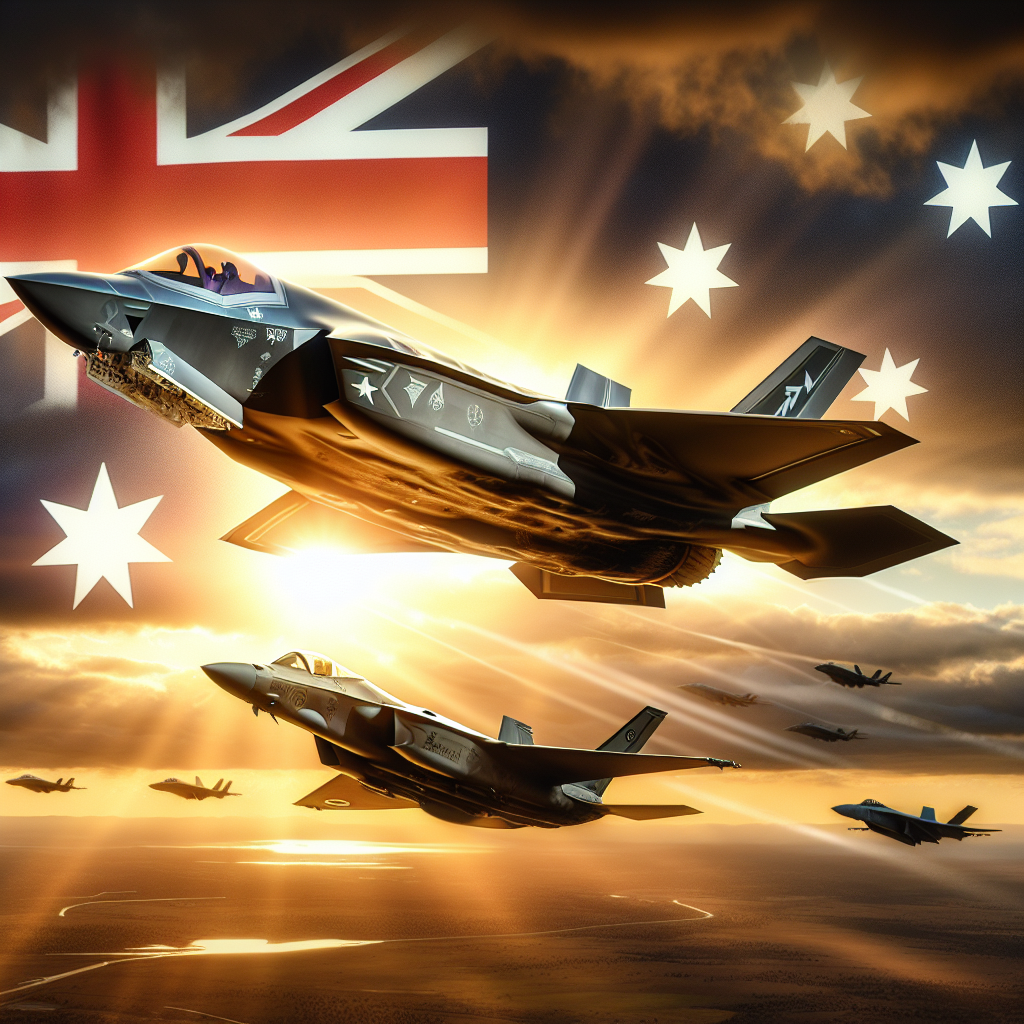
RAAF Plans Fleet Modernization for Enhanced Capabilities

Title: RAAF Fleet Modernization: Enhancing Australia’s Air Combat Capabilities
In response to escalating regional tensions and evolving military technologies, the Royal Australian Air Force (RAAF) is undergoing a significant fleet modernization. As Australia faces a challenging defense landscape, the need to upgrade air combat capabilities has never been more urgent. This strategic move comes against the backdrop of increasing unpredictability in U.S. foreign policy and heightened assertiveness from China.
RAAF’s Urgent Need for Fleet Modernization
Australia’s defense planners are grappling with pressing security challenges. The reliability of the United States, Australia’s key ally, has come under scrutiny, particularly during President Donald Trump’s administration. Recent incidents, such as a Chinese naval task force’s unprecedented circumnavigation of Australia and aggressive maneuvers by Chinese fighter jets in international airspace, have intensified concerns about regional stability.
These developments set the stage for the upcoming Avalon Air Show, where the RAAF’s modernization efforts will be prominently showcased amid rising tensions in the Indo-Pacific region.
F-35A Fleet Reaches Full Strength: A Game Changer
In 2024, the RAAF finalized its procurement of 72 F-35A Lightning II aircraft, marking a significant milestone in Australia’s air combat capabilities. The deliveries, which began in 2018, have led to the establishment of indigenous support facilities, including a maintenance and upgrade center operated by BAE Systems in Williamtown, New South Wales.
According to RAAF Chief Air Marshal Stephen Chappell, “These aircraft contribute leading-edge air combat capabilities as part of the integrated force. Maintaining this capability involves building capacity support and maturing the F-35A logistics and infrastructure to grow operational capacity.”
Super Hornet Upgrades Enhance Strike Capabilities
The RAAF’s 24 Boeing F/A-18F Super Hornets are set to undergo Block III standard upgrades, primarily conducted in Australia. These upgrades will enhance operational capabilities with advanced features such as infrared search and track systems and sophisticated weaponry, including the AGM-158 Joint Air-to-Surface Standoff Missile.
Chappell emphasized, “Our Super Hornets will be practically identical to US Navy aircraft and will continue to receive upgrades throughout their operational life. The Super Hornet will remain a crucial air combat asset until at least 2040, even as the F-35A fleet matures.”
Electronic Warfare Assets Strengthen Defense Posture
To bolster its defense capabilities, Australia operates 12 EA-18G Growlers, which are specialized electronic warfare versions of the Super Hornet. These aircraft will receive Block II upgrades, significantly enhancing their threat response capabilities.
Additionally, the RAAF is set to acquire the Gulfstream/L3Harris MC-55A Peregrine, an advanced electronic warfare platform designed for intelligence, surveillance, reconnaissance, and electronic warfare missions.
Support Aircraft Investments Continue
Investment in essential combat support aircraft remains a priority for the RAAF. The Boeing E-7A Wedgetail and Airbus KC-30A Multi-Role Tanker Transport (MRTT) are pivotal components of Australia’s air force operations.
Chappell stated, “The E-7A and KC-30A have provided significant capabilities, recognized by our allies during operations and exercises since their introduction.”
Ghost Bat Program Advances Autonomous Combat Technologies
The MQ-28A Ghost Bat program, a collaborative initiative between Boeing Defence Australia and the RAAF, signifies Australia’s commitment to innovative aerial technology. Designed for operations across Australia’s vast geography, the Ghost Bat has a range of 2,000 nautical miles and is currently undergoing testing with plans for operational deployment by year-end.
The platform is pivotal for electronic warfare and intelligence-gathering missions, with future iterations expected to integrate weapon systems. The RAAF aims to demonstrate collaborative operations with the Ghost Bat alongside existing assets this year.
While the RAAF possesses formidable independent capabilities, the need for joint operations, particularly with U.S. forces, remains critical. However, shifting strategic priorities necessitate greater Australian self-reliance in a rapidly changing security environment.
As Australia continues its journey towards modernizing its air combat fleet, the RAAF is poised to enhance its operational capabilities and ensure national security in an increasingly uncertain world.
What are your thoughts on Australia’s defense strategy? Share your insights below or explore more articles on military modernization and defense technologies.