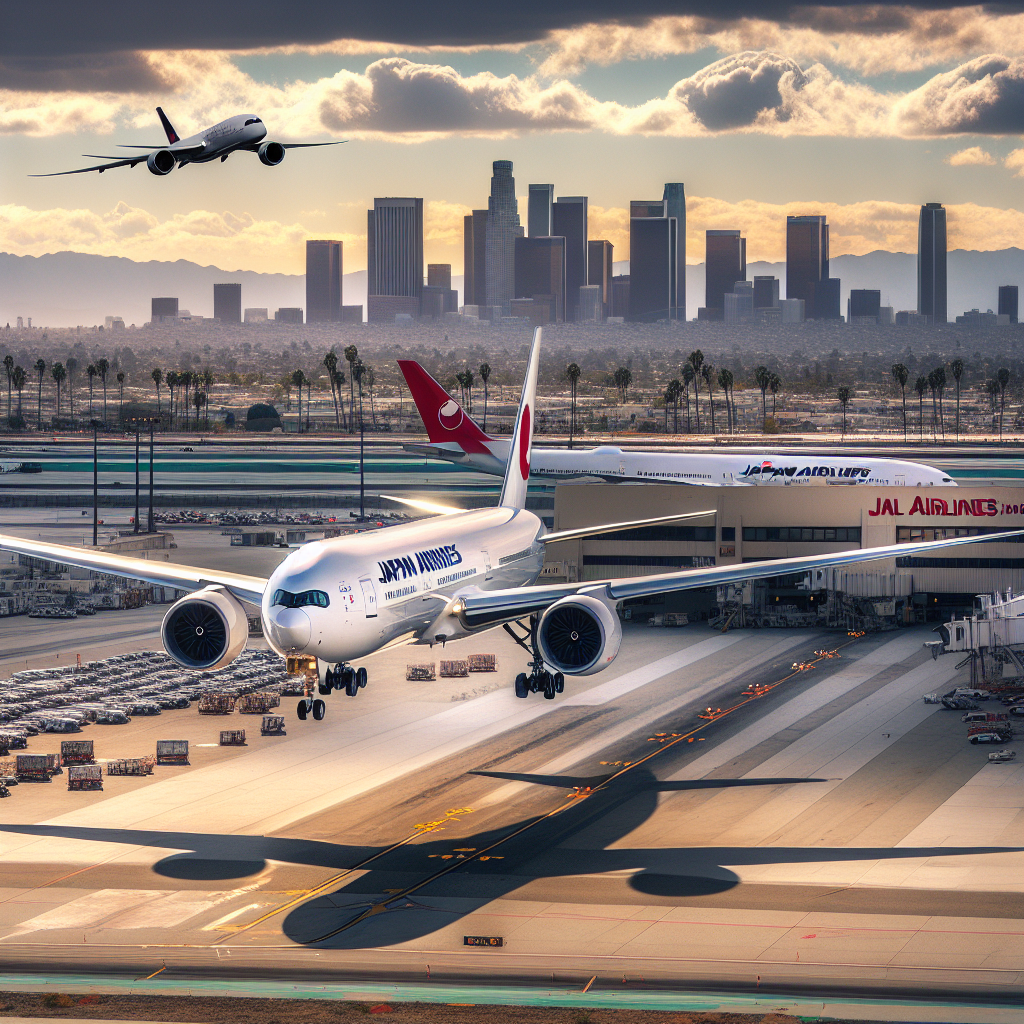
Japan Airlines Retires First 777-300ER on Final L.A. Flight

Japan Airlines to Retire Its First Boeing 777-300ER: A Milestone in Aviation History
Japan Airlines (JAL) is set to retire its first-ever Boeing 777-300ER, marking a significant transition in its long-haul fleet. This historic aircraft, designated JA731J, will complete its final commercial journey from Los Angeles International Airport (LAX) to Tokyo Haneda (HND) as Flight JL015. The retirement of this iconic aircraft symbolizes the end of a two-decade era for JAL, which has relied on the Boeing 777-300ER for its international operations since its introduction in 2004.
Since entering service in June 2004, JA731J has been a cornerstone of JAL’s fleet, showcasing the airline’s commitment to modernization and technological advancement. Its maiden flight was from Tokyo Narita (NRT) to Singapore (SIN), and it has since played a crucial role in expanding JAL’s global reach.
The Legacy of the Boeing 777-300ER at JAL
The Boeing 777-300ER has been instrumental in Japan Airlines’ international operations. As the first 777-300ER in JAL’s fleet, JA731J represents a significant milestone in the airline’s history.
- Delivery and Service: Delivered on June 15, 2004, JA731J began its service just weeks later on July 1, establishing itself as a reliable aircraft for long-haul flights.
- Global Operations: Over its 20-year lifespan, this aircraft supported numerous global routes, solidifying JAL’s presence in key international markets.
Currently, Japan Airlines operates a total of 13 Boeing 777-300ERs, primarily serving long-haul routes to North America and Europe. While JA731J is set to retire, the airline had previously phased out another Boeing 777-300ER and is planning further retirements as it modernizes its fleet.
Final Flight Details
JA731J’s final flight will operate as JL015, departing from Los Angeles at 1:40 PM on May 26 and arriving at Tokyo Haneda the following day at 5:25 PM. This route has long been one of JAL’s premier trans-Pacific services, effectively showcasing the capabilities of the Boeing 777.
As Japan Airlines shifts its focus to the Airbus A350-1000, the airline is embracing a new era of efficiency and passenger comfort. The A350-1000 will gradually replace the Boeing 777-300ER on international routes, offering enhanced fuel efficiency and innovative passenger amenities.
Transition to the Airbus A350-1000
Japan Airlines is committed to modernizing its fleet, and the Airbus A350-1000 is positioned as the new flagship. Key features of the A350-1000 include:
- Fuel Efficiency: Improved fuel consumption compared to older models.
- Passenger Comfort: Quieter cabins and modern amenities.
- Cabin Configuration: The A350-1000 is configured to accommodate:
- 6 First Class seats
- 54 Business Class seats
- 24 Premium Economy seats
- 155 Economy seats
The End of an Era: Similar Boeing 777 Retirements
Earlier this year, Japan Airlines also retired the Boeing 777-300ER from its Tokyo Haneda (HND) to London Heathrow (LHR) route, further emphasizing the airline’s commitment to modernization. The final flight on this route, operated by aircraft JA739J, occurred on January 1, 2025, reinforcing JAL’s strategy to enhance efficiency and passenger experience through newer aircraft.
For more insights on Japan Airlines’ fleet modernization and its impact on international travel, consider reading about other airlines transitioning to sustainable aircraft models.
Conclusion
The retirement of JA731J marks a significant chapter in Japan Airlines’ history and reflects broader trends in the aviation industry towards modernization and sustainability. What are your thoughts on this transition? Share your insights below or explore more articles on airline innovations and fleet upgrades.
Learn more about the Boeing 777-300ER’s impact on aviation and discover the latest trends in airline sustainability.