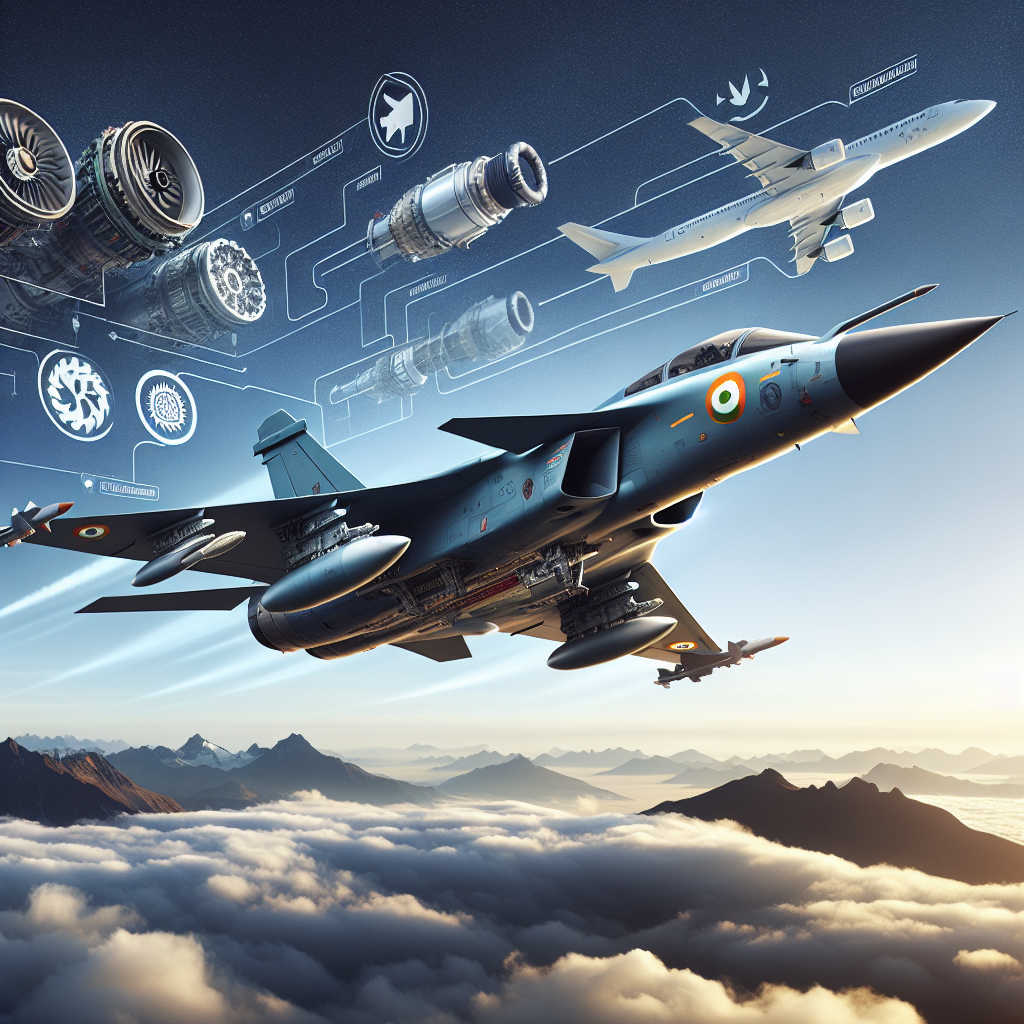
HAL’s Tejas Mk2 Jet to Feature Safran Engines

Tejas Mk2: Boosting India’s Air Force with Advanced Engine Collaboration
BENGALURU – India’s Tejas Mk2, a state-of-the-art 4.5-generation fighter jet developed by Hindustan Aeronautics Limited (HAL), is poised to significantly enhance the capabilities of the Indian Air Force (IAF). A pivotal partnership with French aerospace leader Safran for advanced engine development aims to address existing delays in engine supplies and fortify India’s indigenous defense production efforts.
This strategic collaboration comes in the wake of Operation Sindoor, during which the IAF has prioritized expediting production rates to reinforce its operational capacity from 31 active squadrons towards a target of 42. The partnership with Safran is set to not only power the Tejas Mk2 but may also bolster India’s Advanced Medium Combat Aircraft (AMCA) program.
HAL Tejas Mk2 and Safran Engines: A New Era in Defense
The prospective partnership with Safran marks a crucial step in diversifying India’s engine supply sources for the Tejas Mk2. Currently, HAL relies heavily on GE Aerospace for the F404-IN20 and F414-GE-INS6 engines that power the existing Tejas Mk-1 and the upcoming Mk-2 jets, respectively. Persistent delays in engine deliveries have critically impacted the IAF’s operational goals.
- Key Concerns:
- Only 31 of the targeted 42 fighter squadrons are currently operational.
- Delays have been exacerbated following Operation Sindoor, which has blurred the lines between state and non-state threats.
According to sources like Moneycontrol, India is aggressively pursuing local engine production options, with Safran emerging as a prime candidate for collaboration. The aim is to develop high-thrust, next-generation engines not only for the Tejas Mk2 but also for future aircraft platforms.
The Evolution of Next-Generation Aircraft
The journey of Tejas began in 2009, with the IAF’s initial order for 40 Mk-1 aircraft. In 2021, a larger contract worth ₹48,000 crore was signed for 83 Mk-1A fighters, with deliveries expected to commence in mid-2024. However, as of March, GE had only delivered the first unit of the 99 engines under this agreement. This delay has raised concerns about reliance on US suppliers and emphasized the need for indigenization.
India’s ambition to indigenize engine production dates back to the Kaveri engine program, initiated by the Gas Turbine Research Establishment (GTRE), which ultimately fell short of meeting LCA requirements. The anticipated collaboration with Safran is expected to revive these ambitions, leveraging superior technology and industry expertise to provide engines for the Tejas Mk2 and other future platforms.
Future Scope: Strengthening Defense Capabilities
Safran’s relationship with India is not new; it already has a joint venture with HAL, Safran Helicopter Engines Pvt Ltd, focused on developing modern engines for Indian helicopters. The potential extension of this partnership to fighter jet engines could significantly accelerate R&D and manufacturing processes.
If this agreement progresses, Safran’s advanced engine technology is expected to power the Tejas Mk2, classified as a 4.5-generation fighter jet. This aircraft is designed to replace aging IAF platforms and will substantially enhance India’s air defense capabilities once deployed.
Conclusion: A Stronger Future for the IAF
The collaboration between HAL and Safran could mark a transformative shift in India’s defense capabilities, addressing current challenges while paving the way for future advancements. We invite readers to share their thoughts on this exciting development and explore more related articles on defense technology and India’s aerospace initiatives.
For more information on the Tejas Mk2 and its strategic implications, check out HAL’s official website and the IAF’s latest updates.