Delta 767 Flight from Milan to New York Faces Hail Damage Due to Weather Oversight

NEW YORK— Italian officials have concluded that the limited use of weather data played a role in a significant hail damage incident involving a Delta Air Lines (DL) Boeing 767-300ER shortly after its departure from Milan Malpensa Airport (MXP) on July 24, 2023, as it headed towards New York JFK (JFK).
The aircraft encountered a severe hailstorm while ascending through 13,000 feet on the DOGUB 6T departure path, resulting in major damage to its structure and systems. Fortunately, all 226 passengers and crew members aboard were unharmed.
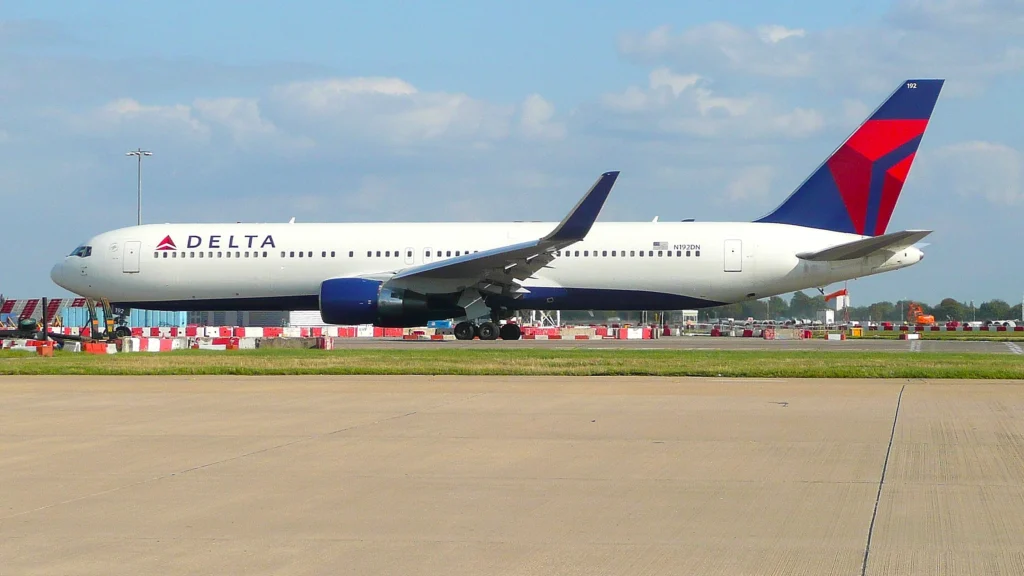
Delta 767 Pilot Did Not Utilize Weather Data
The Agenzia Nazionale per la Sicurezza del Volo (ANSV) noted that although standard forecasts like METAR and TAF indicated instability, they did not deem the weather unsafe for departure.
In contrast, satellite-based radar images available before takeoff clearly indicated a high probability of severe weather along the intended flight path. Unfortunately, this critical information was not shared with the flight crew.
Additionally, while Delta’s meteorology team provided an updated threat analysis of deteriorating weather conditions, it lacked sufficient specifics to be actionable.
This situation meant that the crew relied on standard briefings, which did not adequately reflect the immediate weather risks in the west and southwest of Malpensa.
Notably, eight other flights departed within 30 minutes of the Delta flight, but none of them were routed in the same southwest direction. Most took off towards the north or northeast, avoiding the brewing storm cells.
As the Boeing 767 made its southwest turn, onboard radar indicated considerable storm activity. The Alps nearby restricted any deviation, forcing the crew to veer left—directly into the hailstorm.
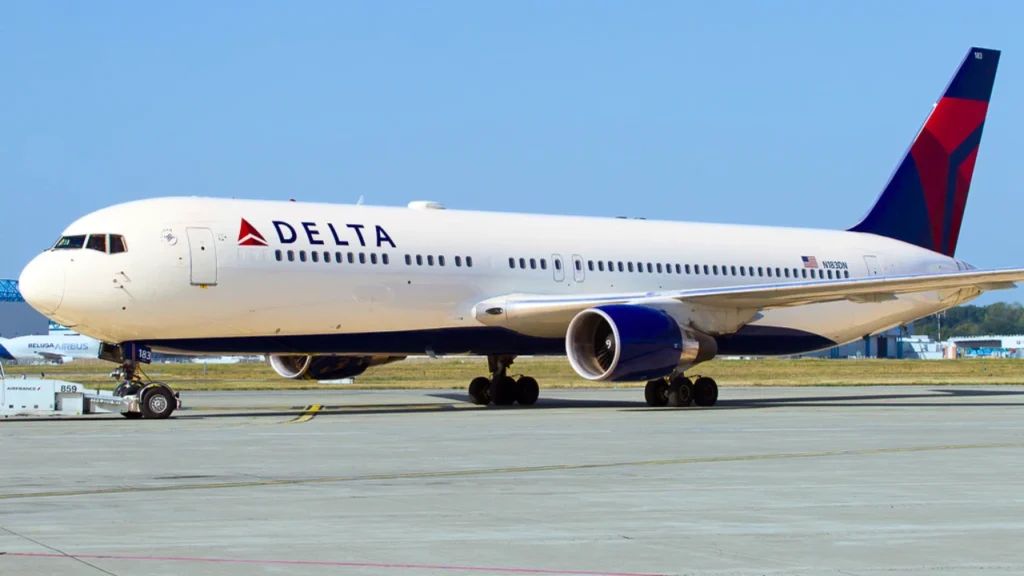
Extent of Damage and Diversion
The aircraft suffered significant damage, including a shattered cockpit window on the first officer’s side, a punctured radome, and roughly 20 strikes on the weather radar antenna.
Additional damage affected the leading edges of both wings, the horizontal stabilizer, engine spinners, and exterior lights.
Initially, the crew intended to return to Milan Malpensa (MXP), but as the windshield continued to crack, they redirected the flight to Rome Fiumicino (FCO) for an overweight landing. The cockpit was staffed by four pilots, including a line-check pilot and a relief pilot.
Investigative Limitations and Safety Actions
The lack of cockpit voice recorder (CVR) data limited the investigation, hindering a complete reconstruction of the cockpit decision-making process. Nevertheless, ANSV emphasized the human factors and meteorological awareness as key issues in this incident.
In response to the event, Delta Air Lines (DL) enhanced its training on how to avoid thunderstorms and hail and is in the process of upgrading its Boeing 767 and 757 fleets with advanced 3D weather radar systems for improved sensitivity. The retrofit program is anticipated to be finalized by April 2027.
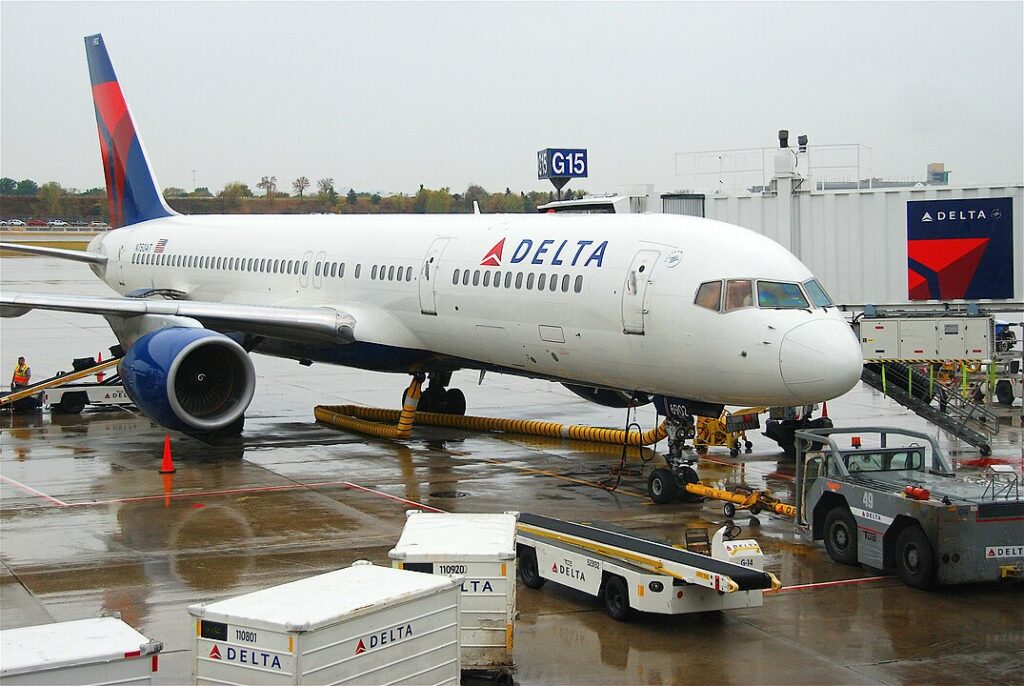
Wider Safety and Climate Considerations
ANSV has observed that climate change is leading to an increase in the frequency and severity of weather-related threats to aviation, such as turbulence, icing, and substantial hail.
A proposal has been made to the International Civil Aviation Organization (ICAO) Assembly to integrate climate-related operational safety risks into future updates of the Global Aviation Safety Plan. This is a response to growing concerns about how atmospheric instability impacts long-haul flights.
To what extent do you think advancements in weather technology will help prevent such incidents in the future?