Discover Why the Boeing 777X Features the World’s Largest Jet Engines

SEATTLE- The Boeing 777X has emerged as a prominent figure in modern aviation, distinguished not only by its size but also by the extraordinary scale of its engines. Slated for operation from major hubs like Dubai International Airport (DXB), this aircraft showcases engines that are unparalleled in commercial aviation.
The powerplants, General Electric’s GE9X, are recognized as the largest commercial turbofans ever constructed. Their considerable diameter and sophisticated design play a crucial role in the 777X’s capacity to provide long-range performance while satisfying strict standards for efficiency and noise.
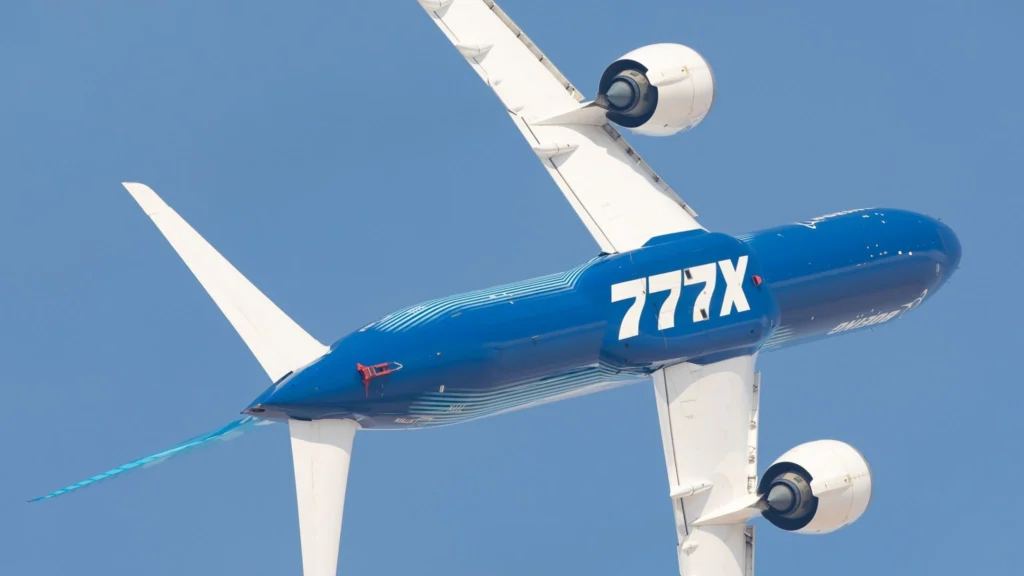
Boeing 777X Engines
The Boeing 777X family, which includes the 777-8 and 777-9 variants, was designed to replace the Boeing 777-300ER and directly compete with the Airbus A350.
To address operational demands such as long range, high passenger capacity, and reduced emissions, Boeing needed an engine that delivered substantial thrust, high fuel efficiency, and durability. The GE9X emerged as the only fitting solution at its introduction.
With a fan diameter of 134 inches (3.4 meters), which is larger than that of a Boeing 737’s fuselage, the engine achieves an impressive bypass ratio of 10:1.
Providing up to 110,000 pounds of certified thrust, it enables full departures on ultra-long-haul routes, including from Dubai to Los Angeles.
Its design leverages ceramic matrix composites (CMCs), carbon fiber fan blades, and 3D-printed components, resulting in weight reduction and enhanced heat resistance.
According to industry insights, the GE9X also boasts a 10% improvement in fuel burn compared to its predecessor, the GE90-115B.
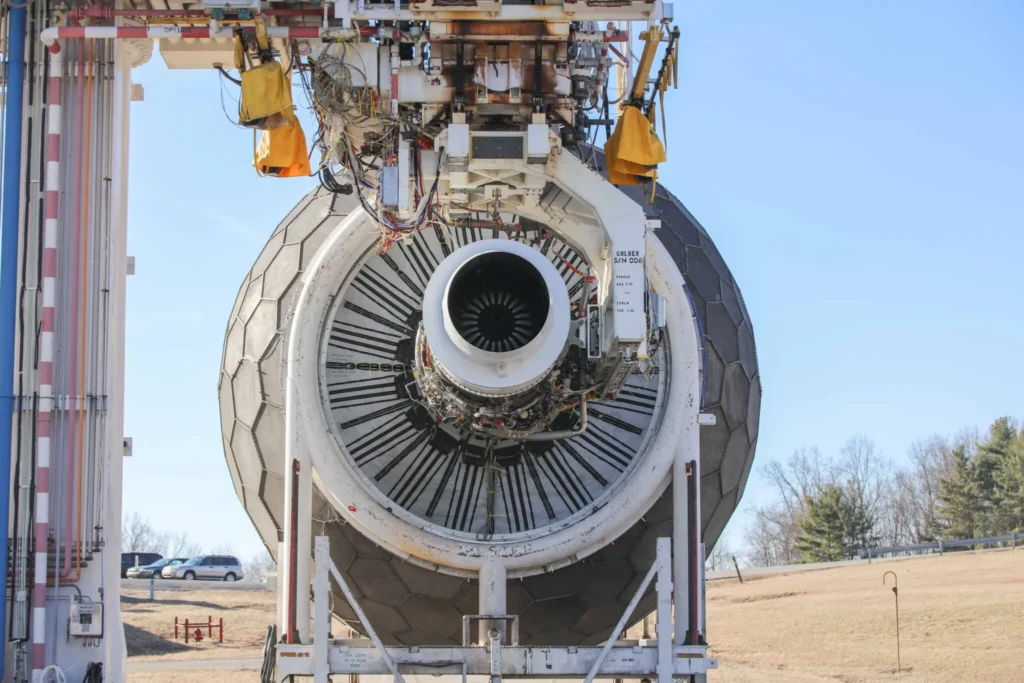
Reason for GE9X
The maximum takeoff weight of the 777X exceeds 775,000 lbs, necessitating a thrust level over 100,000 lbf for reliable operations. Smaller engines would require higher rotational speeds, creating greater thermal stress and a lower bypass ratio, which could compromise efficiency and lifespan.
The larger fan diameter allows for slower operation, leading to increased bypass airflow and cooler core temperatures, effectively lowering fuel consumption and noise levels.
Choosing GE exclusively also streamlines parts logistics for airlines like Emirates, Qatar Airways, and Lufthansa, all of which have extensive Boeing 777 fleets. Nonetheless, relying on a single supplier can lead to delays in production or maintenance.

Technological Advancements
The GE90-115B previously set records for power with a 128-inch fan, but the GE9X surpasses it with numerous efficiency enhancements.
This engine operates at a remarkable pressure ratio of 60:1, incorporates CMC components capable of enduring temperatures above 1,300°C, and utilizes full authority digital engine control (FADEC) with predictive maintenance features.
When compared to earlier models, such as Pratt & Whitney’s JT9D or Rolls-Royce’s Trent XWB, the GE9X capitalizes on advanced manufacturing techniques and materials to achieve lower weight, greater heat resistance, and enhanced combustion efficiency.
While future engines like Rolls-Royce’s UltraFan may exceed the GE9X in fan size, the GE9X remains the most advanced commercial jet engine currently in service.

The Path Forward
The introduction of the GE9X on the Boeing 777-9 represents a transition toward high-thrust engines that prioritize efficiency over mere power. Boeing’s innovative folding wingtip design accommodates the engine’s size while ensuring compatibility with standard airport gates.
This integration of aerodynamic design and propulsion efficiency positions the 777X for operation on some of the world’s longest routes with a minimized environmental impact.
The evolving landscape of high-bypass turbofans, whether through GE’s CFM RISE program or Rolls-Royce’s UltraFan, will likely build upon the foundational advancements realized in the GE9X.
For now, the GE9X stands as a benchmark for achieving a balance of size, performance, and efficiency in today’s long-haul aviation landscape. What do you think about the advancements in commercial jet engines?